3A1V | pdb_00003a1v

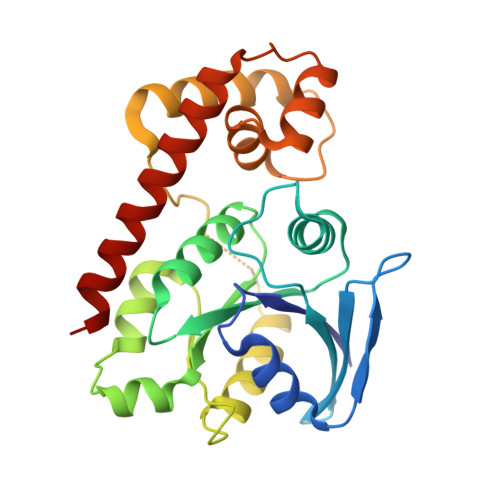
Crystal structue of the cytosolic domain of T. maritima FeoB iron iransporter in apo form


Experimental Data Snapshot

  • Method: X-RAY DIFFRACTION
  • Resolution: 2.40 Å
  • R-Value Free: 
    0.242 (Depositor), 0.236 (DCC) 
  • R-Value Work: 
    0.203 (Depositor), 0.203 (DCC) 
  • R-Value Observed: 
    0.205 (Depositor) 

Starting Model: experimental
View more details

wwPDB Validation 3D Report Full Report

Validation slider image for 3A1V

This is version 1.2 of the entry. See complete history

Literature

Structural basis of novel interactions between the small-GTPase and GDI-like domains in prokaryotic FeoB iron transporter

Hattori, M.Jin, Y.Nishimasu, H.Tanaka, Y.Mochizuki, M.Uchiumi, T.Ishitani, R.Ito, K.Nureki, O.

(2009) Structure 17: 1345-1355

  • DOI: https://doi.org/10.1016/j.str.2009.08.007
  • Primary Citation Related Structures: 
    3A1S, 3A1T, 3A1U, 3A1V, 3A1W

  • PubMed Abstract: 

    The FeoB family proteins are widely distributed prokaryotic membrane proteins involved in Fe(2+) uptake. FeoB consists of N-terminal cytosolic and C-terminal transmembrane domains. The N-terminal region of the cytosolic domain is homologous to small GTPase (G) proteins and is considered to regulate Fe(2+) uptake. The spacer region connecting the G and TM domains reportedly functions as a GDP dissociation inhibitor (GDI)-like domain that stabilizes the GDP-binding state. However, the function of the G and GDI-like domains in iron uptake remains unclear. Here, we report the structural and functional analyses of the FeoB cytosolic domain from Thermotoga maritima. The structure-based mutational analysis indicated that the interaction between the G and GDI-like domains is important for both the GDI and Fe(2+) uptake activities. On the basis of these results, we propose a regulatory mechanism of Fe(2+) uptake.


  • Organizational Affiliation
    • Department of Basic Medical Sciences, Institute of Medical Science, The University of Tokyo, Minato-ku, Tokyo, Japan.

Macromolecule Content 

  • Total Structure Weight: 59.25 kDa 
  • Atom Count: 3,949 
  • Modeled Residue Count: 497 
  • Deposited Residue Count: 516 
  • Unique protein chains: 1

Macromolecules

Find similar proteins by:|  3D Structure
Entity ID: 1
MoleculeChains  Sequence LengthOrganismDetailsImage
Iron(II) transport protein B
A, B
258Thermotoga maritimaMutation(s): 0 
Gene Names: TM0051
UniProt
Find proteins for Q9WXQ8 (Thermotoga maritima (strain ATCC 43589 / DSM 3109 / JCM 10099 / NBRC 100826 / MSB8))
Explore Q9WXQ8 
Go to UniProtKB:  Q9WXQ8
Entity Groups
Sequence Clusters30% Identity50% Identity70% Identity90% Identity95% Identity100% Identity
UniProt GroupQ9WXQ8
Sequence Annotations
Expand
Reference Sequence

Small Molecules

Ligands 4 Unique
IDChains Name / Formula / InChI Key2D Diagram3D Interactions
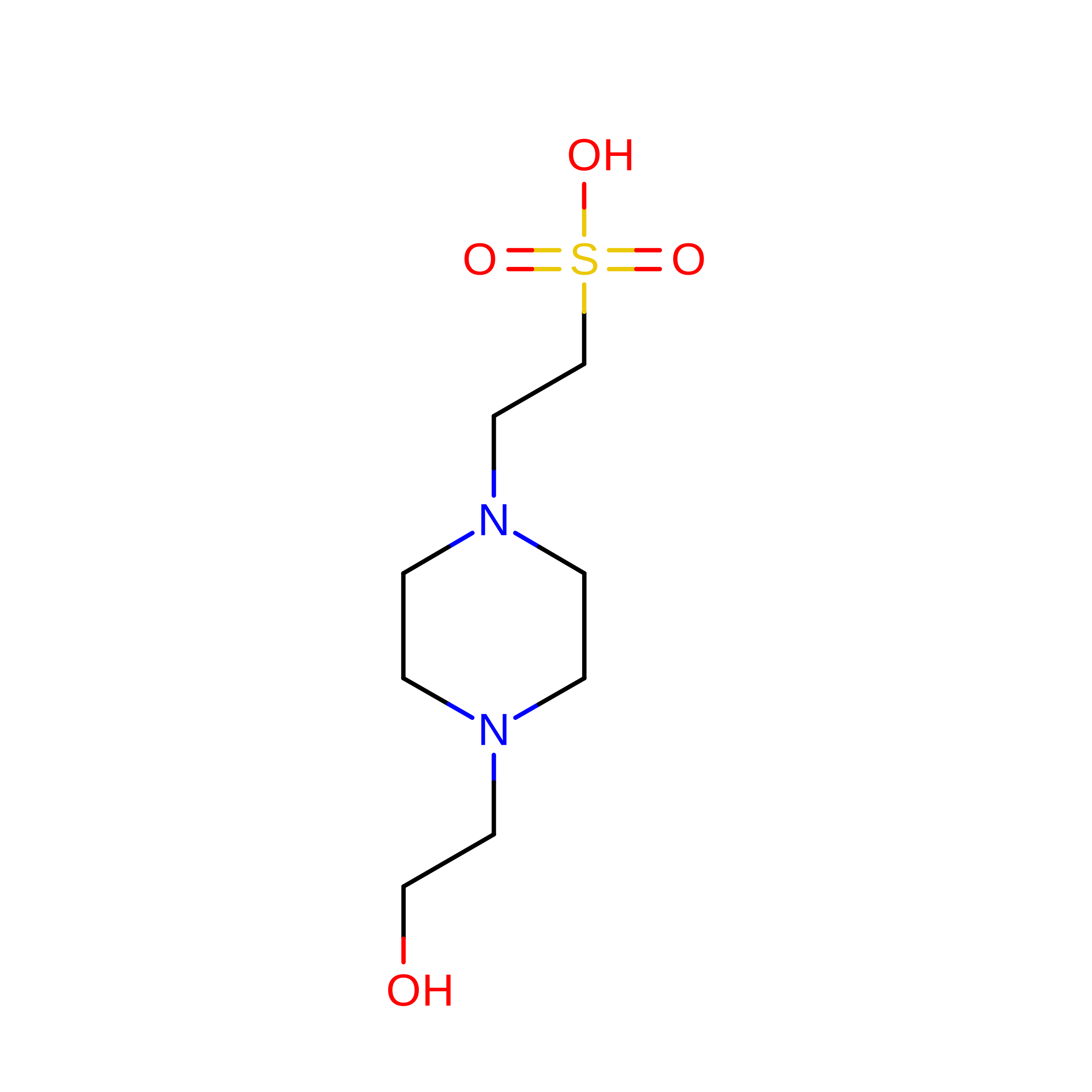
EPE

Query on EPE


Download:Ideal Coordinates CCD File
E [auth A]4-(2-HYDROXYETHYL)-1-PIPERAZINE ETHANESULFONIC ACID
C8 H18 N2 O4 S
JKMHFZQWWAIEOD-UHFFFAOYSA-N
MPD

Query on MPD


Download:Ideal Coordinates CCD File
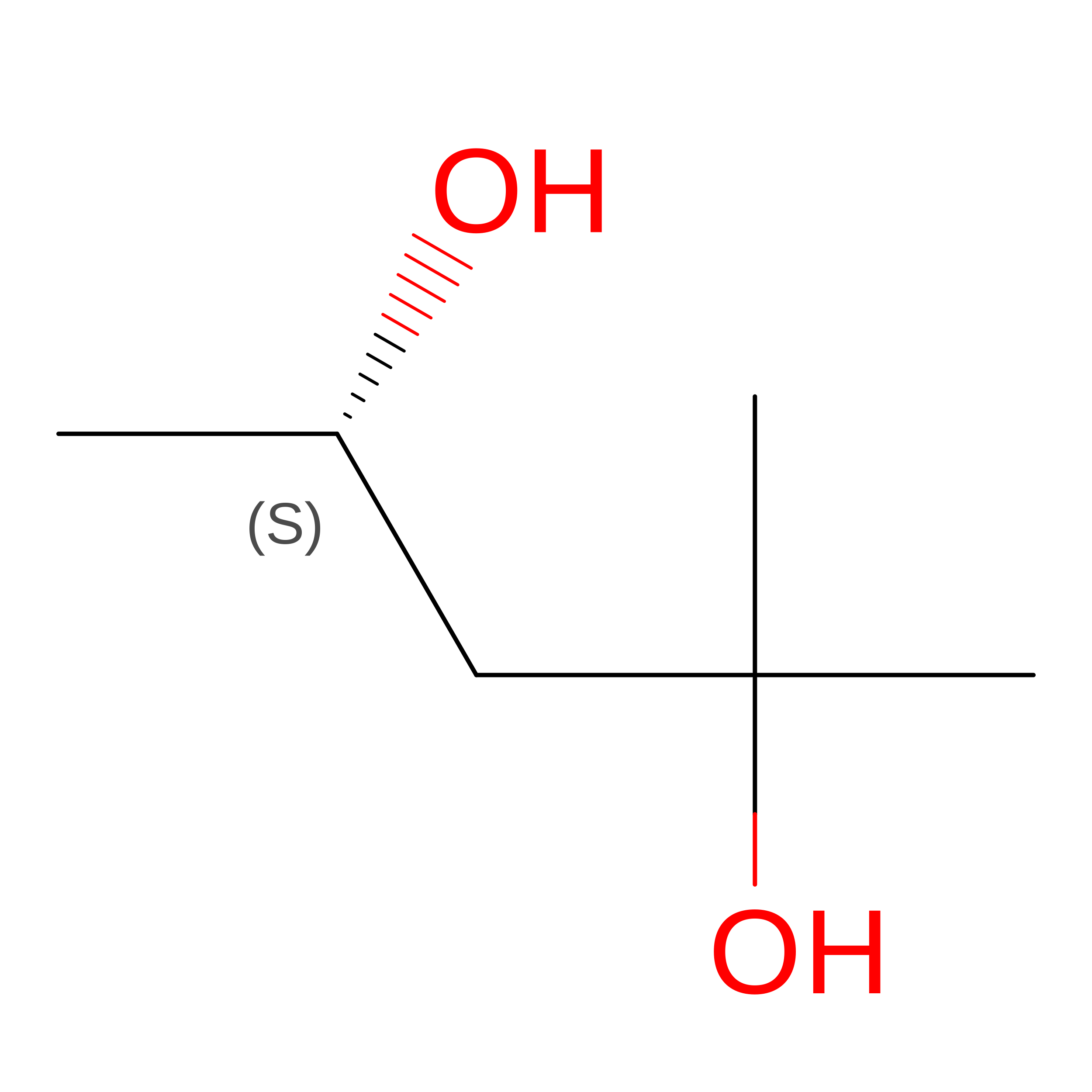
D [auth A],
G [auth B]
(4S)-2-METHYL-2,4-PENTANEDIOL
C6 H14 O2
SVTBMSDMJJWYQN-YFKPBYRVSA-N
MRD

Query on MRD


Download:Ideal Coordinates CCD File
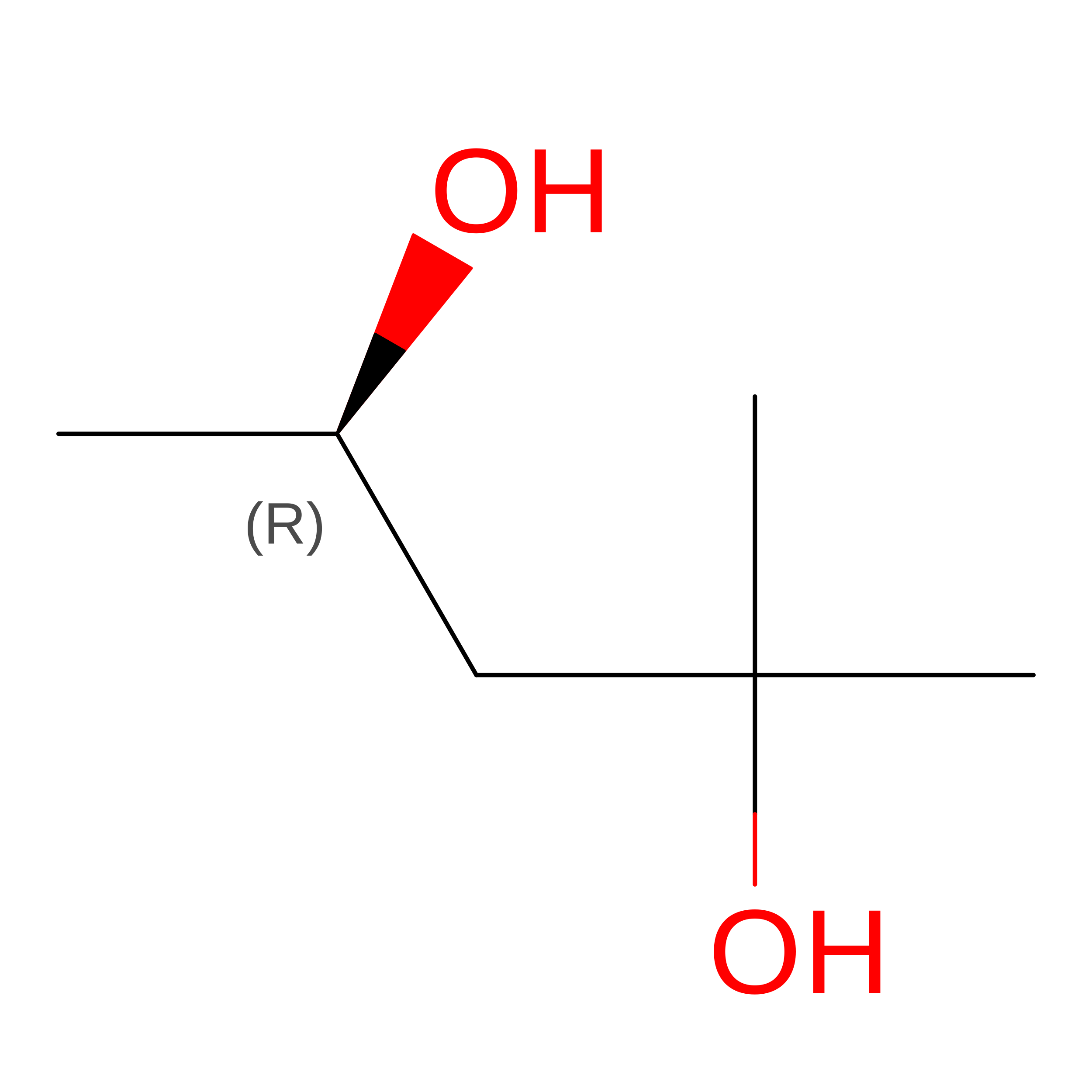
F [auth B](4R)-2-METHYLPENTANE-2,4-DIOL
C6 H14 O2
SVTBMSDMJJWYQN-RXMQYKEDSA-N
SO4

Query on SO4


Download:Ideal Coordinates CCD File
C [auth A],
H [auth B]
SULFATE ION
O4 S
QAOWNCQODCNURD-UHFFFAOYSA-L

Experimental Data & Validation

Experimental Data

  • Method: X-RAY DIFFRACTION
  • Resolution: 2.40 Å
  • R-Value Free:  0.242 (Depositor), 0.236 (DCC) 
  • R-Value Work:  0.203 (Depositor), 0.203 (DCC) 
  • R-Value Observed: 0.205 (Depositor) 
Space Group: P 21 21 21
Unit Cell:
Length ( Å )Angle ( ˚ )
a = 57.426α = 90
b = 81.556β = 90
c = 128.473γ = 90
Software Package:
Software NamePurpose
PHENIXrefinement

Structure Validation

View Full Validation Report


Entry History 

Deposition Data

Revision History  (Full details and data files)

  • Version 1.0: 2009-09-22
    Type: Initial release
  • Version 1.1: 2011-07-13
    Changes: Version format compliance
  • Version 1.2: 2023-11-01
    Changes: Data collection, Database references, Derived calculations, Refinement description