Download Mendeley
Generative design of bacteriophages with genome language models.
King, S.H., Driscoll, C.L., Li, D.B., Guo, D., Merchant, A.T., Brixi, G., Wilkinson, M.E., Hie, B.L.(2026) Science 393: eaec2657-eaec2657
- PubMed: 42561074 Search on PubMed
- DOI: https://doi.org/10.1126/science.aec2657
- Primary Citation Related Structures:
36CQ, 36CR - PubMed Abstract:
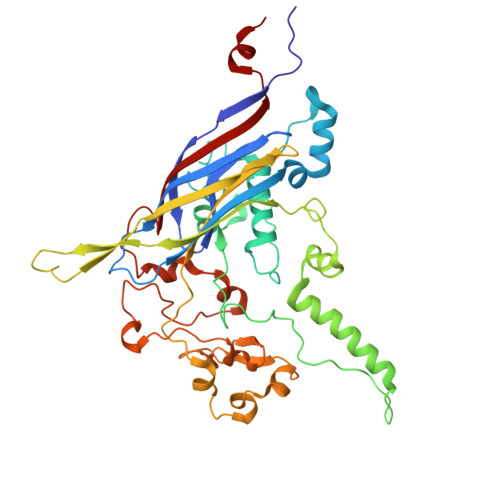
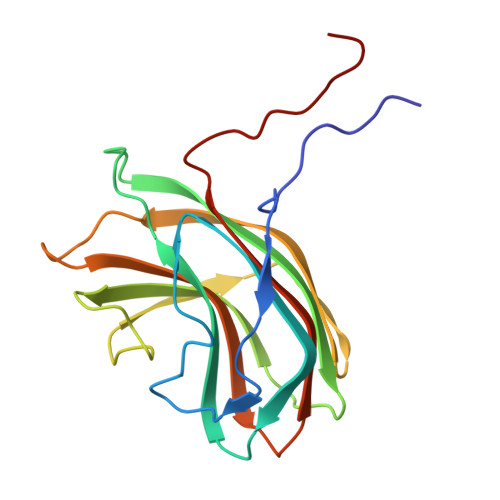
Many important biological functions arise not from single genes but from complex interactions encoded by entire genomes. We report the first generative design of complete bacteriophage genomes using genome language models. We generated viable bacteriophages with target host tropism, using the phage ΦX174 as our design template. Experimental testing yielded 16 phages with diverse fitness profiles in laboratory conditions. Cryo-electron microscopy confirmed that a generated phage utilizes an evolutionarily distant DNA packaging protein in its capsid. A cocktail of generated phages rapidly overcomes ΦX174-resistant Escherichia coli strains, demonstrating a path toward artificial intelligence-generated phage therapies against rapidly evolving bacterial pathogens. This work provides a blueprint for the design of diverse synthetic bacteriophages and useful biological systems at the genome scale.
- Department of Bioengineering, Stanford University, Stanford, CA, USA.
Organizational Affiliation: