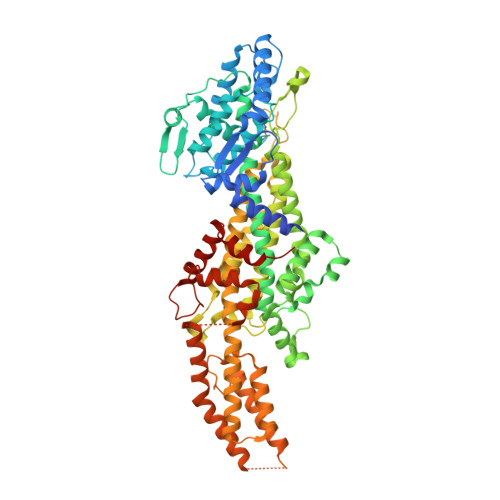
2YII | pdb_00002yii

Manipulating the regioselectivity of phenylalanine aminomutase: new insights into the reaction mechanism of MIO-dependent enzymes from structure-guided directed evolution


Experimental Data Snapshot

  • Method: X-RAY DIFFRACTION
  • Resolution: 2.18 Å
  • R-Value Free: 
    0.214 (Depositor), 0.213 (DCC) 
  • R-Value Work: 
    0.179 (Depositor), 0.180 (DCC) 
  • R-Value Observed: 
    0.181 (Depositor) 

Starting Models: experimental
View more details

wwPDB Validation 3D Report Full Report

Validation slider image for 2YII

This is version 2.2 of the entry. See complete history. 

Literature

Mechanism-Inspired Engineering of Phenylalanine Aminomutase for Enhanced Beta-Regioselective Asymmetric Amination of Cinnamates.

Wu, B., Szymanski, W., Wybenga, G.G., Heberling, M.M., Bartsch, S., De Wildeman, S., Poelarends, G.J., Feringa, B.L., Dijkstra, B.W., Janssen, D.B.

(2012) Angew Chem Int Ed Engl 51: 482

  • DOI: https://doi.org/10.1002/anie.201106372
  • Primary Citation Related Structures: 
    2YII

  • PubMed Abstract: 

    Turn to switch: A mutant of phenylalanine aminomutase was engineered that can catalyze the regioselective amination of cinnamate derivatives (see scheme, red) to, for example, β-amino acids. This regioselectivity, along with the X-ray crystal structures, suggests two distinct carboxylate binding modes differentiated by C(β)-C(ipso) bond rotation, which determines if β- (see scheme) or α-addition takes place.


  • Organizational Affiliation: 
    • Department of Biochemistry, Groningen Biomolecular Sciences and Biotechnology Institute, University of Groningen, Nijenborgh 4, 9747 AG, Groningen, The Netherlands.

Macromolecule Content 

  • Total Structure Weight: 311.12 kDa 
  • Atom Count: 20,965 
  • Modeled Residue Count: 2,585 
  • Deposited Residue Count: 2,820 
  • Unique protein chains: 1

Macromolecules

Find similar proteins by:|  3D Structure
Entity ID: 1
MoleculeChains  Sequence LengthOrganismDetailsImage
PHENYLALANINE AMMONIA-LYASE
A, B, C, D
705Taxus chinensisMutation(s): 1 
EC: 5.4.3 (PDB Primary Data), 4.3.1.24 (PDB Primary Data), 5.4.3.10 (UniProt)
UniProt
Find proteins for Q68G84 (Taxus chinensis)
Explore Q68G84 
Go to UniProtKB:  Q68G84
Entity Groups
Sequence Clusters30% Identity50% Identity70% Identity90% Identity95% Identity100% Identity
UniProt GroupQ68G84
Sequence Annotations
Expand
Reference Sequence

Small Molecules

Ligands 3 Unique
IDChains Name / Formula / InChI Key2D Diagram3D Interactions
GOL

Query on GOL


Download:Ideal Coordinates CCD File
J [auth B]GLYCEROL
C3 H8 O3
PEDCQBHIVMGVHV-UHFFFAOYSA-N
BME

Query on BME


Download:Ideal Coordinates CCD File
E [auth A]
F [auth A]
H [auth B]
I [auth B]
L [auth C]
E [auth A],
F [auth A],
H [auth B],
I [auth B],
L [auth C],
M [auth C],
O [auth D],
P [auth D]
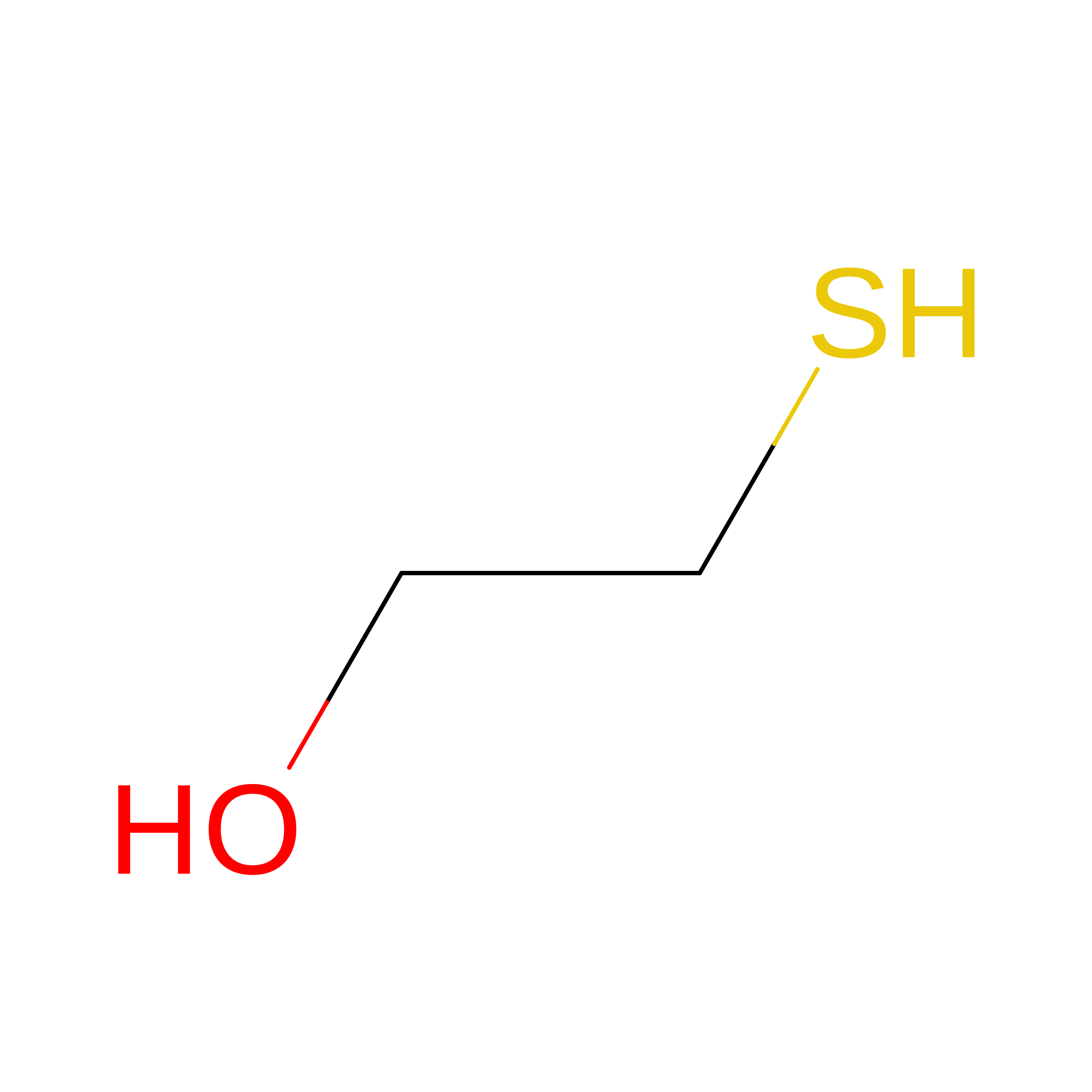
BETA-MERCAPTOETHANOL
C2 H6 O S
DGVVWUTYPXICAM-UHFFFAOYSA-N
FMT

Query on FMT


Download:Ideal Coordinates CCD File
G [auth A],
K [auth B],
N [auth C],
Q [auth D]
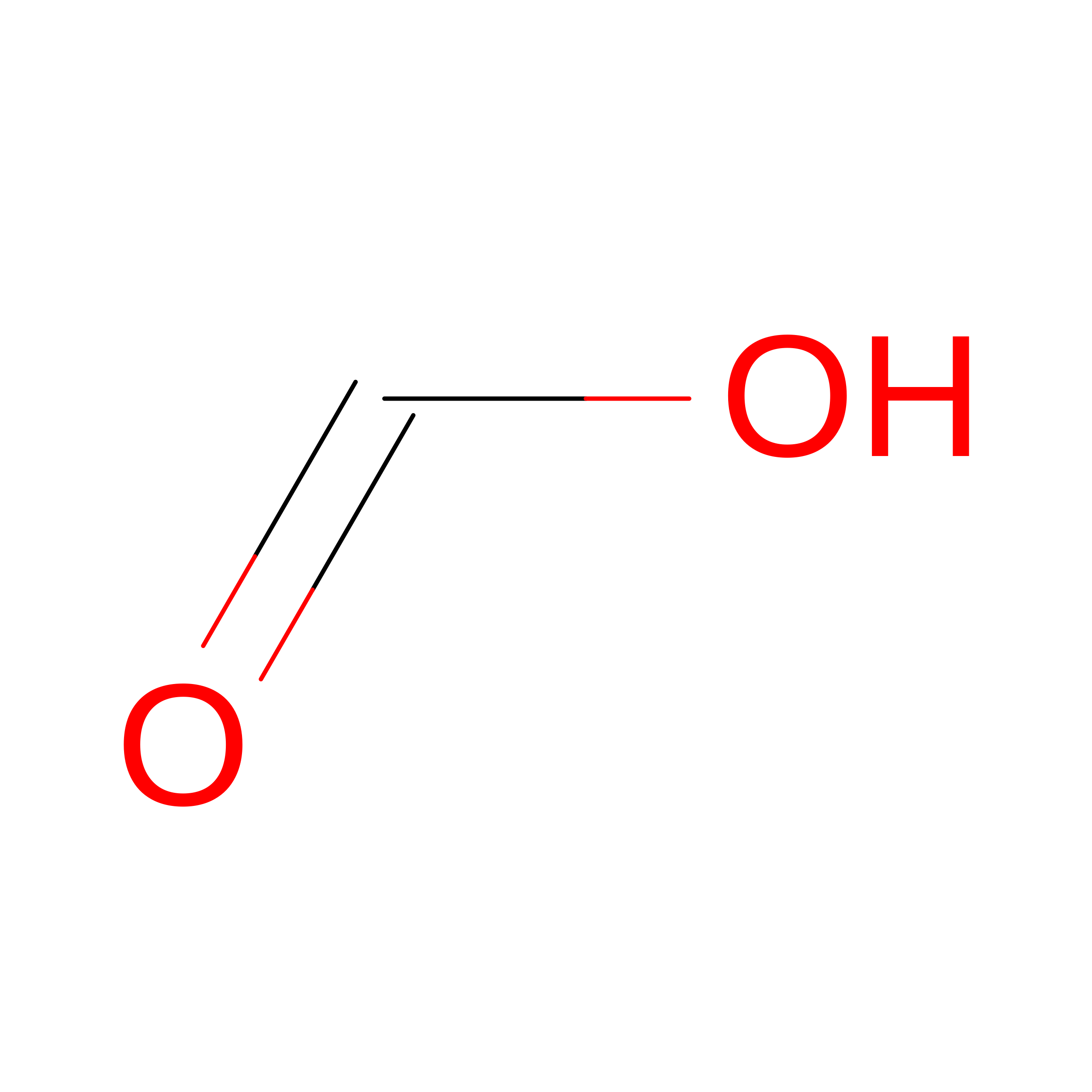
FORMIC ACID
C H2 O2
BDAGIHXWWSANSR-UHFFFAOYSA-N
Modified Residues  1 Unique
IDChains TypeFormula2D DiagramParent
MDO
Query on MDO
A, B, C, D
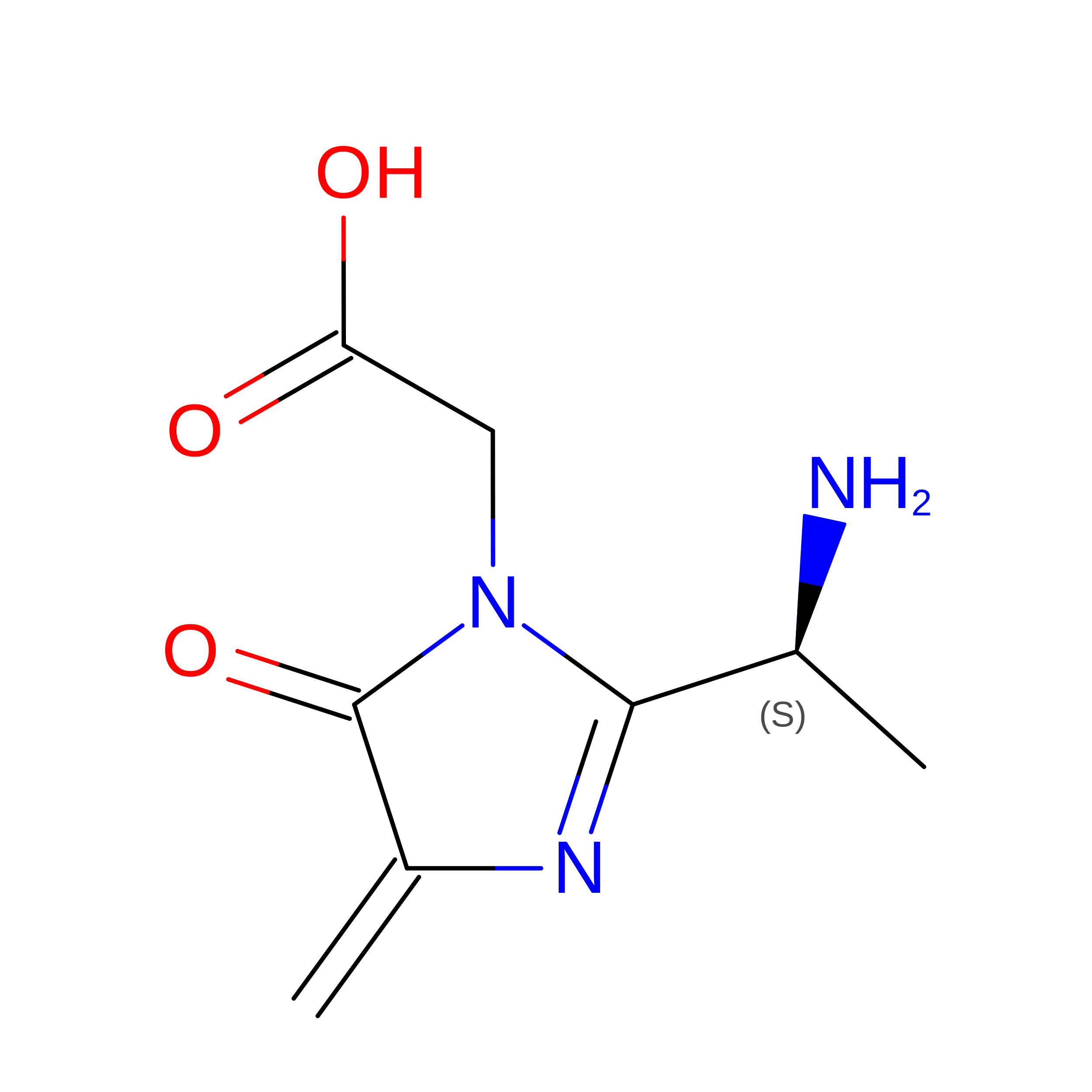
L-PEPTIDE LINKINGC8 H11 N3 O3ALA, SER, GLY

Experimental Data & Validation

Experimental Data

  • Method: X-RAY DIFFRACTION
  • Resolution: 2.18 Å
  • R-Value Free:  0.214 (Depositor), 0.213 (DCC) 
  • R-Value Work:  0.179 (Depositor), 0.180 (DCC) 
  • R-Value Observed: 0.181 (Depositor) 
Space Group: P 1 21 1
Unit Cell:
Length ( Å )Angle ( ˚ )
a = 99.454α = 90
b = 145.999β = 99.51
c = 99.68γ = 90
Software Package:
Software NamePurpose
REFMACrefinement
XDSdata reduction
SCALAdata scaling
PHASERphasing

Structure Validation

View Full Validation Report


Entry History 

Deposition Data

Revision History  (Full details and data files)

  • Version 1.0: 2011-11-09
    Type: Initial release
  • Version 1.1: 2012-01-25
    Changes: Other
  • Version 1.2: 2013-01-30
    Changes: Database references
  • Version 1.3: 2019-10-23
    Changes: Data collection, Database references, Derived calculations, Other
  • Version 2.0: 2023-11-15
    Changes: Atomic model, Data collection, Database references, Derived calculations
  • Version 2.1: 2023-12-20
    Changes: Refinement description
  • Version 2.2: 2025-10-01
    Changes: Advisory, Derived calculations, Structure summary