2YP8 | pdb_00002yp8

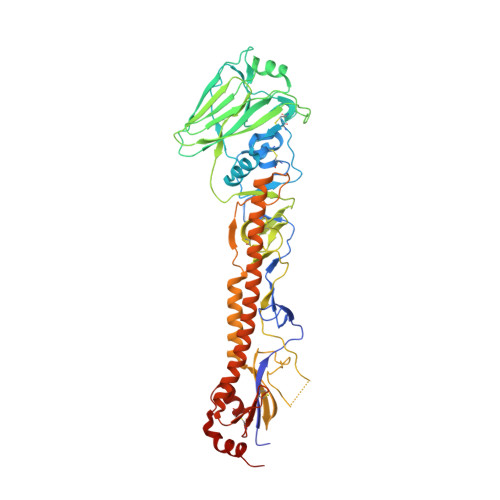
Haemagglutinin of 2005 Human H3N2 Virus in Complex with Human Receptor Analogue 6SLN


Experimental Data Snapshot

  • Method: X-RAY DIFFRACTION
  • Resolution: 1.80 Å
  • R-Value Free: 
    0.198 (Depositor), 0.201 (DCC) 
  • R-Value Work: 
    0.173 (Depositor), 0.180 (DCC) 
  • R-Value Observed: 
    0.174 (Depositor) 

wwPDB Validation 3D Report Full Report

Validation slider image for 2YP8

Ligand Structure Quality Assessment 


This is version 2.1 of the entry. See complete history

Literature

Evolution of the Receptor Binding Properties of the Influenza A(H3N2) Hemagglutinin.

Lin, Y.P.Xiong, X.Wharton, S.A.Martin, S.R.Coombs, P.J.Vachieri, S.G.Christodoulou, E.Walker, P.A.Liu, J.Skehel, J.J.Gamblin, S.J.Hay, A.J.Daniels, R.S.Mccauley, J.W.

(2012) Proc Natl Acad Sci U S A 109: 21474

  • DOI: https://doi.org/10.1073/pnas.1218841110
  • Primary Citation Related Structures: 
    2YP2, 2YP3, 2YP4, 2YP5, 2YP7, 2YP8, 2YP9, 2YPG

  • PubMed Abstract: 

    The hemagglutinin (HA) of influenza A(H3N2) virus responsible for the 1968 influenza pandemic derived from an avian virus. On introduction into humans, its receptor binding properties had changed from a preference for avian receptors (α2,3-linked sialic acid) to a preference for human receptors (α2,6-linked sialic acid). By 2001, the avidity of human H3 viruses for avian receptors had declined, and since then the affinity for human receptors has also decreased significantly. These changes in receptor binding, which correlate with increased difficulties in virus propagation in vitro and in antigenic analysis, have been assessed by virus hemagglutination of erythrocytes from different species and quantified by measuring virus binding to receptor analogs using surface biolayer interferometry. Crystal structures of HA-receptor analog complexes formed with HAs from viruses isolated in 2004 and 2005 reveal significant differences in the conformation of the 220-loop of HA1, relative to the 1968 structure, resulting in altered interactions between the HA and the receptor analog that explain the changes in receptor affinity. Site-specific mutagenesis shows the HA1 Asp-225→Asn substitution to be the key determinant of the decreased receptor binding in viruses circulating since 2005. Our results indicate that the evolution of human influenza A(H3N2) viruses since 1968 has produced a virus with a low propensity to bind human receptor analogs, and this loss of avidity correlates with the marked reduction in A(H3N2) virus disease impact in the last 10 y.


  • Organizational Affiliation
    • Division of Virology, Medical Research Council National Institute for Medical Research, London NW7 1AA, United Kingdom.

Macromolecule Content 

  • Total Structure Weight: 60.01 kDa 
  • Atom Count: 4,654 
  • Modeled Residue Count: 490 
  • Deposited Residue Count: 503 
  • Unique protein chains: 1

Macromolecules

Find similar proteins by:|  3D Structure
Entity ID: 1
MoleculeChains  Sequence LengthOrganismDetailsImage
HEMAGGLUTININ503Influenza A virusMutation(s): 1 
UniProt
Find proteins for I2D7A8 (Influenza A virus)
Explore I2D7A8 
Go to UniProtKB:  I2D7A8
Entity Groups
Sequence Clusters30% Identity50% Identity70% Identity90% Identity95% Identity100% Identity
UniProt GroupI2D7A8
Glycosylation
Glycosylation Sites: 8
Sequence Annotations
Expand
Reference Sequence

Oligosaccharides

Help  
Entity ID: 2
MoleculeChains Length2D Diagram GlycosylationD Interactions
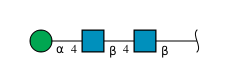
alpha-D-mannopyranose-(1-4)-2-acetamido-2-deoxy-beta-D-glucopyranose-(1-4)-2-acetamido-2-deoxy-beta-D-glucopyranose
B
3N-Glycosylation
Glycosylation Resources
GlyTouCan: G62182OO
GlyCosmos: G62182OO
GlyGen: G62182OO
Entity ID: 3
MoleculeChains Length2D Diagram GlycosylationD Interactions
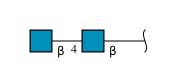
2-acetamido-2-deoxy-beta-D-glucopyranose-(1-4)-2-acetamido-2-deoxy-beta-D-glucopyranose
C
2N-Glycosylation
Glycosylation Resources
GlyTouCan: G42666HT
GlyCosmos: G42666HT
GlyGen: G42666HT

Small Molecules

Ligands 4 Unique
IDChains Name / Formula / InChI Key2D Diagram3D Interactions
SIA

Query on SIA


Download:Ideal Coordinates CCD File
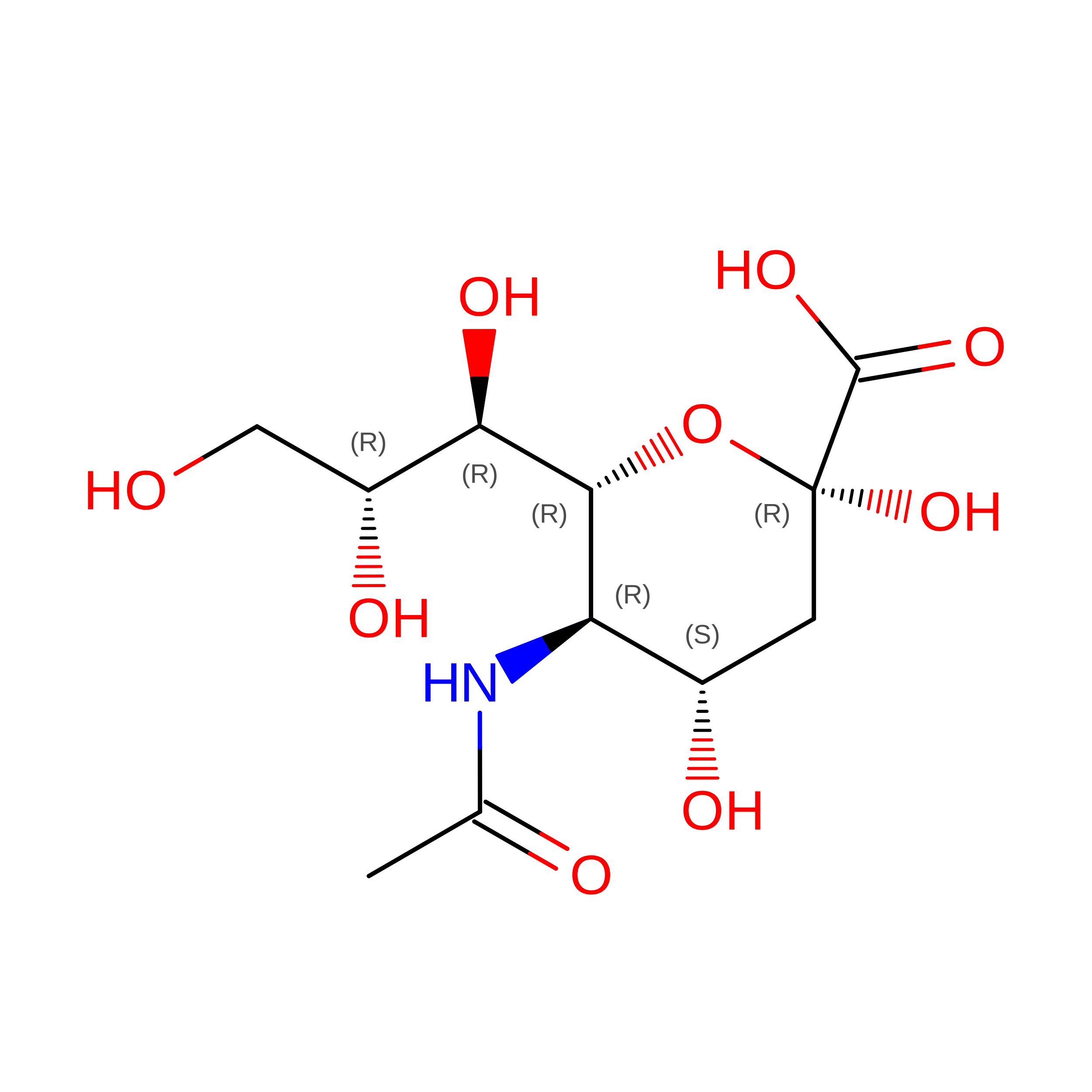
N [auth A]N-acetyl-alpha-neuraminic acid
C11 H19 N O9
SQVRNKJHWKZAKO-YRMXFSIDSA-N
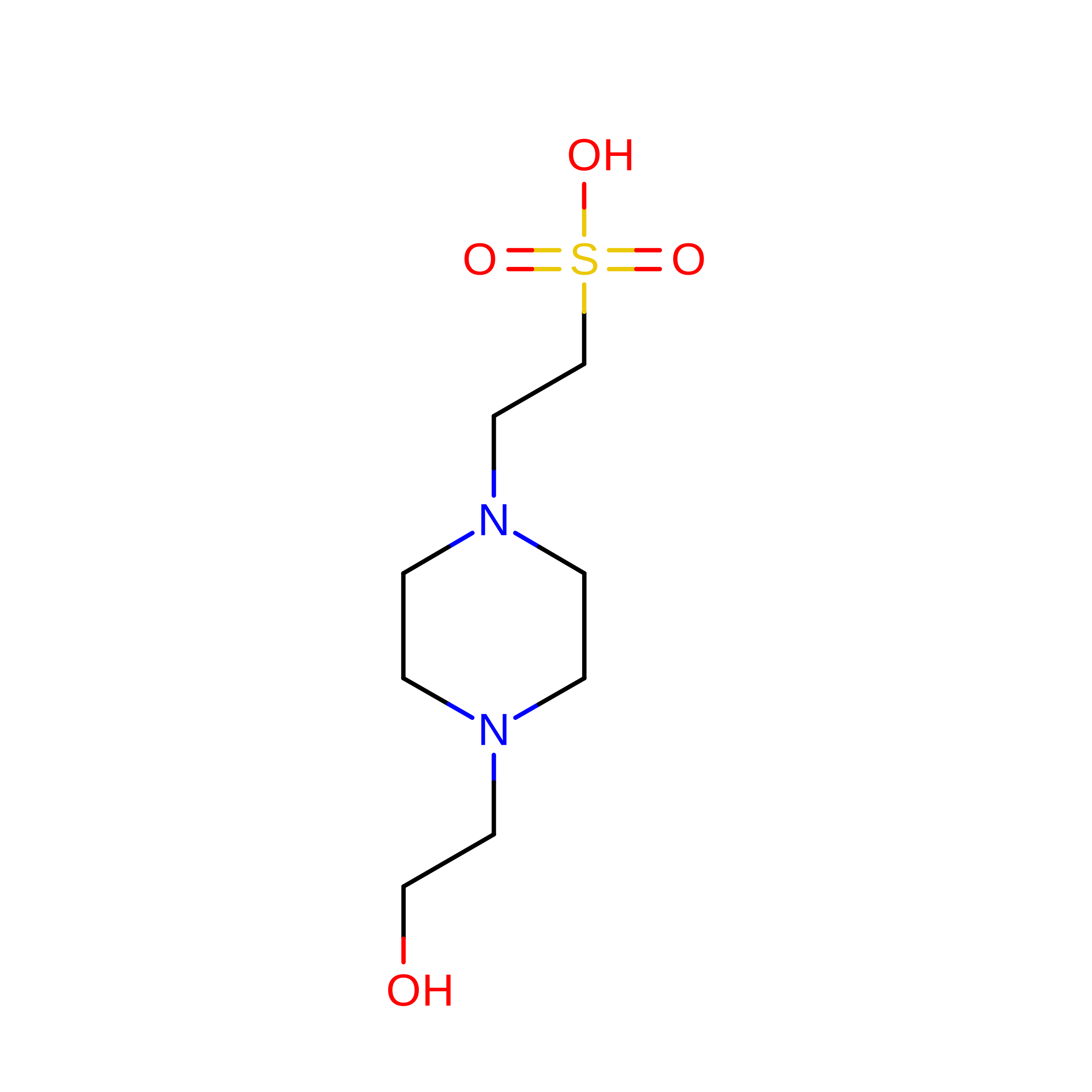
EPE

Query on EPE


Download:Ideal Coordinates CCD File
J [auth A],
K [auth A],
L [auth A]
4-(2-HYDROXYETHYL)-1-PIPERAZINE ETHANESULFONIC ACID
C8 H18 N2 O4 S
JKMHFZQWWAIEOD-UHFFFAOYSA-N
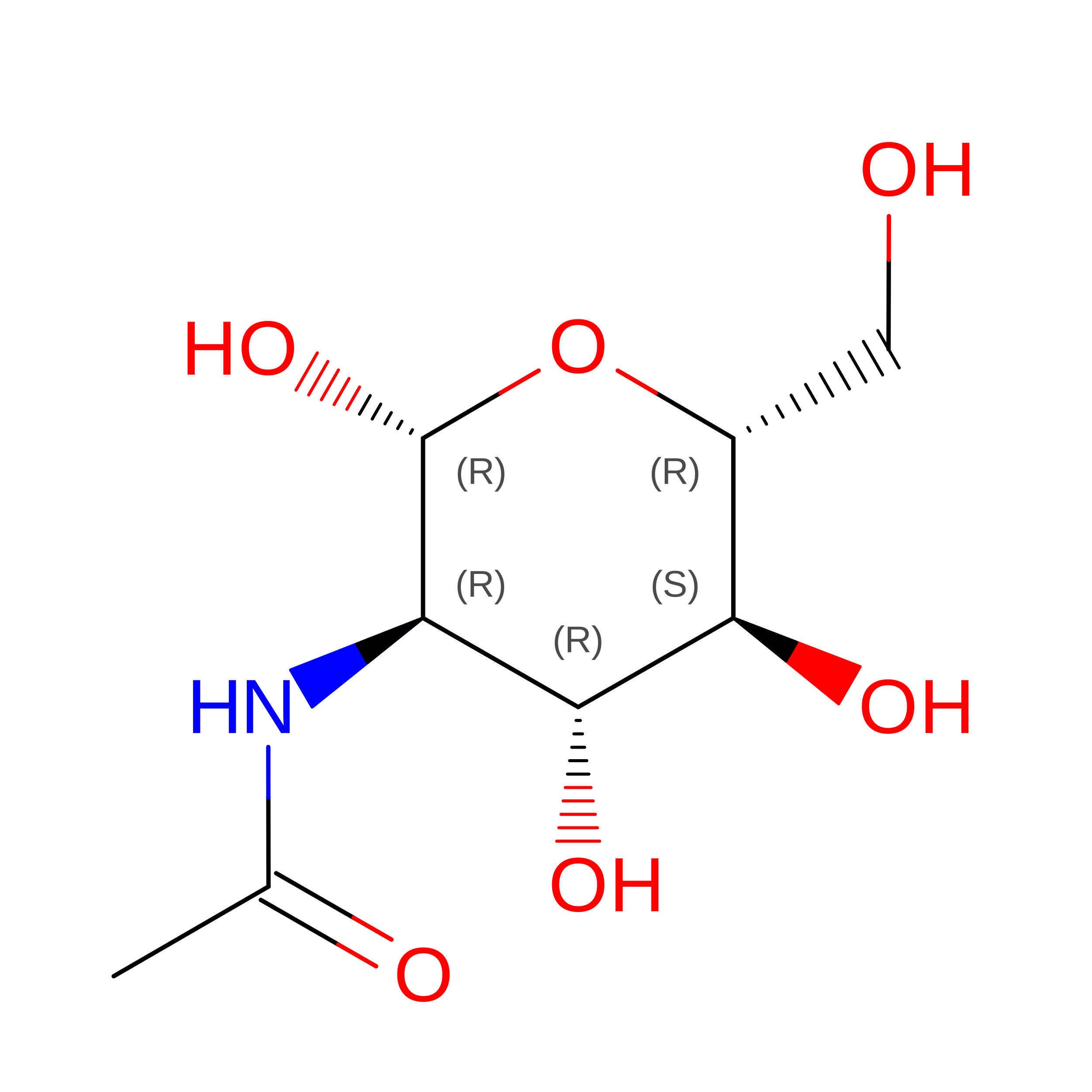
NAG

Query on NAG


Download:Ideal Coordinates CCD File
D [auth A]
E [auth A]
F [auth A]
G [auth A]
H [auth A]
D [auth A],
E [auth A],
F [auth A],
G [auth A],
H [auth A],
I [auth A]
2-acetamido-2-deoxy-beta-D-glucopyranose
C8 H15 N O6
OVRNDRQMDRJTHS-FMDGEEDCSA-N
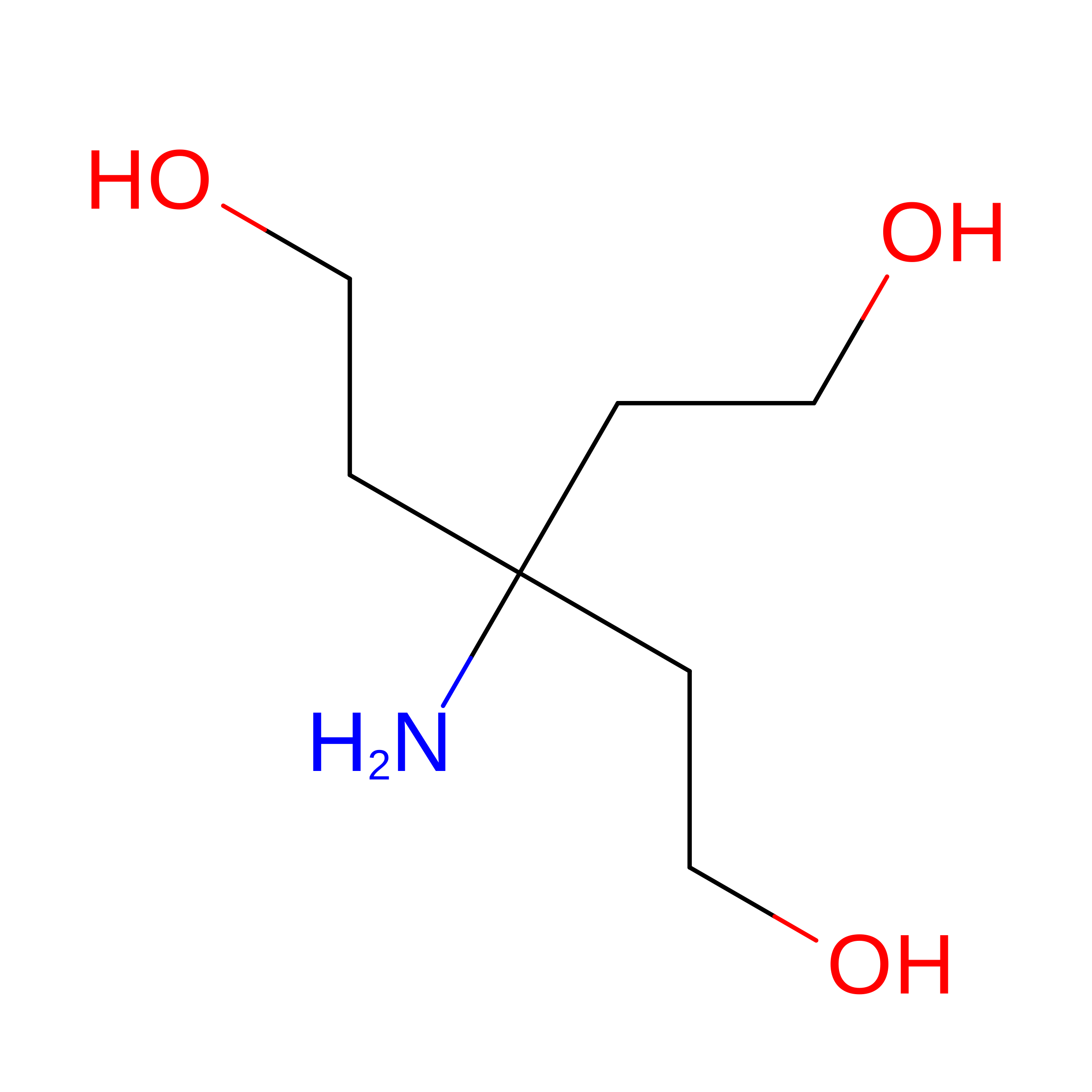
TAM

Query on TAM


Download:Ideal Coordinates CCD File
M [auth A]TRIS(HYDROXYETHYL)AMINOMETHANE
C7 H17 N O3
GKODZWOPPOTFGA-UHFFFAOYSA-N

Experimental Data & Validation

Experimental Data

  • Method: X-RAY DIFFRACTION
  • Resolution: 1.80 Å
  • R-Value Free:  0.198 (Depositor), 0.201 (DCC) 
  • R-Value Work:  0.173 (Depositor), 0.180 (DCC) 
  • R-Value Observed: 0.174 (Depositor) 
Space Group: H 3 2
Unit Cell:
Length ( Å )Angle ( ˚ )
a = 100.92α = 90
b = 100.92β = 90
c = 386.69γ = 120
Software Package:
Software NamePurpose
REFMACrefinement
MOSFLMdata reduction
SCALAdata scaling
PHASERphasing

Structure Validation

View Full Validation Report


Ligand Structure Quality Assessment 


Entry History 

Revision History  (Full details and data files)

  • Version 1.0: 2012-11-07
    Type: Initial release
  • Version 1.1: 2012-12-26
    Changes: Database references, Structure summary
  • Version 1.2: 2013-01-16
    Changes: Database references
  • Version 1.3: 2019-05-08
    Changes: Data collection, Derived calculations, Experimental preparation, Other
  • Version 2.0: 2020-07-29
    Type: Remediation
    Reason: Carbohydrate remediation
    Changes: Advisory, Atomic model, Data collection, Derived calculations, Other, Structure summary
  • Version 2.1: 2024-11-06
    Changes: Data collection, Database references, Structure summary