2WHR | pdb_00002whr

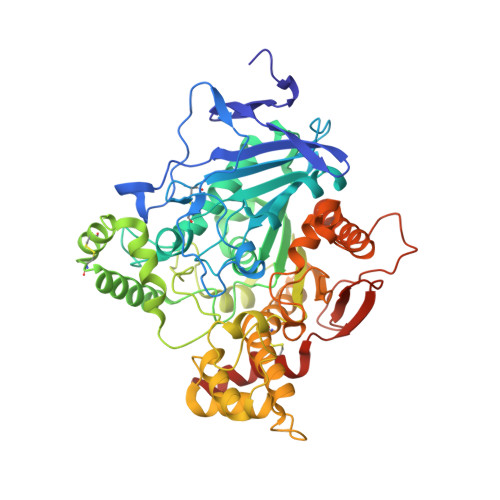
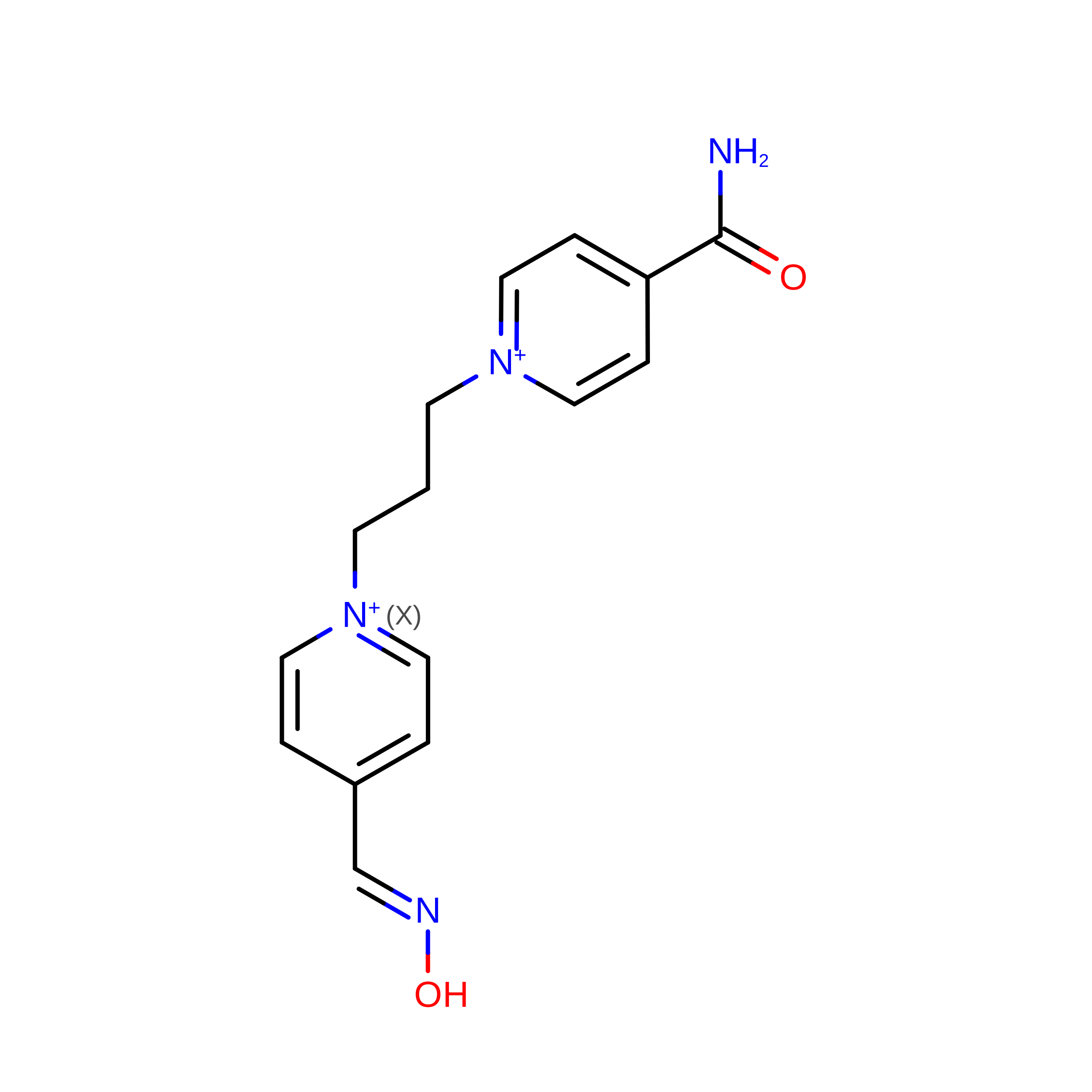
Crystal structure of acetylcholinesterase in complex with K027


Experimental Data Snapshot

  • Method: X-RAY DIFFRACTION
  • Resolution: 2.54 Å
  • R-Value Free: 
    0.219 (Depositor), 0.196 (DCC) 
  • R-Value Work: 
    0.170 (Depositor) 
  • R-Value Observed: 
    0.171 (Depositor) 

Starting Model: experimental
View more details

wwPDB Validation 3D Report Full Report

Validation slider image for 2WHR

Ligand Structure Quality Assessment 


This is version 1.7 of the entry. See complete history

Literature

Structure of Hi-6Sarin-Acetylcholinesterase Determined by X-Ray Crystallography and Molecular Dynamics Simulation: Reactivator Mechanism and Design.

Ekstrom, F.Hornberg, A.Artursson, E.Hammarstrom, L.-G.Schneider, G.Pang, Y.-P.

(2009) PLoS One 4: E5957

  • DOI: https://doi.org/10.1371/journal.pone.0005957
  • Primary Citation Related Structures: 
    2WHP, 2WHQ, 2WHR

  • PubMed Abstract: 

    Organophosphonates such as isopropyl metylphosphonofluoridate (sarin) are extremely toxic as they phosphonylate the catalytic serine residue of acetylcholinesterase (AChE), an enzyme essential to humans and other species. Design of effective AChE reactivators as antidotes to various organophosphonates requires information on how the reactivators interact with the phosphonylated AChEs. However, such information has not been available hitherto because of three main challenges. First, reactivators are generally flexible in order to change from the ground state to the transition state for reactivation; this flexibility discourages determination of crystal structures of AChE in complex with effective reactivators that are intrinsically disordered. Second, reactivation occurs upon binding of a reactivator to the phosphonylated AChE. Third, the phosphorous conjugate can develop resistance to reactivation. We have identified crystallographic conditions that led to the determination of a crystal structure of the sarin(nonaged)-conjugated mouse AChE in complex with [(E)-[1-[(4-carbamoylpyridin-1-ium-1-yl)methoxymethyl]pyridin-2-ylidene]methyl]-oxoazanium dichloride (HI-6) at a resolution of 2.2 A. In this structure, the carboxyamino-pyridinium ring of HI-6 is sandwiched by Tyr124 and Trp286, however, the oxime-pyridinium ring is disordered. By combining crystallography with microsecond molecular dynamics simulation, we determined the oxime-pyridinium ring structure, which shows that the oxime group of HI-6 can form a hydrogen-bond network to the sarin isopropyl ether oxygen, and a water molecule is able to form a hydrogen bond to the catalytic histidine residue and subsequently deprotonates the oxime for reactivation. These results offer insights into the reactivation mechanism of HI-6 and design of better reactivators.


  • Organizational Affiliation
    • Swedish Defence Research Agency, CBRN Defence and Security, Umeå, Sweden. fredrik.ekstrom@foi.se

Macromolecule Content 

  • Total Structure Weight: 122.71 kDa 
  • Atom Count: 9,160 
  • Modeled Residue Count: 1,069 
  • Deposited Residue Count: 1,096 
  • Unique protein chains: 1

Macromolecules

Find similar proteins by:|  3D Structure
Entity ID: 1
MoleculeChains  Sequence LengthOrganismDetailsImage
ACETYLCHOLINESTERASE
A, B
548Mus musculusMutation(s): 0 
EC: 3.1.1.7
UniProt & NIH Common Fund Data Resources
Find proteins for P21836 (Mus musculus)
Explore P21836 
Go to UniProtKB:  P21836
IMPC:  MGI:87876
Entity Groups
Sequence Clusters30% Identity50% Identity70% Identity90% Identity95% Identity100% Identity
UniProt GroupP21836
Glycosylation
Glycosylation Sites: 2Go to GlyGen: P21836-1
Sequence Annotations
Expand
Reference Sequence

Small Molecules

Ligands 7 Unique
IDChains Name / Formula / InChI Key2D Diagram3D Interactions
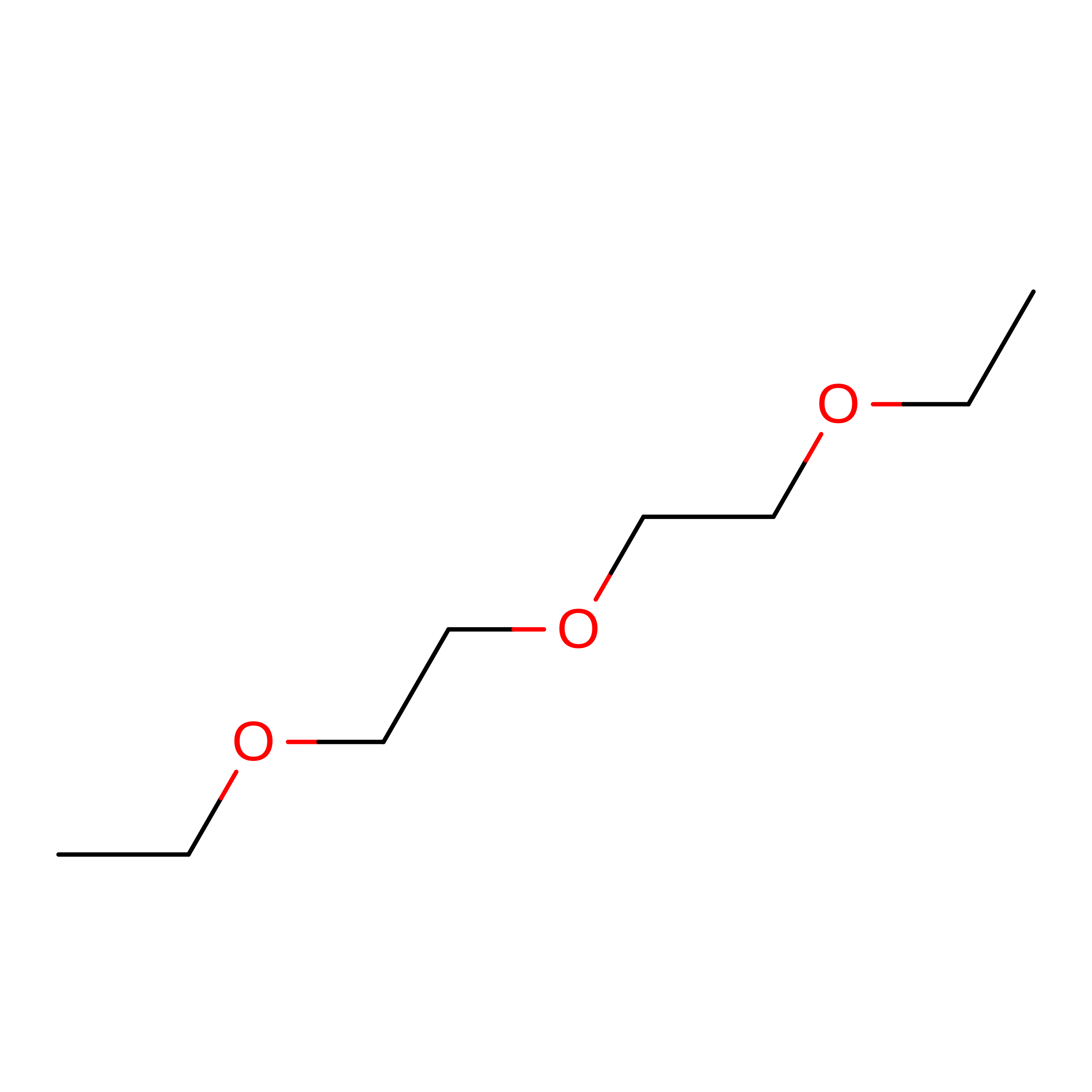
PE4

Query on PE4


Download:Ideal Coordinates CCD File
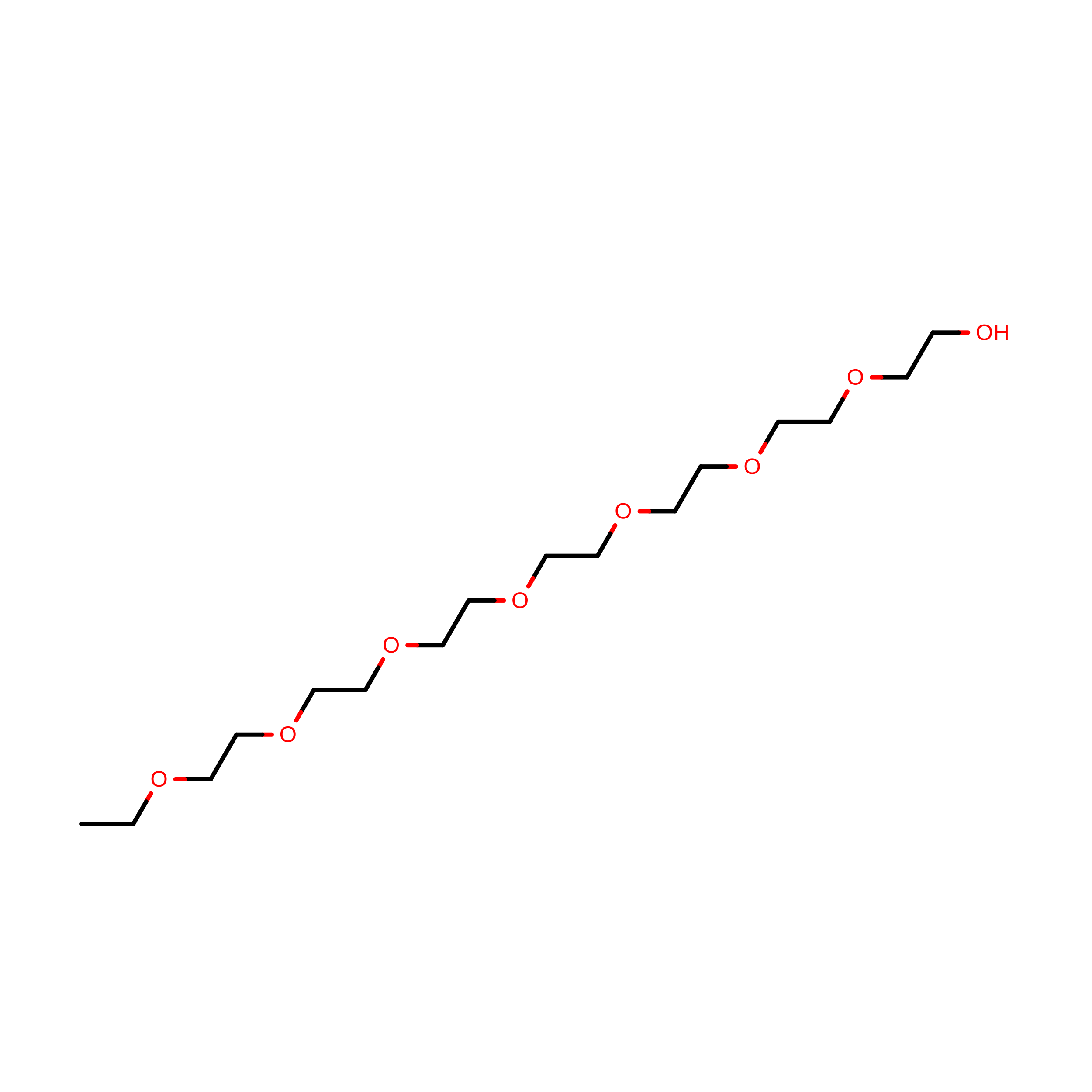
L [auth B]2-{2-[2-(2-{2-[2-(2-ETHOXY-ETHOXY)-ETHOXY]-ETHOXY}-ETHOXY)-ETHOXY]-ETHOXY}-ETHANOL
C16 H34 O8
PJWQOENWHPEPKI-UHFFFAOYSA-N
K27

Query on K27


Download:Ideal Coordinates CCD File
C [auth A],
I [auth B]
4-carbamoyl-1-(3-{4-[(E)-(hydroxyimino)methyl]pyridinium-1-yl}propyl)pyridinium
C15 H18 N4 O2
KCCVYOKFPFWMQG-UHFFFAOYSA-P
NAG

Query on NAG


Download:Ideal Coordinates CCD File
D [auth A],
E [auth A]
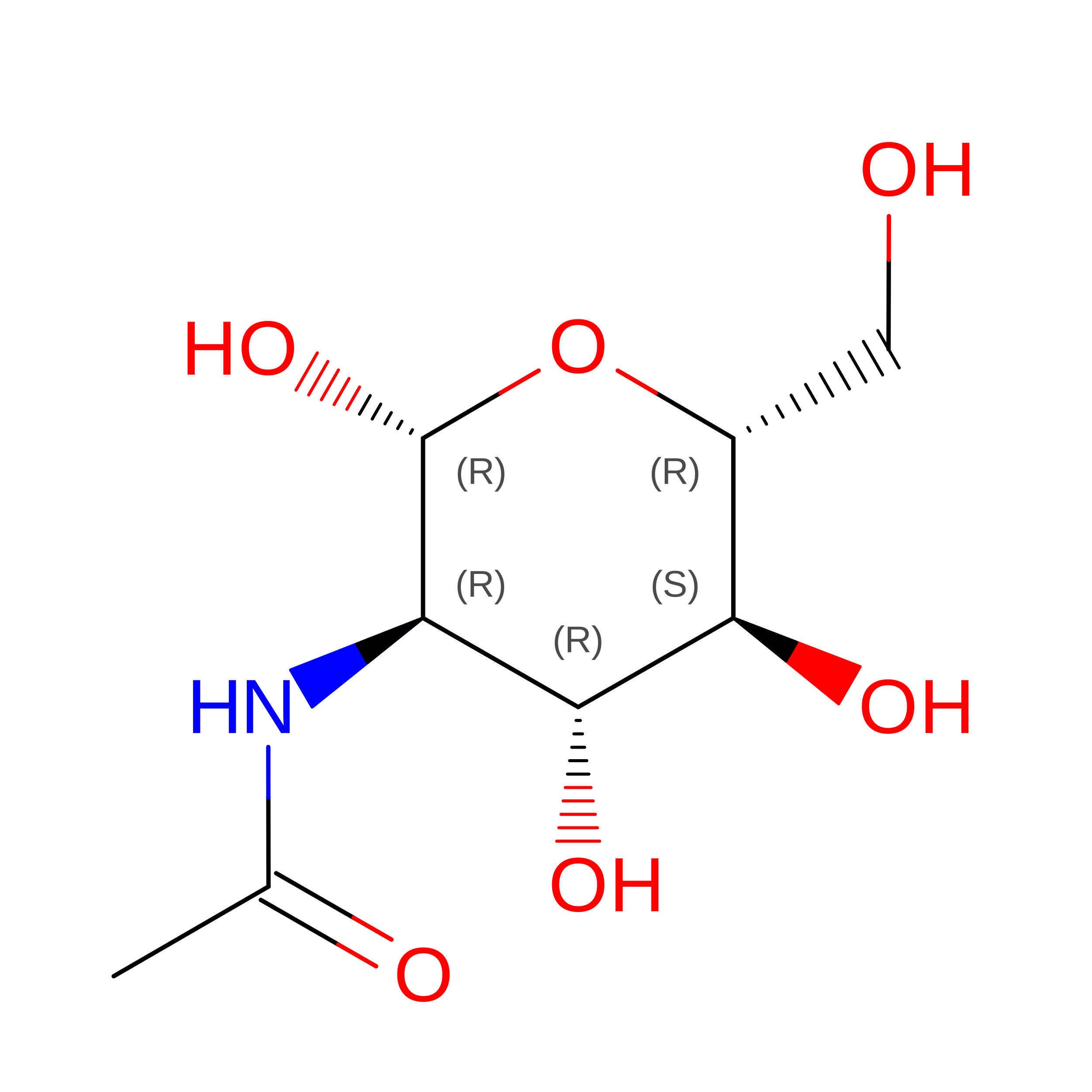
2-acetamido-2-deoxy-beta-D-glucopyranose
C8 H15 N O6
OVRNDRQMDRJTHS-FMDGEEDCSA-N
P4G

Query on P4G


Download:Ideal Coordinates CCD File
G [auth A],
M [auth B],
N [auth B]
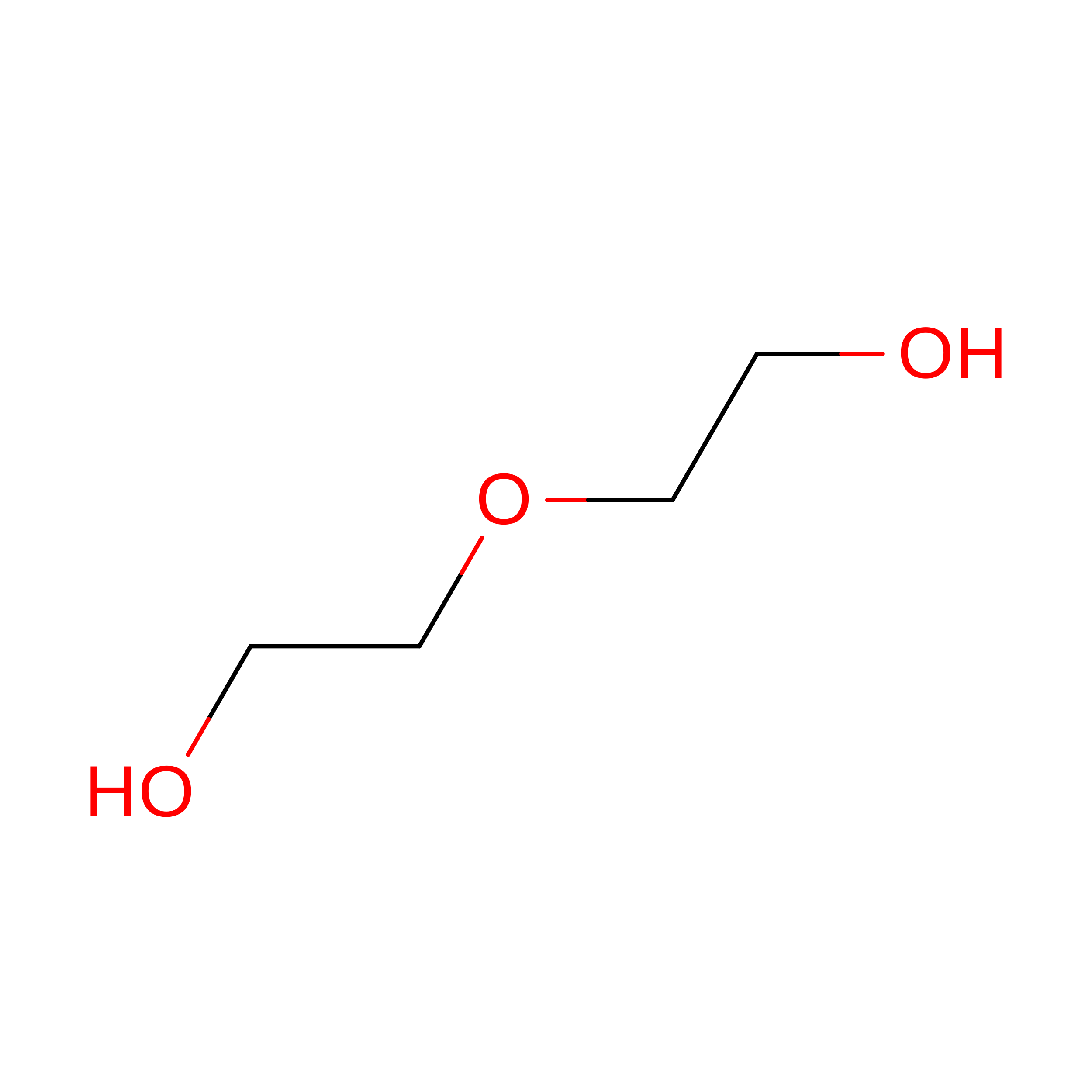
1-ETHOXY-2-(2-ETHOXYETHOXY)ETHANE
C8 H18 O3
RRQYJINTUHWNHW-UHFFFAOYSA-N
PEG

Query on PEG


Download:Ideal Coordinates CCD File
K [auth B]DI(HYDROXYETHYL)ETHER
C4 H10 O3
MTHSVFCYNBDYFN-UHFFFAOYSA-N
BR

Query on BR


Download:Ideal Coordinates CCD File
F [auth A],
J [auth B]
BROMIDE ION
Br
CPELXLSAUQHCOX-UHFFFAOYSA-M
CO3

Query on CO3


Download:Ideal Coordinates CCD File
H [auth A],
O [auth B]
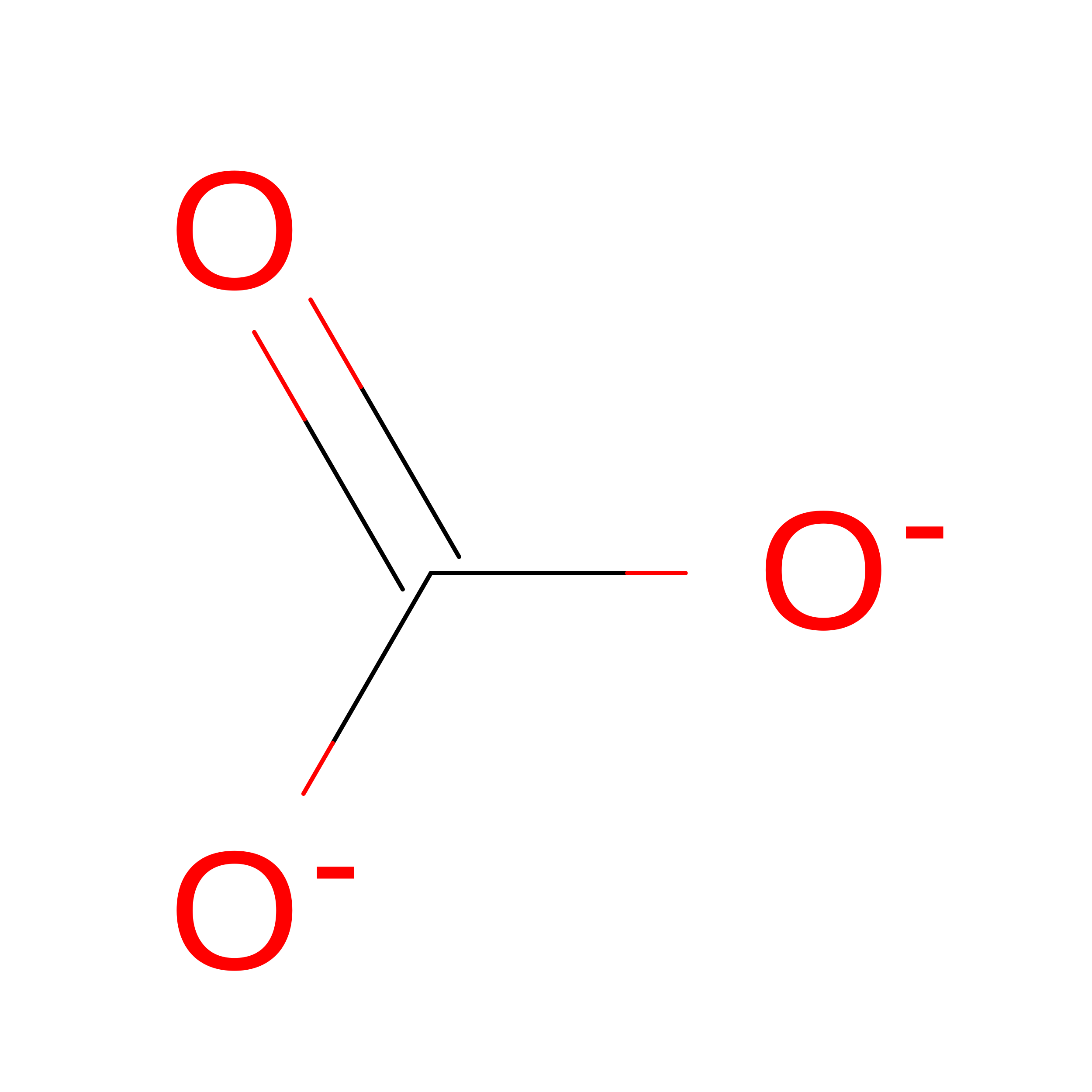
CARBONATE ION
C O3
BVKZGUZCCUSVTD-UHFFFAOYSA-L

Experimental Data & Validation

Experimental Data

  • Method: X-RAY DIFFRACTION
  • Resolution: 2.54 Å
  • R-Value Free:  0.219 (Depositor), 0.196 (DCC) 
  • R-Value Work:  0.170 (Depositor) 
  • R-Value Observed: 0.171 (Depositor) 
Space Group: P 21 21 21
Unit Cell:
Length ( Å )Angle ( ˚ )
a = 78.32α = 90
b = 111.41β = 90
c = 226.85γ = 90
Software Package:
Software NamePurpose
PHENIXrefinement
XDSdata reduction
SCALAdata scaling
REFMACphasing

Structure Validation

View Full Validation Report


Ligand Structure Quality Assessment 


Entry History 

Deposition Data

Revision History  (Full details and data files)

  • Version 1.0: 2009-05-26
    Type: Initial release
  • Version 1.1: 2011-05-08
    Changes: Version format compliance
  • Version 1.2: 2011-07-13
    Changes: Version format compliance
  • Version 1.3: 2018-01-17
    Changes: Data collection
  • Version 1.4: 2020-07-29
    Type: Remediation
    Reason: Carbohydrate remediation
    Changes: Data collection, Derived calculations, Other, Structure summary
  • Version 1.5: 2021-05-12
    Changes: Derived calculations, Structure summary
  • Version 1.6: 2023-12-13
    Changes: Data collection, Database references, Refinement description
  • Version 1.7: 2024-11-06
    Changes: Structure summary