2QT0 | pdb_00002qt0

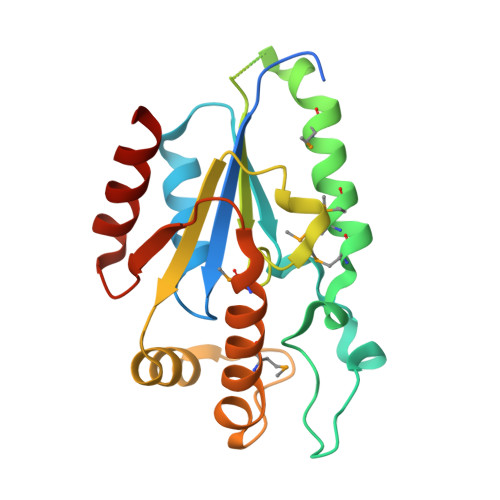
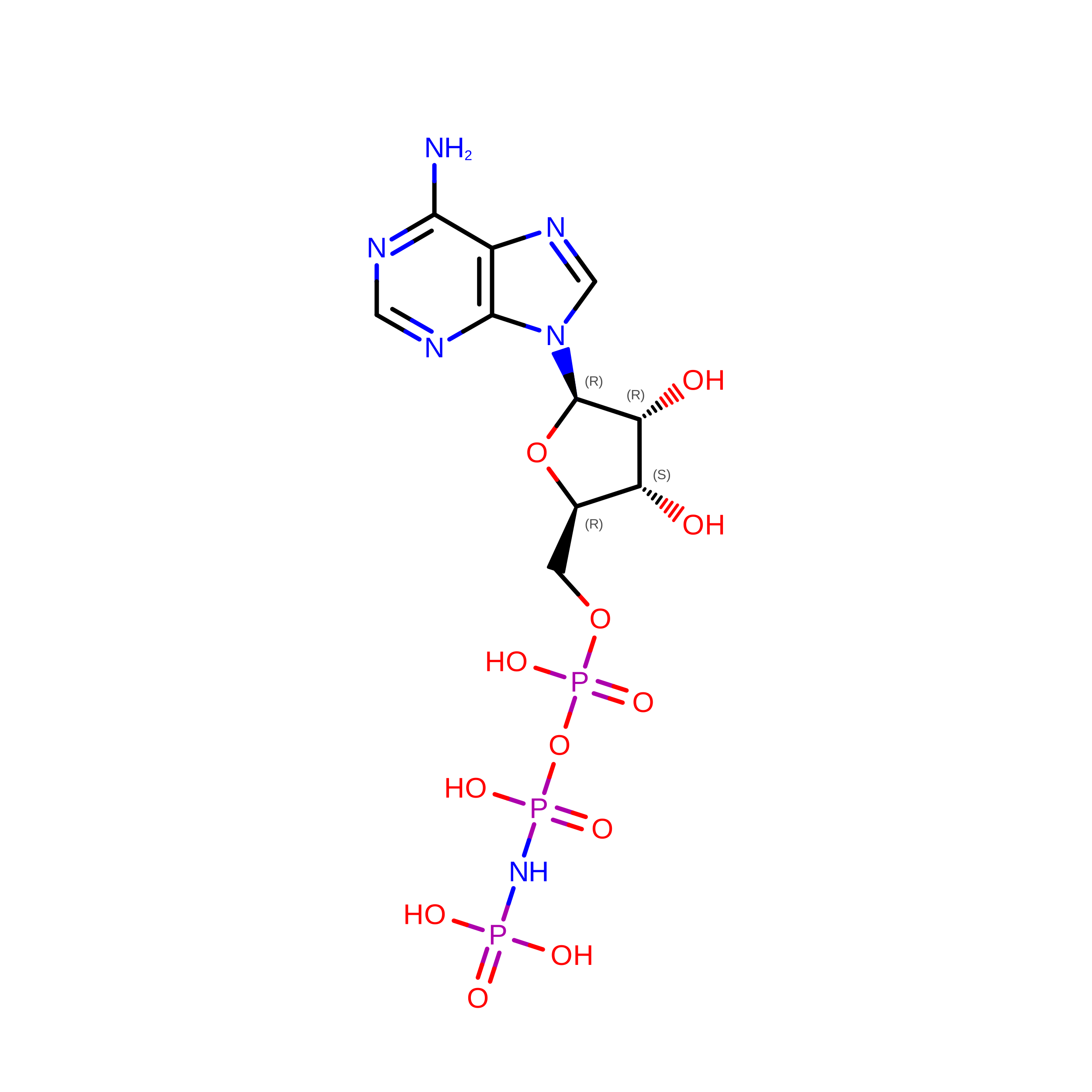
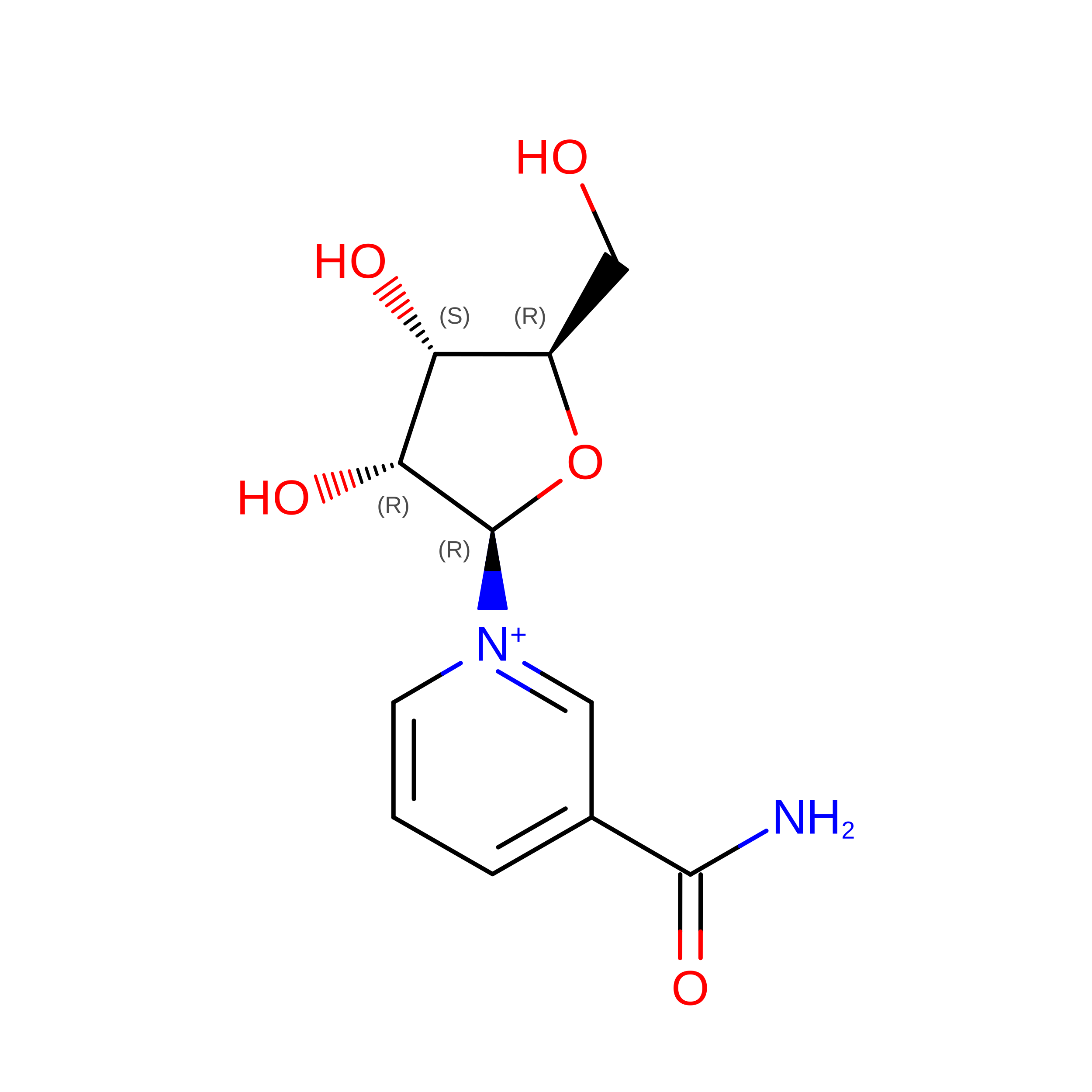
Human nicotinamide riboside kinase 1 in complex with nicotinamide riboside and an ATP analogue


Experimental Data Snapshot

  • Method: X-RAY DIFFRACTION
  • Resolution: 1.92 Å
  • R-Value Free: 
    0.241 (Depositor), 0.244 (DCC) 
  • R-Value Work: 
    0.209 (Depositor), 0.213 (DCC) 

Starting Model: experimental
View more details

wwPDB Validation 3D Report Full Report

Validation slider image for 2QT0

Ligand Structure Quality Assessment 


This is version 1.5 of the entry. See complete history

Literature

Nicotinamide Riboside Kinase Structures Reveal New Pathways to NAD(+).

Tempel, W.Rabeh, W.M.Bogan, K.L.Belenky, P.Wojcik, M.Seidle, H.F.Nedyalkova, L.Yang, T.Sauve, A.A.Park, H.W.Brenner, C.

(2007) PLoS Biol 5: e263-e263

  • DOI: https://doi.org/10.1371/journal.pbio.0050263
  • Primary Citation Related Structures: 
    2P0E, 2QSY, 2QSZ, 2QT0, 2QT1

  • PubMed Abstract: 

    The eukaryotic nicotinamide riboside kinase (Nrk) pathway, which is induced in response to nerve damage and promotes replicative life span in yeast, converts nicotinamide riboside to nicotinamide adenine dinucleotide (NAD+) by phosphorylation and adenylylation. Crystal structures of human Nrk1 bound to nucleoside and nucleotide substrates and products revealed an enzyme structurally similar to Rossmann fold metabolite kinases and allowed the identification of active site residues, which were shown to be essential for human Nrk1 and Nrk2 activity in vivo. Although the structures account for the 500-fold discrimination between nicotinamide riboside and pyrimidine nucleosides, no enzyme feature was identified to recognize the distinctive carboxamide group of nicotinamide riboside. Indeed, nicotinic acid riboside is a specific substrate of human Nrk enzymes and is utilized in yeast in a novel biosynthetic pathway that depends on Nrk and NAD+ synthetase. Additionally, nicotinic acid riboside is utilized in vivo by Urh1, Pnp1, and Preiss-Handler salvage. Thus, crystal structures of Nrk1 led to the identification of new pathways to NAD+.


  • Organizational Affiliation
    • Structural Genomics Consortium and Department of Pharmacology, University of Toronto, Toronto, Canada.

Macromolecule Content 

  • Total Structure Weight: 25.16 kDa 
  • Atom Count: 1,542 
  • Modeled Residue Count: 179 
  • Deposited Residue Count: 207 
  • Unique protein chains: 1

Macromolecules

Find similar proteins by:|  3D Structure
Entity ID: 1
MoleculeChains  Sequence LengthOrganismDetailsImage
Nicotinamide riboside kinase 1207Homo sapiensMutation(s): 0 
Gene Names: NRK1C9orf95
EC: 2.7.1 (PDB Primary Data), 2.7.1.22 (UniProt), 2.7.1.173 (UniProt)
UniProt & NIH Common Fund Data Resources
Find proteins for Q9NWW6 (Homo sapiens)
Explore Q9NWW6 
Go to UniProtKB:  Q9NWW6
PHAROS:  Q9NWW6
GTEx:  ENSG00000106733 
Entity Groups
Sequence Clusters30% Identity50% Identity70% Identity90% Identity95% Identity100% Identity
UniProt GroupQ9NWW6
Sequence Annotations
Expand
Reference Sequence

Small Molecules

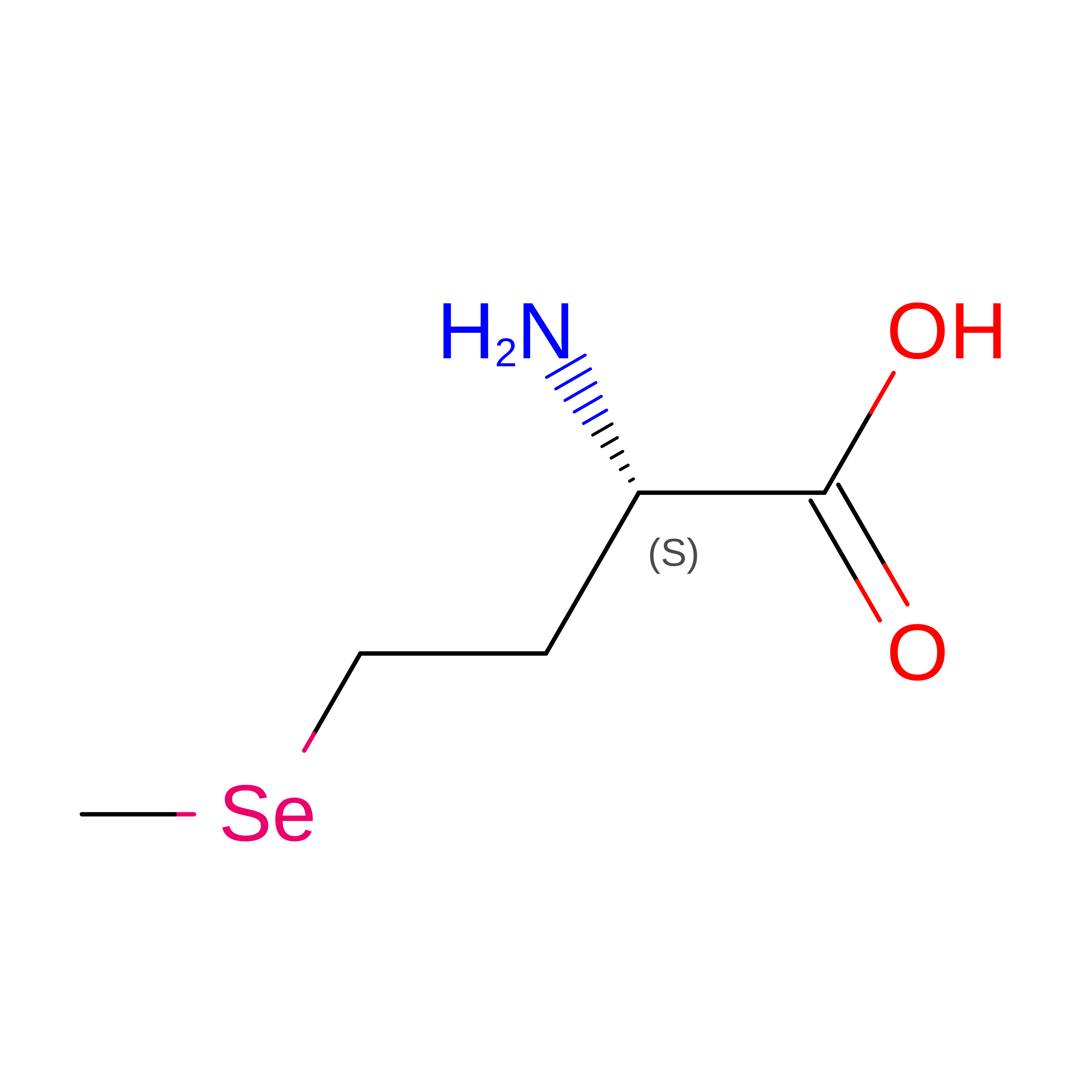
Modified Residues  1 Unique
IDChains TypeFormula2D DiagramParent
MSE
Query on MSE
A
L-PEPTIDE LINKINGC5 H11 N O2 SeMET

Experimental Data & Validation

Experimental Data

  • Method: X-RAY DIFFRACTION
  • Resolution: 1.92 Å
  • R-Value Free:  0.241 (Depositor), 0.244 (DCC) 
  • R-Value Work:  0.209 (Depositor), 0.213 (DCC) 
Space Group: P 41 21 2
Unit Cell:
Length ( Å )Angle ( ˚ )
a = 97.025α = 90
b = 97.025β = 90
c = 44.801γ = 90
Software Package:
Software NamePurpose
DENZOdata reduction
SCALEPACKdata scaling
PHASERphasing
REFMACrefinement
PDB_EXTRACTdata extraction

Structure Validation

View Full Validation Report


Ligand Structure Quality Assessment 


Entry History 

Revision History  (Full details and data files)

  • Version 1.0: 2007-08-14
    Type: Initial release
  • Version 1.1: 2011-07-13
    Changes: Version format compliance
  • Version 1.2: 2017-10-25
    Changes: Refinement description
  • Version 1.3: 2023-08-30
    Changes: Data collection, Database references, Derived calculations, Refinement description
  • Version 1.4: 2023-11-15
    Changes: Data collection
  • Version 1.5: 2024-11-06
    Changes: Structure summary