2QPZ | pdb_00002qpz

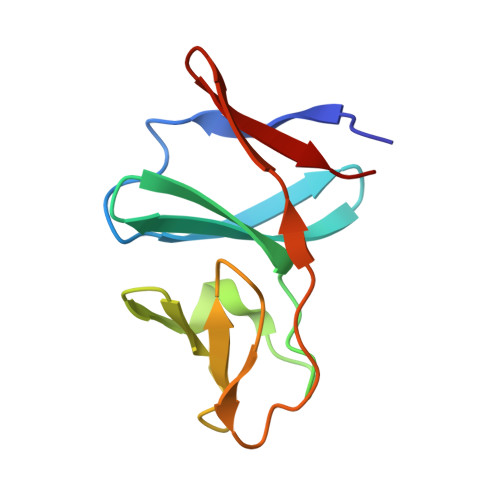
Naphthalene 1,2-dioxygenase Rieske ferredoxin


Experimental Data Snapshot

  • Method: X-RAY DIFFRACTION
  • Resolution: 1.85 Å
  • R-Value Free: 
    0.197 (Depositor), 0.207 (DCC) 
  • R-Value Work: 
    0.154 (Depositor), 0.156 (DCC) 
  • R-Value Observed: 
    0.157 (Depositor) 

Starting Model: experimental
View more details

wwPDB Validation 3D Report Full Report

Validation slider image for 2QPZ

This is version 1.2 of the entry. See complete history

Literature

Determining Rieske cluster reduction potentials.

Brown, E.N.Friemann, R.Karlsson, A.Parales, J.V.Couture, M.M.Eltis, L.D.Ramaswamy, S.

(2008) J Biol Inorg Chem 13: 1301-1313

  • DOI: https://doi.org/10.1007/s00775-008-0413-4
  • Primary Citation Related Structures: 
    2QPZ

  • PubMed Abstract: 

    The Rieske iron-sulfur proteins have reduction potentials ranging from -150 to +400 mV. This enormous range of potentials was first proposed to be due to differing solvent exposure or even protein structure. However, the increasing number of available crystal structures for Rieske iron-sulfur proteins has shown this not to be the case. Colbert and colleagues proposed in 2000 that differences in the electrostatic environment, and not structural differences, of a Rieske proteins are responsible for the wide range of reduction potentials observed. Using computational simulation methods and the newly determined structure of Pseudomonas sp. NCIB 9816-4 naphthalene dioxygenase Rieske ferredoxin (NDO-F9816-4), we have developed a model to predict the reduction potential of Rieske proteins given only their crystal structure. The reduction potential of NDO-F9816-4, determined using a highly oriented pyrolytic graphite electrode, was -150+/-2 mV versus the standard hydrogen electrode. The predicted reduction potentials correlate well with experimentally determined potentials. Given this model, the effect of protein mutations can be evaluated. Our results suggest that the reduction potential of new proteins can be estimated with good confidence from 3D structures of proteins. The structure of NDO-F9816-4 is the most basic Rieske ferredoxin structure determined to date. Thus, the contributions of additional structural motifs and their effects on reduction potential can be compared with respect to this base structure.


  • Organizational Affiliation
    • Department of Biochemistry, University of Iowa, Iowa City, IA 52242, USA.

Macromolecule Content 

  • Total Structure Weight: 11.5 kDa 
  • Atom Count: 920 
  • Modeled Residue Count: 103 
  • Deposited Residue Count: 103 
  • Unique protein chains: 1

Macromolecules

Find similar proteins by:|  3D Structure
Entity ID: 1
MoleculeChains  Sequence LengthOrganismDetailsImage
Naphthalene 1,2-dioxygenase system ferredoxin subunit103Pseudomonas putidaMutation(s): 0 
Gene Names: ndoAnahABndoC1
UniProt
Find proteins for P0A185 (Pseudomonas putida)
Explore P0A185 
Go to UniProtKB:  P0A185
Entity Groups
Sequence Clusters30% Identity50% Identity70% Identity90% Identity95% Identity100% Identity
UniProt GroupP0A185
Sequence Annotations
Expand
Reference Sequence

Small Molecules

Ligands 1 Unique
IDChains Name / Formula / InChI Key2D Diagram3D Interactions
FES

Query on FES


Download:Ideal Coordinates CCD File
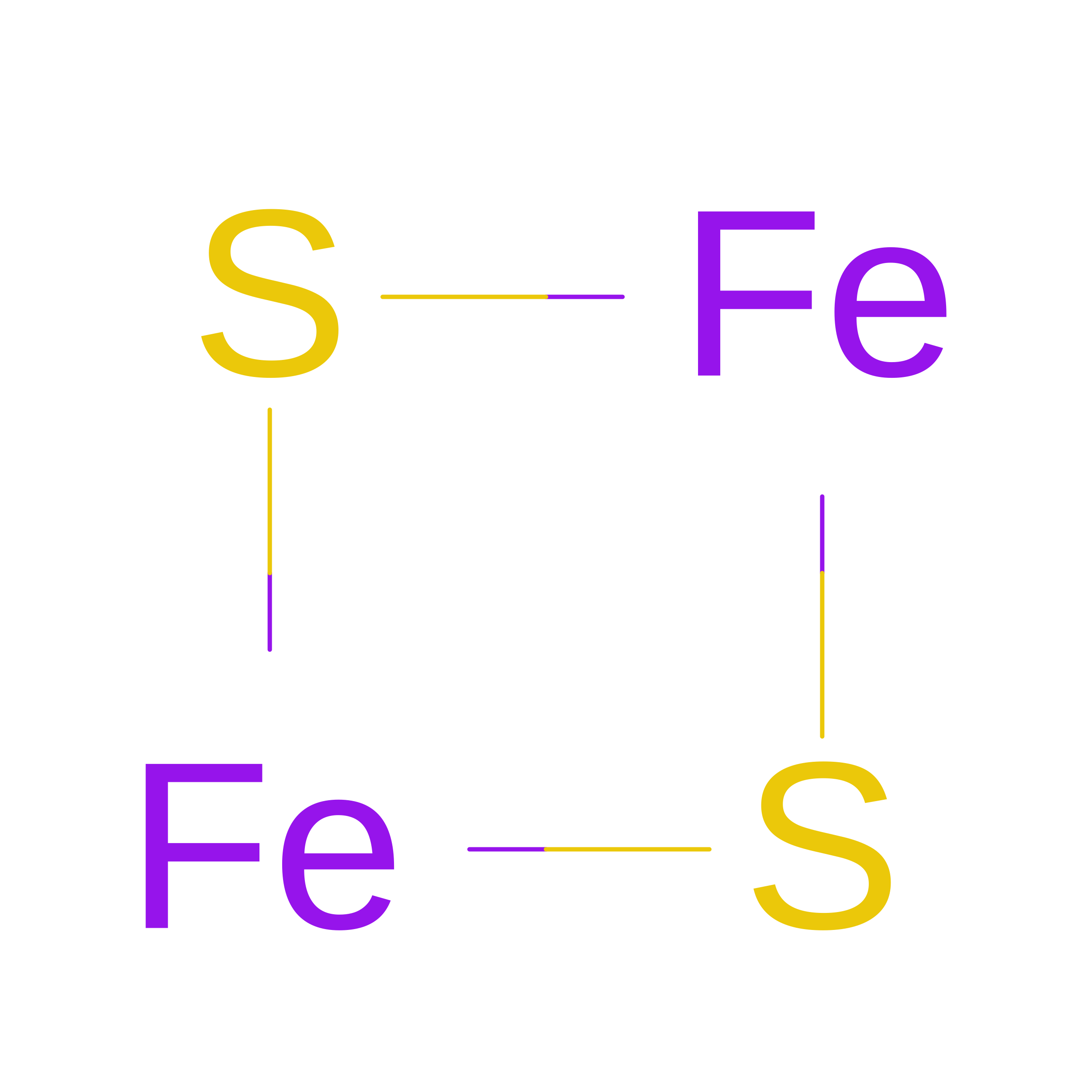
B [auth A]FE2/S2 (INORGANIC) CLUSTER
Fe2 S2
NIXDOXVAJZFRNF-UHFFFAOYSA-N

Experimental Data & Validation

Experimental Data

  • Method: X-RAY DIFFRACTION
  • Resolution: 1.85 Å
  • R-Value Free:  0.197 (Depositor), 0.207 (DCC) 
  • R-Value Work:  0.154 (Depositor), 0.156 (DCC) 
  • R-Value Observed: 0.157 (Depositor) 
Space Group: P 61
Unit Cell:
Length ( Å )Angle ( ˚ )
a = 65.23α = 90
b = 65.23β = 90
c = 49.44γ = 120
Software Package:
Software NamePurpose
MOSFLMdata reduction
SCALAdata scaling
AMoREphasing
REFMACrefinement
PDB_EXTRACTdata extraction

Structure Validation

View Full Validation Report


Entry History 

Deposition Data

Revision History  (Full details and data files)

  • Version 1.0: 2008-09-02
    Type: Initial release
  • Version 1.1: 2011-07-13
    Changes: Version format compliance
  • Version 1.2: 2023-08-30
    Changes: Data collection, Database references, Derived calculations, Refinement description