Download Mendeley
Structures of dimeric dihydrodiol dehydrogenase apoenzyme and inhibitor complex: probing the subunit interface with site-directed mutagenesis.
Carbone, V., Endo, S., Sumii, R., Chung, R.P., Matsunaga, T., Hara, A., El-Kabbani, O.(2008) Proteins 70: 176-187
- PubMed: 17654552 Search on PubMed
- DOI: https://doi.org/10.1002/prot.21566
- Primary Citation Related Structures:
2O48, 2O4U - PubMed Abstract:
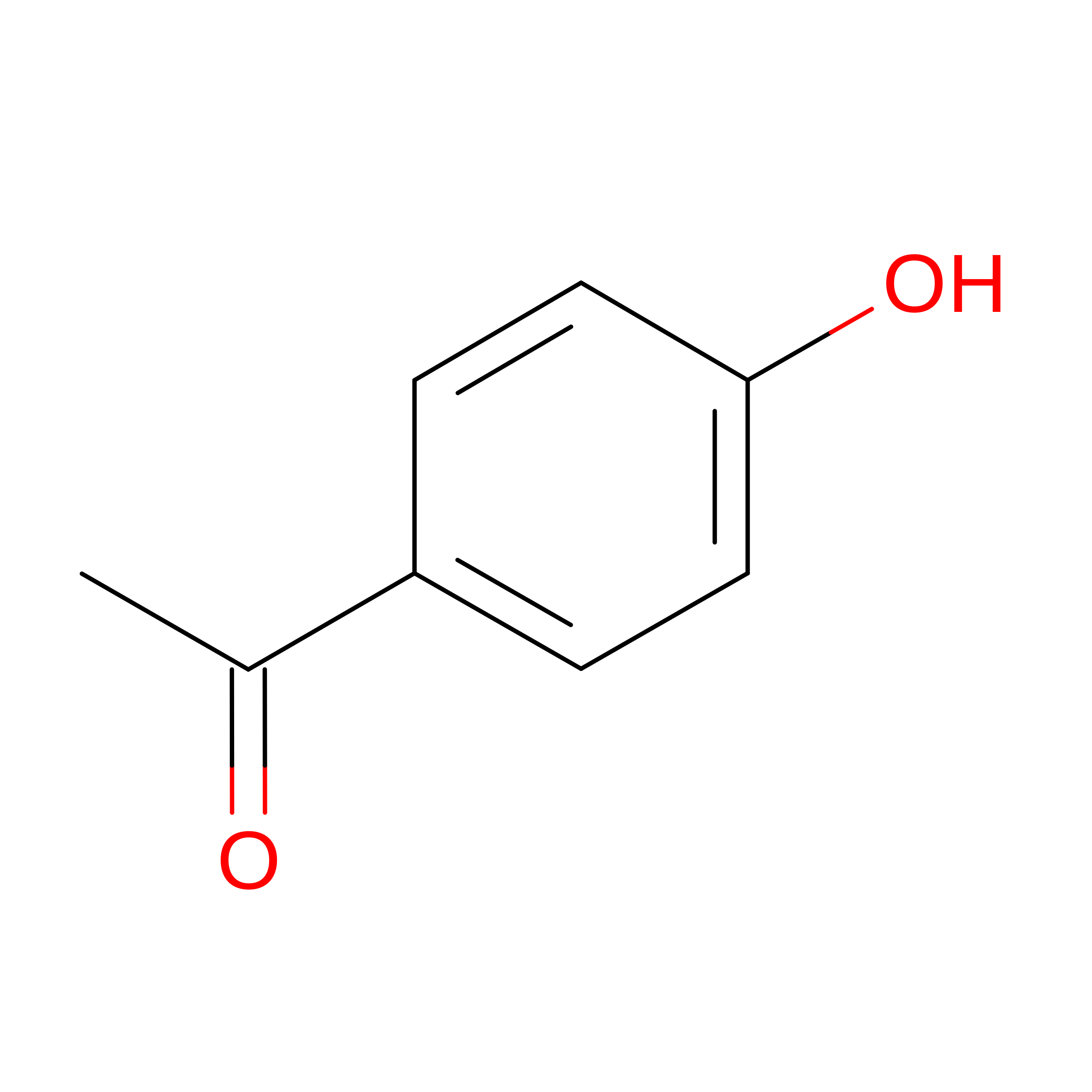
Dimeric dihydrodiol dehydrogenase (DD) catalyses the nicotinamide adenine dinucleotide phosphate (NADP+)-dependent oxidation of trans-dihydrodiols of aromatic hydrocarbons to their corresponding catechols. This is the first report of the crystal structure of the dimeric enzyme determined at 2.0 A resolution. The tertiary structure is formed by a classical dinucleotide binding fold comprising of two betaalphabetaalphabeta motifs at the N-terminus and an eight-stranded, predominantly antiparallel beta-sheet at the C-terminus. The active-site of DD, occupied either by a glycerol molecule or the inhibitor 4-hydroxyacetophenone, is located in the C-terminal domain of the protein and maintained by a number of residues including Lys97, Trp125, Phe154, Leu158, Val161, Asp176, Leu177, Tyr180, Trp254, Phe279, and Asp280. The dimer interface is stabilized by a large number of intermolecular contacts mediated by the beta-sheet of each monomer, which includes an intricate hydrogen bonding network maintained in principal by Arg148 and Arg202. Site-directed mutagenesis has demonstrated that the intact dimer is not essential for catalytic activity. The similarity between the quaternary structures of mammalian DD and glucose-fructose oxidoreductase isolated from the prokaryotic organism Zymomonas mobilis suggests that both enzymes are members of a unique family of oligomeric proteins and may share a common ancestral gene.
- Department of Medicinal Chemistry, Victorian College of Pharmacy, Monash University, Parkville, Victoria 3052, Australia.
Organizational Affiliation: