Download Mendeley
Flanking Bases Influence the Nature of DNA Distortion by Platinum 1,2-Intrastrand (GG) Cross-Links.
Bhattacharyya, D., Ramachandran, S., Sharma, S., Pathmasiri, W., King, C.L., Baskerville-Abraham, I., Boysen, G., Swenberg, J.A., Campbell, S.L., Dokholyan, N.V., Chaney, S.G.(2011) PLoS One 6: e23582-e23582
- PubMed: 21853154 Search on PubMedSearch on PubMed Central
- DOI: https://doi.org/10.1371/journal.pone.0023582
- Primary Citation Related Structures:
2K0T, 2K0U, 2K0V - PubMed Abstract:
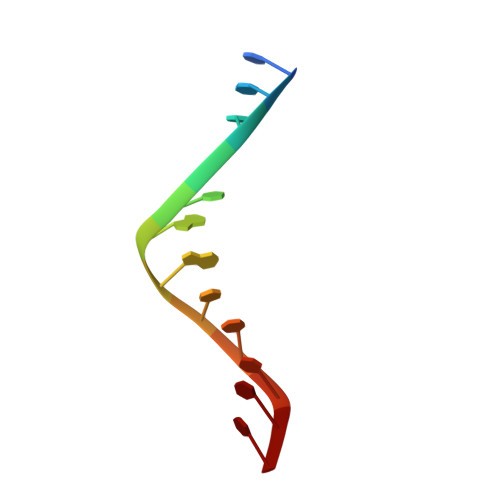
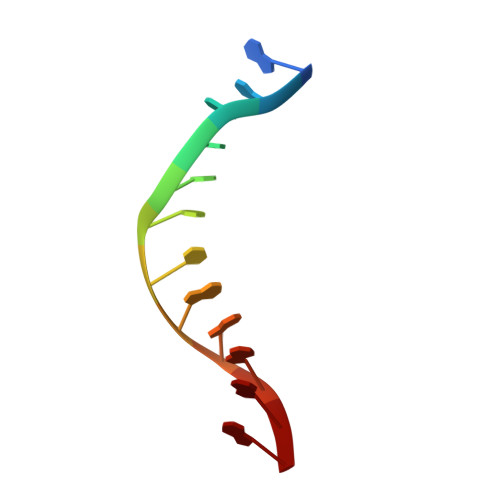
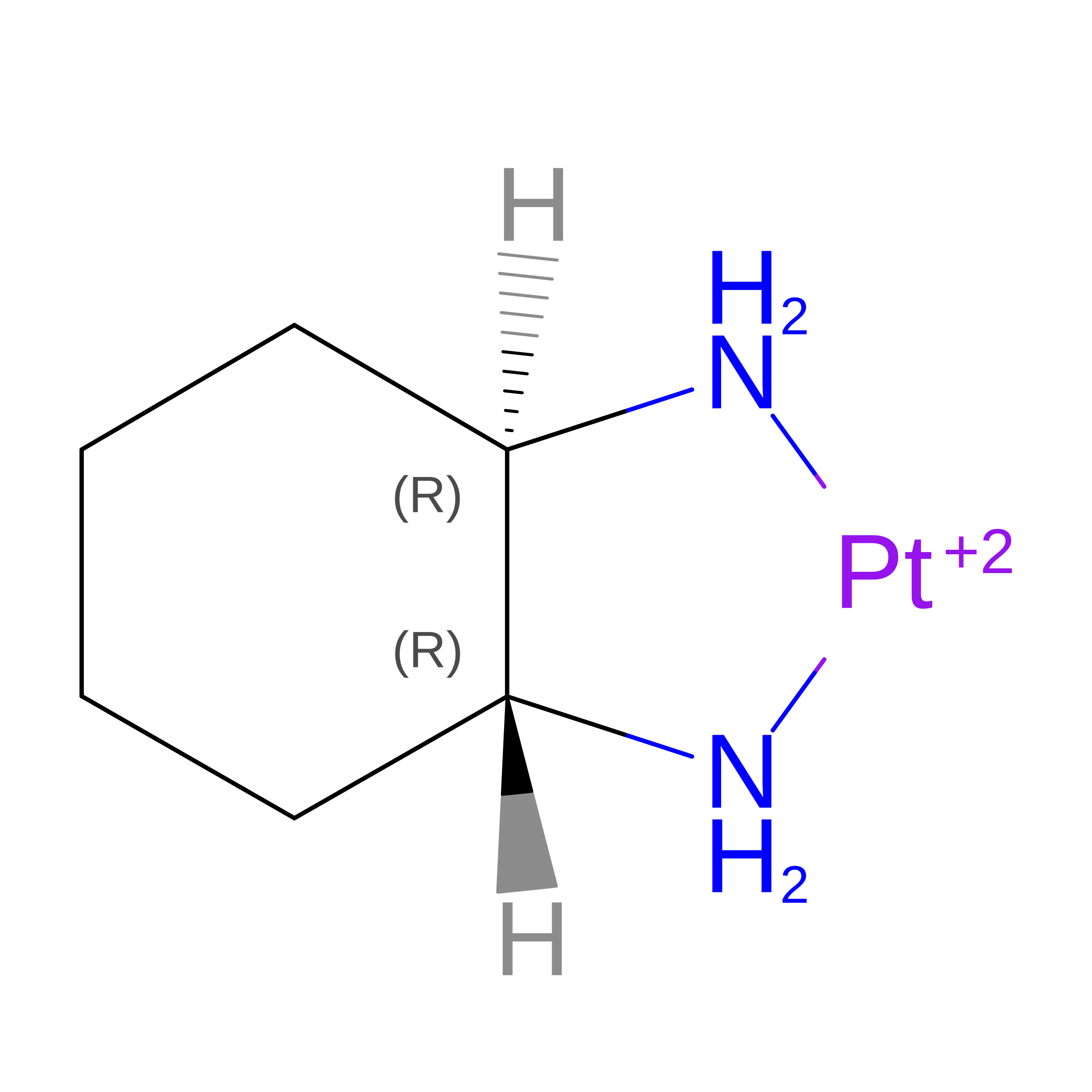
The differences in efficacy and molecular mechanisms of platinum anti-cancer drugs cisplatin (CP) and oxaliplatin (OX) are thought to be partially due to the differences in the DNA conformations of the CP and OX adducts that form on adjacent guanines on DNA, which in turn influence the binding of damage-recognition proteins that control downstream effects of the adducts. Here we report a comprehensive comparison of the structural distortion of DNA caused by CP and OX adducts in the TGGT sequence context using nuclear magnetic resonance (NMR) spectroscopy and molecular dynamics (MD) simulations. When compared to our previous studies in other sequence contexts, these structural studies help us understand the effect of the sequence context on the conformation of Pt-GG DNA adducts. We find that both the sequence context and the type of Pt-GG DNA adduct (CP vs. OX) play an important role in the conformation and the conformational dynamics of Pt-DNA adducts, possibly explaining their influence on the ability of many damage-recognition proteins to bind to Pt-DNA adducts.
- Department of Biochemistry and Biophysics, School of Medicine, University of North Carolina, Chapel Hill, North Carolina, United States of America.
Organizational Affiliation: