2GAB | pdb_00002gab

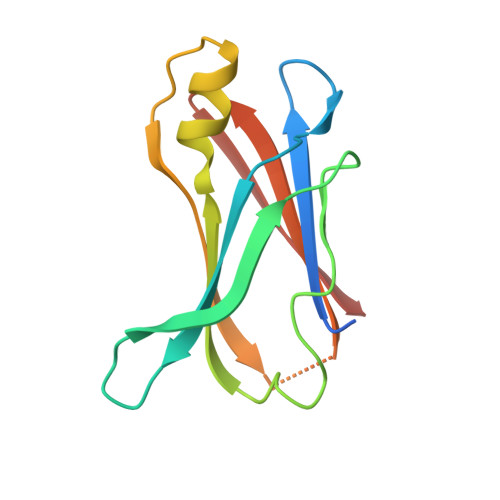
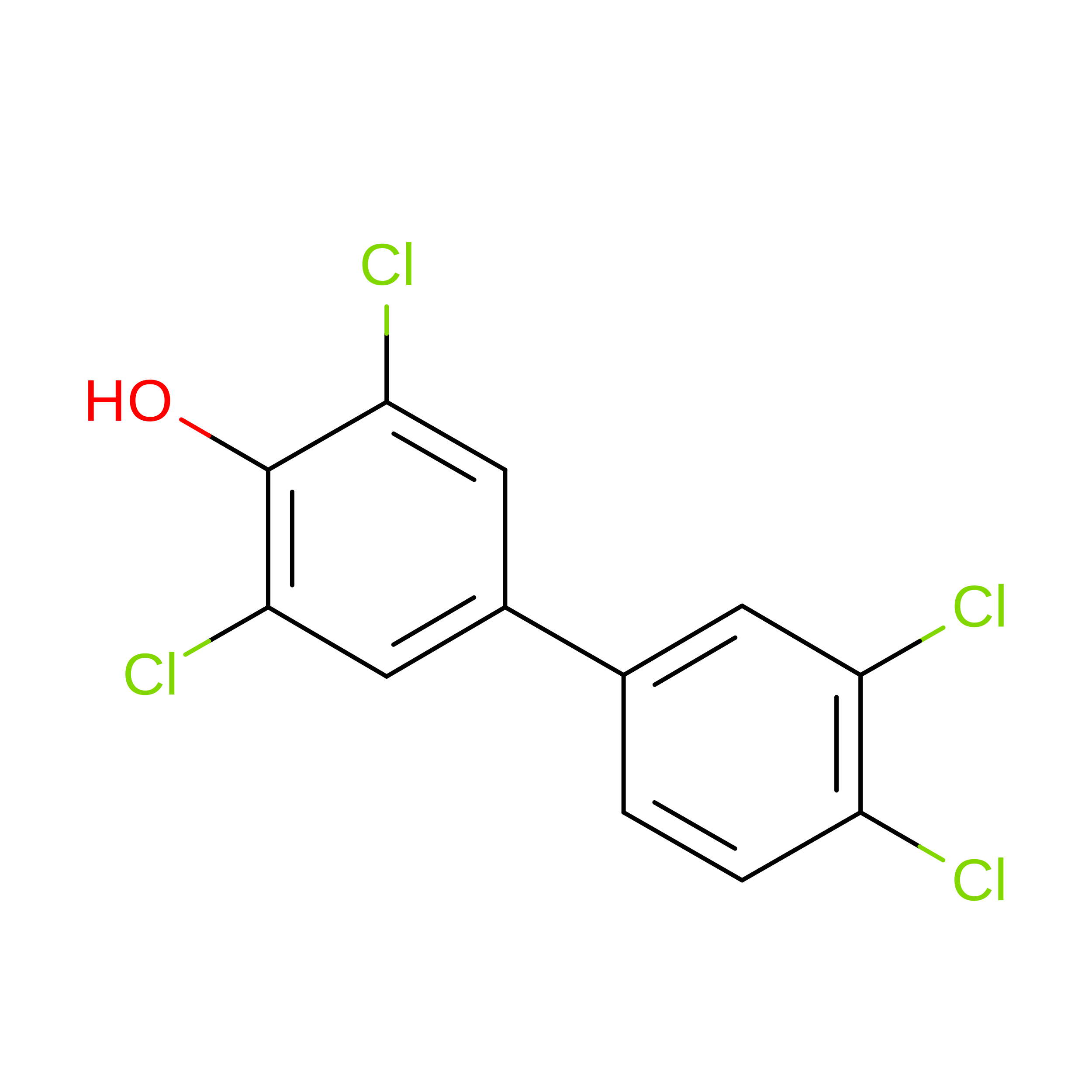
Human Transthyretin (TTR) Complexed with Hydroxylated polychlorinated Biphenyl-4-hydroxy-3,3',5,4'-tetrachlorobiphenyl


Experimental Data Snapshot

  • Method: X-RAY DIFFRACTION
  • Resolution: 1.85 Å
  • R-Value Free: 
    0.238 (Depositor) 
  • R-Value Work: 
    0.210 (Depositor) 
  • R-Value Observed: 
    0.211 (Depositor) 

Starting Model: experimental
View more details

wwPDB Validation 3D Report Full Report

Validation slider image for 2GAB

This is version 1.3 of the entry. See complete history

Literature

Hydroxylated polychlorinated biphenyls selectively bind transthyretin in blood and inhibit amyloidogenesis: rationalizing rodent PCB toxicity

Purkey, H.E.Palaninathan, S.K.Kent, K.C.Smith, C.Safe, S.H.Sacchettini, J.C.Kelly, J.W.

(2004) Chem Biol 11: 1719-1728

  • DOI: https://doi.org/10.1016/j.chembiol.2004.10.009
  • Primary Citation Related Structures: 
    2G5U, 2G9K, 2GAB

  • PubMed Abstract: 

    Polychlorinated biphenyls (PCBs) and their hydroxylated metabolites (OH-PCBs) are known to bind to transthyretin (TTR) in vitro, possibly explaining their bioaccumulation, rodent toxicity, and presumed human toxicity. Herein, we show that several OH-PCBs bind selectively to TTR in blood plasma; however, only one of the PCBs tested binds TTR in plasma. Some of the OH-PCBs displace thyroid hormone (T4) from TTR, rationalizing the toxicity observed in rodents, where TTR is the major T4 transporter. Thyroid binding globulin and albumin are the major T4 carriers in humans, making it unlikely that enough T4 could be displaced from TTR to be toxic. OH-PCBs are excellent TTR amyloidogenesis inhibitors in vitro because they bind to the TTR tetramer, imparting kinetic stability under amyloidogenic denaturing conditions. Four OH-PCB/TTR cocrystal structures provide further insight into inhibitor binding interactions.


  • Organizational Affiliation
    • Department of Chemistry and The Skaggs Institute for Chemical Biology, The Scripps Research Institute, La Jolla, California 92037, USA.

Macromolecule Content 

  • Total Structure Weight: 28.17 kDa 
  • Atom Count: 1,856 
  • Modeled Residue Count: 224 
  • Deposited Residue Count: 254 
  • Unique protein chains: 1

Macromolecules

Find similar proteins by:|  3D Structure
Entity ID: 1
MoleculeChains  Sequence LengthOrganismDetailsImage
Transthyretin
A, B
127Homo sapiensMutation(s): 0 
Gene Names: TTRPALB
UniProt & NIH Common Fund Data Resources
Find proteins for P02766 (Homo sapiens)
Explore P02766 
Go to UniProtKB:  P02766
PHAROS:  P02766
GTEx:  ENSG00000118271 
Entity Groups
Sequence Clusters30% Identity50% Identity70% Identity90% Identity95% Identity100% Identity
UniProt GroupP02766
Sequence Annotations
Expand
Reference Sequence

Small Molecules

Ligands 1 Unique
IDChains Name / Formula / InChI Key2D Diagram3D Interactions
NE2

Query on NE2


Download:Ideal Coordinates CCD File
C [auth A],
D [auth B]
3,3',4',5-TETRACHLOROBIPHENYL-4-OL
C12 H6 Cl4 O
RQGVZEFZWFEKQR-UHFFFAOYSA-N

Experimental Data & Validation

Experimental Data

  • Method: X-RAY DIFFRACTION
  • Resolution: 1.85 Å
  • R-Value Free:  0.238 (Depositor) 
  • R-Value Work:  0.210 (Depositor) 
  • R-Value Observed: 0.211 (Depositor) 
Space Group: P 21 21 2
Unit Cell:
Length ( Å )Angle ( ˚ )
a = 43.459α = 90
b = 86.197β = 90
c = 65.488γ = 90
Software Package:
Software NamePurpose
HKL-2000data collection
SCALEPACKdata scaling
AMoREphasing
REFMACrefinement
HKL-2000data reduction

Structure Validation

View Full Validation Report


Entry History 

Deposition Data

Revision History  (Full details and data files)

  • Version 1.0: 2006-03-21
    Type: Initial release
  • Version 1.1: 2008-05-01
    Changes: Version format compliance
  • Version 1.2: 2011-07-13
    Changes: Derived calculations, Version format compliance
  • Version 1.3: 2023-08-30
    Changes: Data collection, Database references, Derived calculations, Refinement description