2FKW | pdb_00002fkw

Structure of LH2 from Rps. acidophila crystallized in lipidic mesophases


Experimental Data Snapshot

  • Method: X-RAY DIFFRACTION
  • Resolution: 2.45 Å
  • R-Value Free: 
    0.254 (Depositor), 0.261 (DCC) 
  • R-Value Work: 
    0.183 (Depositor), 0.203 (DCC) 
  • R-Value Observed: 
    0.187 (Depositor) 

Starting Model: experimental
View more details

wwPDB Validation 3D Report Full Report

Validation slider image for 2FKW

Ligand Structure Quality Assessment 


This is version 1.5 of the entry. See complete history

Literature

Room to Move: Crystallizing Membrane Proteins in Swollen Lipidic Mesophases

Cherezov, V.Clogston, J.Papiz, M.Z.Caffrey, M.

(2006) J Mol Biology 357: 1605-1618

  • DOI: https://doi.org/10.1016/j.jmb.2006.01.049
  • Primary Citation Related Structures: 
    2FKW

  • PubMed Abstract: 

    The cubic phase or in meso crystallization method is responsible for almost 40 solved integral membrane protein structures. Most of these are small and compact proteins. A model for how crystals form by the in meso method has been proposed that invokes a transition between mesophases. In light of this model, we speculated that a more hydrated and open mesophase, of reduced interfacial curvature, would support facile crystallization of bigger and bulkier proteins. The proposal was explored here by performing crystallization in the presence of additives that swell the cubic phase. The additive concentration inducing swelling, as quantified by small-angle X-ray diffraction, coincided with a "crystallization window" in which two, very different transmembranal proteins produced crystals. That the swollen mesophase can grow structure-grade crystals was proven with one of these, the light-harvesting II complex. In most regards, the structural details of the corresponding complex resembled those of crystals grown by the conventional vapour diffusion method, with some important differences. In particular, packing density in the in meso-grown crystals was dramatically higher, more akin to that seen with water-soluble proteins, which accounts for their enhanced diffracting power. The layered and close in-plane packing observed has been rationalized in a model for nucleation and crystal growth by the in meso method that involves swollen mesophases. These results present a rational case for including mesophase-swelling additives in screens for in meso crystallogenesis. Their use will contribute to broadening the range of membrane proteins that yield to structure determination.


  • Organizational Affiliation
    • College of Science and Materials and Surface Science Institute, University of Limerick, Limerick, Ireland.

Macromolecule Content 

  • Total Structure Weight: 129.6 kDa 
  • Atom Count: 9,829 
  • Modeled Residue Count: 846 
  • Deposited Residue Count: 846 
  • Unique protein chains: 2

Macromolecules

Find similar proteins by:|  3D Structure
Entity ID: 1
MoleculeChains  Sequence LengthOrganismDetailsImage
Light-harvesting protein B-800/850, alpha chain
A,
C,
E,
G,
I,
K,
M,
O,
Q [auth R]
53Rhodoblastus acidophilusMutation(s): 1 
Membrane Entity: Yes 
UniProt
Find proteins for P26789 (Rhodoblastus acidophilus)
Explore P26789 
Go to UniProtKB:  P26789
Entity Groups
Sequence Clusters30% Identity50% Identity70% Identity90% Identity95% Identity100% Identity
UniProt GroupP26789
Sequence Annotations
Expand
Reference Sequence
Find similar proteins by:|  3D Structure
Entity ID: 2
MoleculeChains  Sequence LengthOrganismDetailsImage
Light-harvesting protein B-800/850, beta chain
B,
D,
F,
H,
J,
L,
N,
P,
R [auth S]
41Rhodoblastus acidophilusMutation(s): 0 
Membrane Entity: Yes 
UniProt
Find proteins for P26790 (Rhodoblastus acidophilus)
Explore P26790 
Go to UniProtKB:  P26790
Entity Groups
Sequence Clusters30% Identity50% Identity70% Identity90% Identity95% Identity100% Identity
UniProt GroupP26790
Sequence Annotations
Expand
Reference Sequence

Small Molecules

Ligands 3 Unique
IDChains Name / Formula / InChI Key2D Diagram3D Interactions
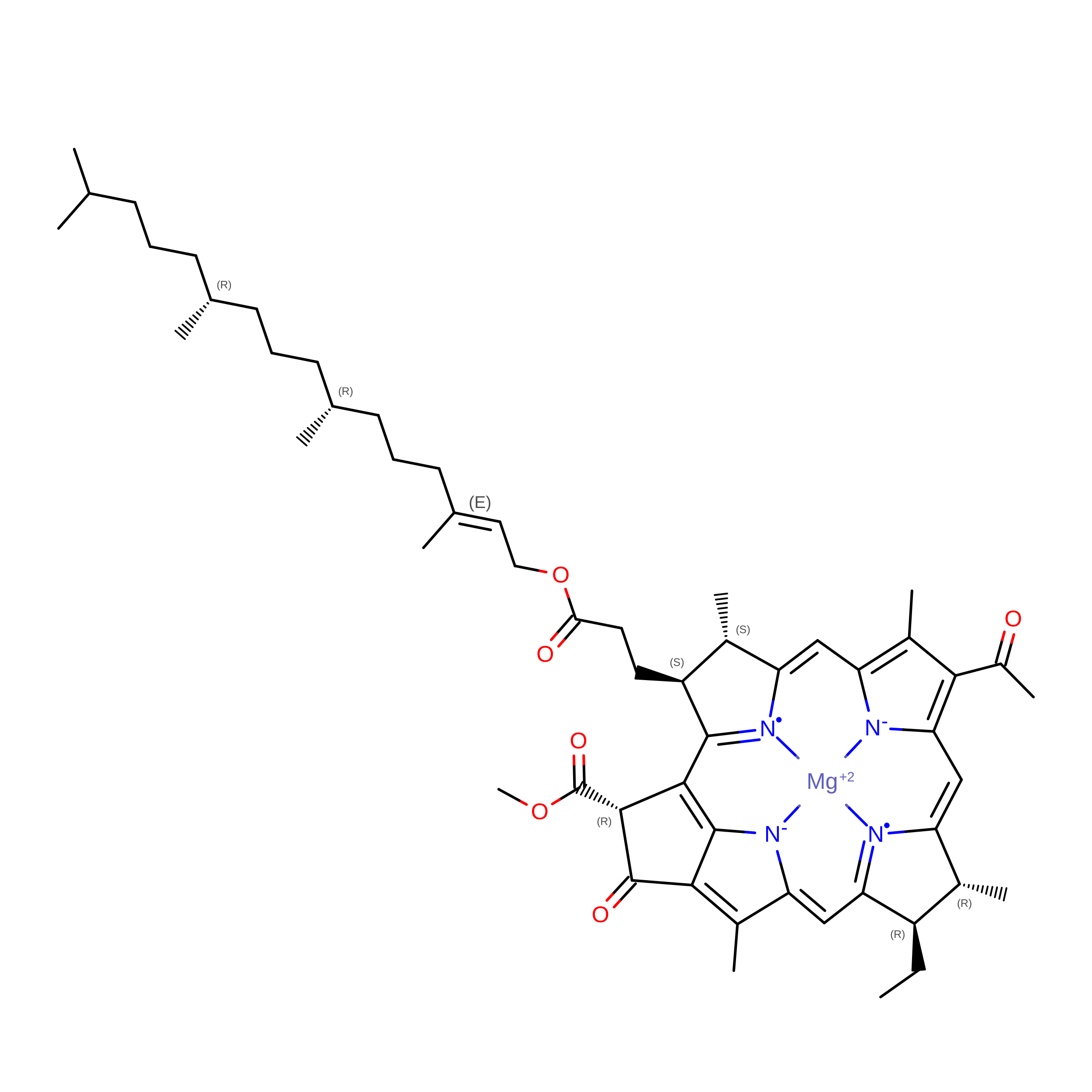
BCL

Query on BCL


Download:Ideal Coordinates CCD File
BB [auth K]
CB [auth K]
CC [auth S]
DA [auth D]
FA [auth E]
BB [auth K],
CB [auth K],
CC [auth S],
DA [auth D],
FA [auth E],
GA [auth E],
GB [auth L],
IB [auth M],
JB [auth M],
KA [auth F],
MA [auth G],
NA [auth G],
NB [auth N],
PB [auth O],
QB [auth O],
RA [auth H],
S [auth A],
T [auth A],
TA [auth I],
TB [auth P],
UA [auth I],
W [auth B],
WB [auth R],
XB [auth R],
Y [auth C],
Z [auth C],
ZA [auth J]
BACTERIOCHLOROPHYLL A
C55 H74 Mg N4 O6
DSJXIQQMORJERS-AGGZHOMASA-M
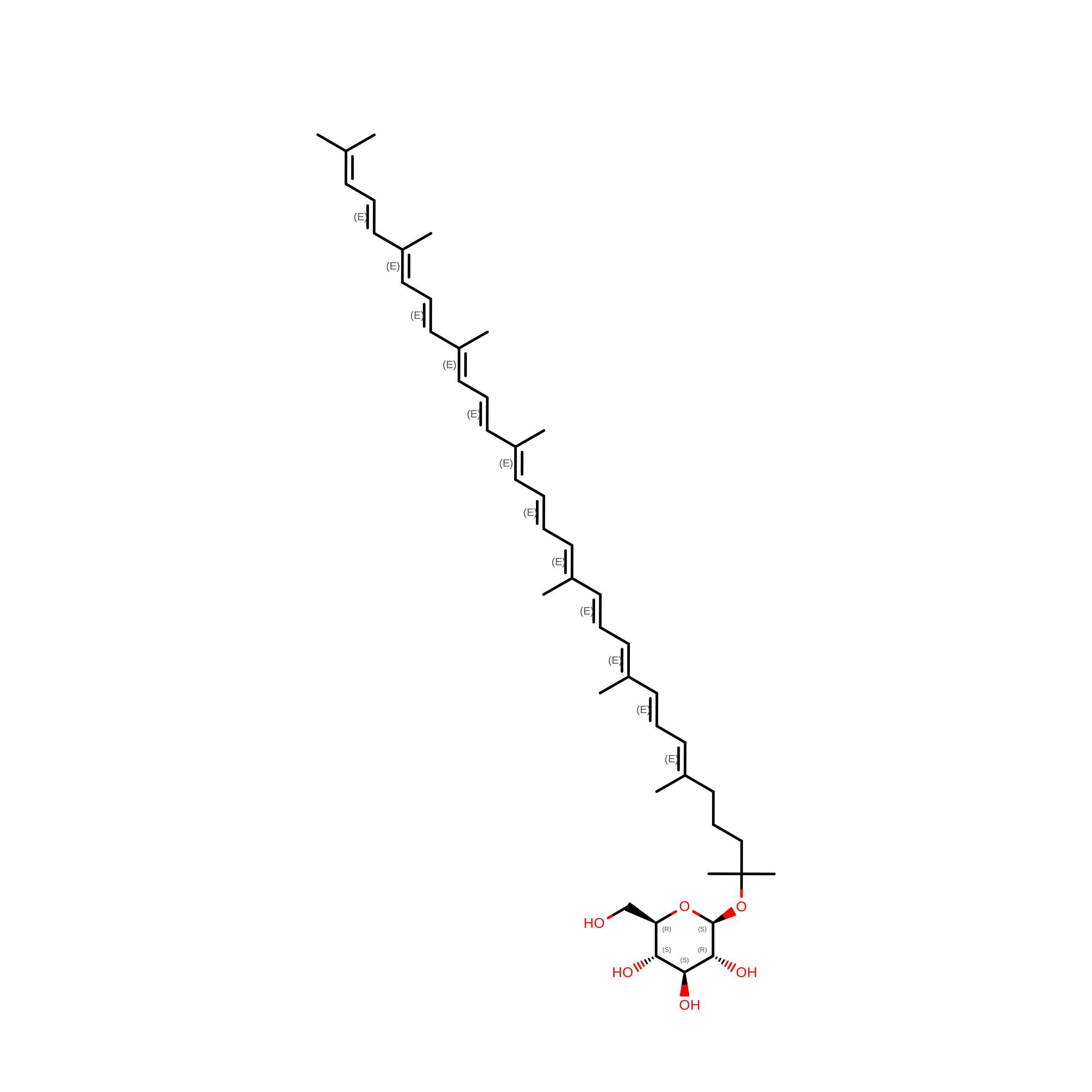
RG1

Query on RG1


Download:Ideal Coordinates CCD File
BC [auth S]
CA [auth D]
FB [auth L]
JA [auth F]
MB [auth N]
BC [auth S],
CA [auth D],
FB [auth L],
JA [auth F],
MB [auth N],
QA [auth H],
SB [auth P],
VB [auth R],
YA [auth J]
Rhodopin b-D-glucoside
C46 H66 O6
ISHBHDBCVQRMDY-GZIKAPSJSA-N
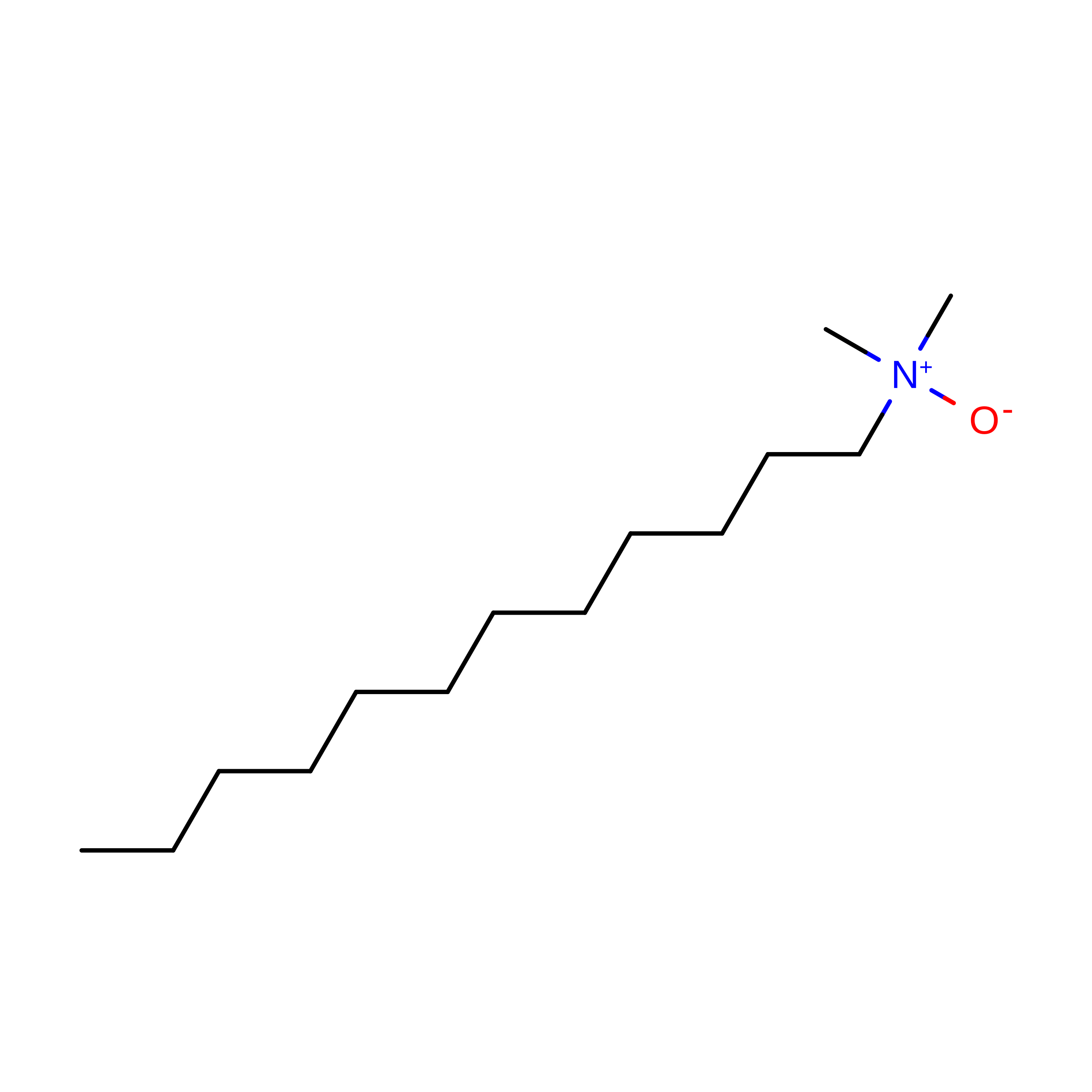
LDA

Query on LDA


Download:Ideal Coordinates CCD File
AA [auth C]
AB [auth J]
AC [auth R]
BA [auth C]
DB [auth K]
AA [auth C],
AB [auth J],
AC [auth R],
BA [auth C],
DB [auth K],
EA [auth D],
EB [auth K],
HA [auth E],
HB [auth L],
IA [auth E],
KB [auth M],
LA [auth F],
LB [auth M],
OA [auth G],
OB [auth N],
PA [auth G],
RB [auth O],
SA [auth H],
U [auth A],
UB [auth P],
V [auth A],
VA [auth I],
WA [auth I],
X [auth B],
XA [auth I],
YB [auth R],
ZB [auth R]
LAURYL DIMETHYLAMINE-N-OXIDE
C14 H31 N O
SYELZBGXAIXKHU-UHFFFAOYSA-N
Modified Residues  1 Unique
IDChains TypeFormula2D DiagramParent
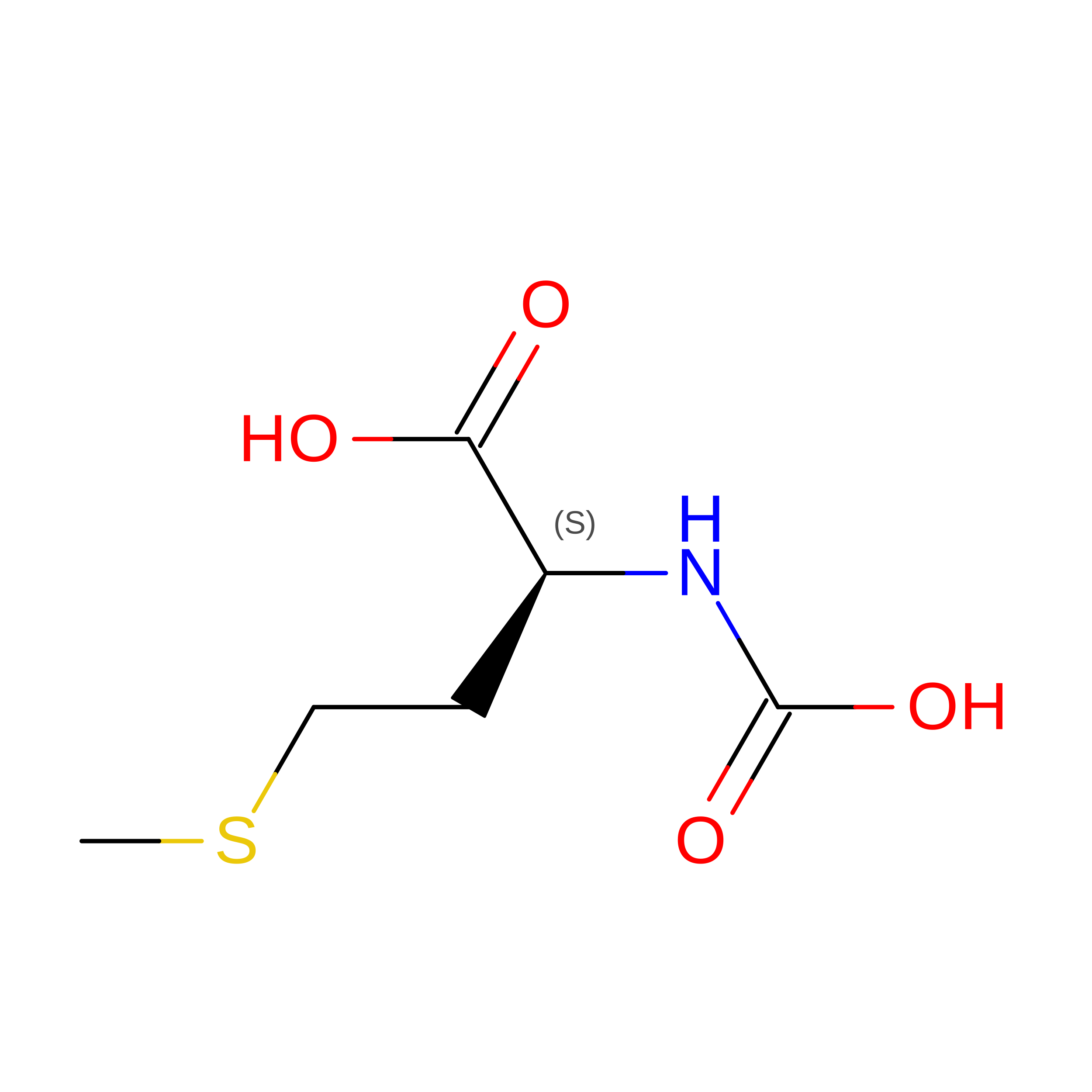
CXM
Query on CXM
A
C
E
G
I
A,
C,
E,
G,
I,
K,
M,
O,
Q [auth R]
L-PEPTIDE LINKINGC6 H11 N O4 SMET

Experimental Data & Validation

Experimental Data

  • Method: X-RAY DIFFRACTION
  • Resolution: 2.45 Å
  • R-Value Free:  0.254 (Depositor), 0.261 (DCC) 
  • R-Value Work:  0.183 (Depositor), 0.203 (DCC) 
  • R-Value Observed: 0.187 (Depositor) 
Space Group: P 21 21 21
Unit Cell:
Length ( Å )Angle ( ˚ )
a = 81.443α = 90
b = 126.384β = 90
c = 129.705γ = 90
Software Package:
Software NamePurpose
REFMACrefinement
HKL-2000data reduction
SCALEPACKdata scaling
MOLREPphasing

Structure Validation

View Full Validation Report


Ligand Structure Quality Assessment 


Entry History 

Deposition Data

Revision History  (Full details and data files)

  • Version 1.0: 2006-03-28
    Type: Initial release
  • Version 1.1: 2008-05-01
    Changes: Version format compliance
  • Version 1.2: 2011-07-13
    Changes: Derived calculations, Version format compliance
  • Version 1.3: 2016-03-30
    Changes: Non-polymer description
  • Version 1.4: 2023-08-30
    Changes: Data collection, Database references, Derived calculations, Refinement description
  • Version 1.5: 2024-11-13
    Changes: Data collection, Structure summary