Download Mendeley
A katE katG double-knockout E. coli strain eliminates the risk of catalase contamination in recombinant proteins.
Scholz, A.T., Coppo, L., Nolan, E., Hernandez, M., Wang, X., Mishra, P., Schnell, R., Pato, Z.A., Chen, Y., Dagnell, M., Andor, A., Cheng, Q., Arner, E.S.J.(2026) Appl Microbiol Biotechnol 110
- PubMed: 42020871 Search on PubMedSearch on PubMed Central
- DOI: https://doi.org/10.1007/s00253-026-13820-2
- Primary Citation Related Structures:
28WU - PubMed Abstract:
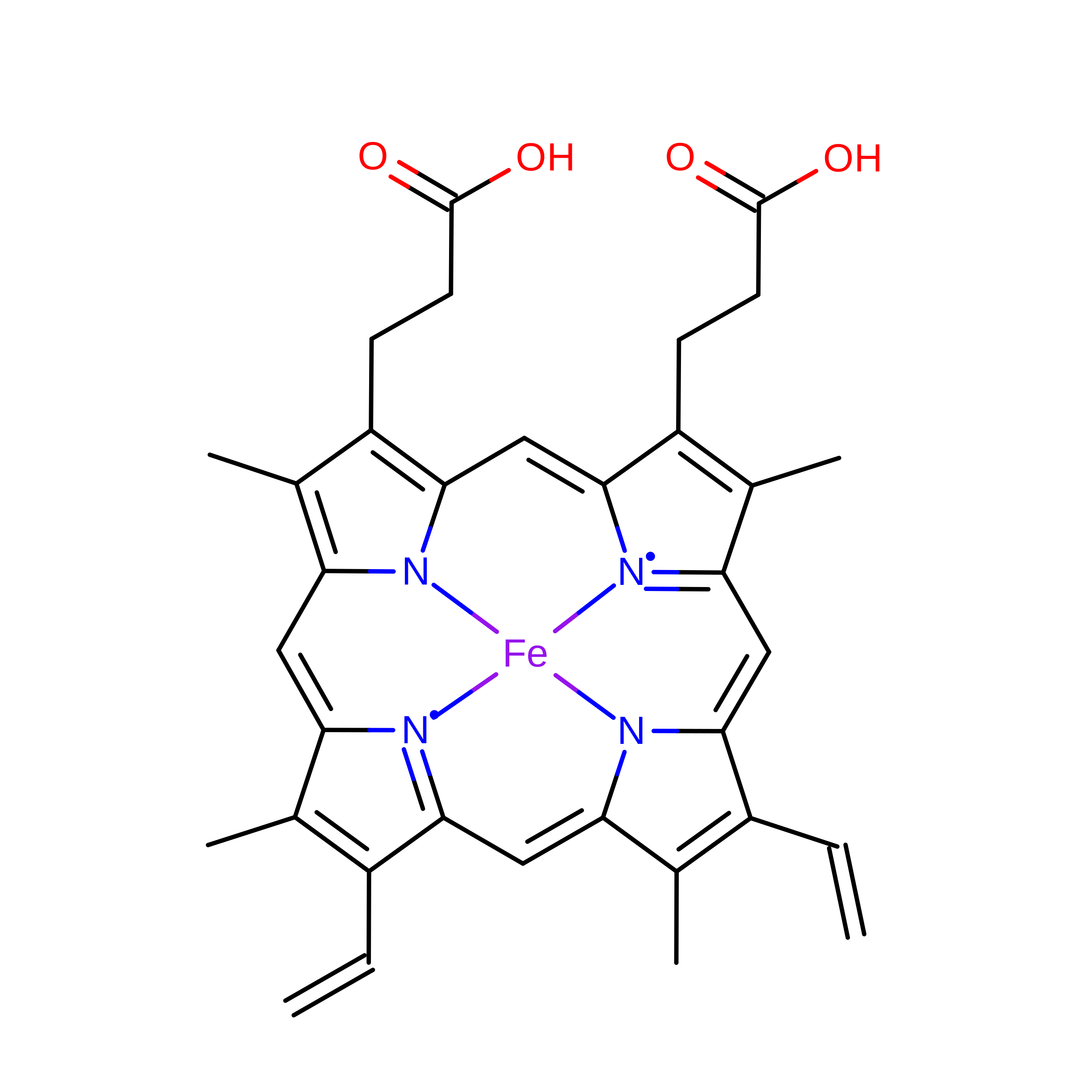
Recombinant protein expression in E. coli is a key methodology for modern biomedical research. Typically, a polyhistidine-tagged ("His-tagged") protein is purified using immobilized metal affinity chromatography (IMAC), achieving close to apparently homogenous target protein preparations. However, contaminant host proteins may nonetheless be co-purified at trace amounts. This includes bacterial catalase, which can even be found crystallized instead of an intended target protein. Here, we found that less than 0.03% of the original endogenous bacterial catalase remaining in a final recombinant protein product can easily be detected in an enzymatic H 2 O 2 (hydrogen peroxide) scavenging assay, because of the high inherent turnover of catalase and its lack of need for additional cofactors. If present in a recombinant protein preparation, this activity may give unintended effects, especially if the target protein is a redox active enzyme, such as glutathione peroxidase, glutaredoxin, ribonucleotide reductase, thioredoxin, or peroxiredoxin. Here, we found that genetic deletion of the two katG and katE genes in a bacterial expression host could fully eliminate catalase from the recombinant protein product without any appreciable loss of final yield. We suggest that this genetic approach is to be preferred for the removal of catalase instead of using more extensive purification schemes. KEY POINTS: • Catalase contaminates recombinant His-tagged proteins purified from E. coli. • A small amount of catalase yields substantial activity due to its high turnover. • Genetic knockout eliminates catalase contamination without compromising yields.
- Department of Medical Biochemistry and Biophysics, Division of Biochemistry, Karolinska Institutet, SE-171 77, Stockholm, Sweden.
Organizational Affiliation: