Funding Organization(s): European Research Council (ERC), German Research Foundation (DFG), National Institutes of Health/National Institute of General Medical Sciences (NIH/NIGMS), National Science Foundation (NSF, United States), Swiss National Science Foundation, European Molecular Biology Organization (EMBO), Boehringer Ingelheim Fonds (BIF)
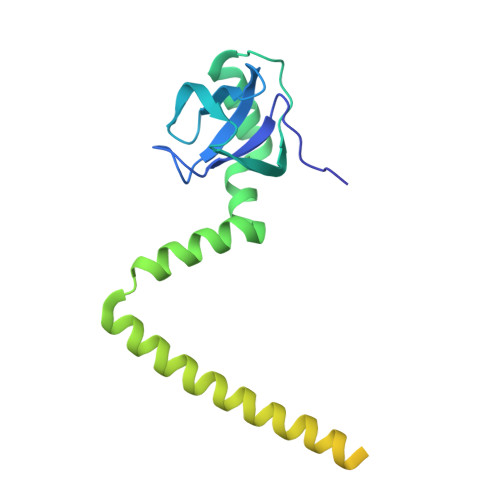
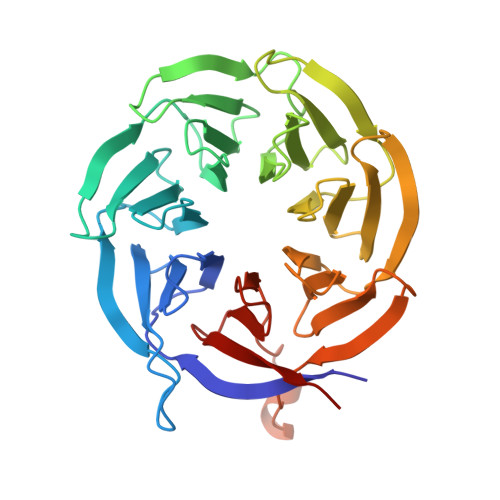
The nascent polypeptide-associated complex (NAC) coordinates enzymatic modifications and membrane targeting of nascent chains during translation. While the role of NAC as a dynamic hub for other factors is well established, its direct role in co-translational folding is unclear. By proteome-wide profiling of co-translational NAC interactions in human cells, we found that NAC recognizes emerging segments enriched in hydrophobicity and α-helical propensity within folded domains of cytonuclear proteins. Single-molecule and structural analyses reveal that NAC, via its β-barrel domain, dynamically interacts with nascent chains at the ribosomal tunnel exit and is capable of promoting on-pathway folding. Compartment-specific nascent chain interactions of NAC further elucidate its role in targeting to the endoplasmic reticulum and in mitochondrial membrane protein biogenesis. Together, these findings show that human NAC acts as a bona fide co-translational chaperone that directly promotes early protein folding at the ribosomal tunnel exit, expanding its functional repertoire in protein biogenesis.
Organizational Affiliation:
Center for Molecular Biology of the University of Heidelberg (ZMBH), DKFZ-ZMBH Alliance, Heidelberg, Germany.
Division of Chemistry and Chemical Engineering, California Institute of Technology, Pasadena, CA, USA.
Autonomous Matter Department, AMOLF, Science Park 104, 1098 Amsterdam, the Netherlands; Bionanoscience Department, Kavli Institute of Nanoscience Delft, Delft University of Technology, Delft, the Netherlands.
Department of Biology, Institute of Molecular Biology and Biophysics, ETH Zurich, 8093 Zurich, Switzerland.
Department of Biology, Institute of Molecular Biology and Biophysics, ETH Zurich, 8093 Zurich, Switzerland. Electronic address: ban@mol.biol.ethz.ch.
Autonomous Matter Department, AMOLF, Science Park 104, 1098 Amsterdam, the Netherlands; Bionanoscience Department, Kavli Institute of Nanoscience Delft, Delft University of Technology, Delft, the Netherlands. Electronic address: s.tans@amolf.nl.
Division of Chemistry and Chemical Engineering, California Institute of Technology, Pasadena, CA, USA. Electronic address: sshan@caltech.edu.
Center for Molecular Biology of the University of Heidelberg (ZMBH), DKFZ-ZMBH Alliance, Heidelberg, Germany. Electronic address: g.kramer@zmbh.uni-heidelberg.de.
Center for Molecular Biology of the University of Heidelberg (ZMBH), DKFZ-ZMBH Alliance, Heidelberg, Germany. Electronic address: bukau@zmbh.uni-heidelberg.de.








 Download Mendeley