Download Mendeley
Molecular basis of single-mismatch-induced nuclease-to-nickase conversion in TIGR-TasH.
Zhou, R., Zhan, Y., Sun, Y., Wang, R., Wang, T., Liu, Z., Shan, Z., Li, X., Zhang, S., Sun, N., Zhang, H., Yuan, Z., Yang, J.(2026) Nucleic Acids Res 54
- PubMed: 42531075 Search on PubMedSearch on PubMed Central
- DOI: https://doi.org/10.1093/nar/gkag743
- Primary Citation Related Structures:
25QK, 25QL - PubMed Abstract:
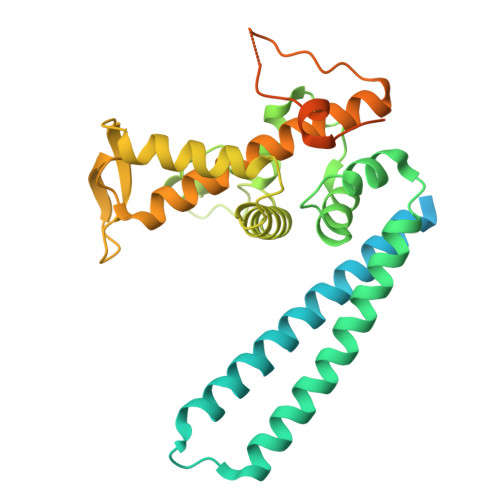
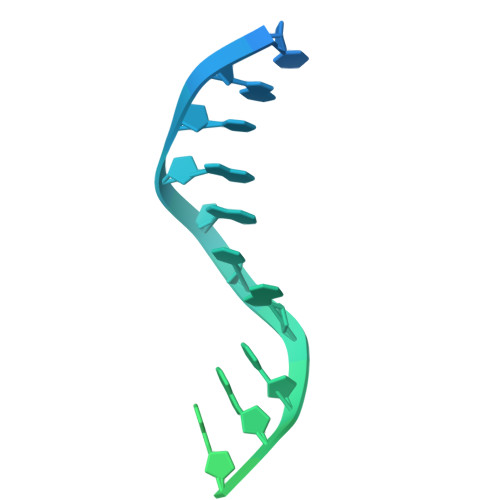
Tandem interspaced guide RNA (TIGR)-Tas systems are a distinct class of RNA-guided double-stranded DNA nucleases that employ dual-spacer guide RNAs (tigRNAs) for PAM-independent target recognition. A single mismatch between the tigRNA and target DNA can convert Salicola phage CGphi29 (Sp)TasH from a double-strand nuclease into a nickase in a position-dependent manner, but the molecular basis underlying this functional switch remains unknown. Here, we combined biochemical analyses and cryo-electron microscopy to investigate tigRNA maturation and mismatched target recognition by the Nop domain of SpTasH. We show that the Nop domain is required for pre-tigRNA processing and stabilizes the mature tigRNA through extensive interactions, thereby establishing a cleavage-competent ribonucleoprotein complex. Structural analyses of SpTasH complexes bound to substrates containing single mismatches reveal that a mismatch at the 5'-most position of spacer A is readily accommodated through Nop domain-mediated stabilization of the spacer-target heteroduplex. In contrast, a mismatch proximal to the cleavage site destabilizes the heteroduplex, preventing recruitment of the corresponding HNH domain, thereby converting the complex into a nickase. Together, these findings establish the structural basis for position-dependent mismatch recognition and reveal how Nop domain-mediated tigRNA-target stabilization enables differential responses to mismatches, providing a foundation for engineering TIGR-Tas systems for genome-editing applications.
- Tianjin Medical University Cancer Institute and Hospital, State Key Laboratory of Experimental Hematology, Key Laboratory of Immune Microenvironment and Disease (Ministry of Education), The Province and Ministry Co-sponsored Collaborative Innovation Center for Medical Epigenetics, National Clinical Research Center for Cancer, Tianjin Institute of Immunology, Tianjin's Clinical Research Center for Cancer, School of Basic Medical Sciences, Tianjin Medical University, Tianjin 300070, China.
Organizational Affiliation: