1ZT5 | pdb_00001zt5

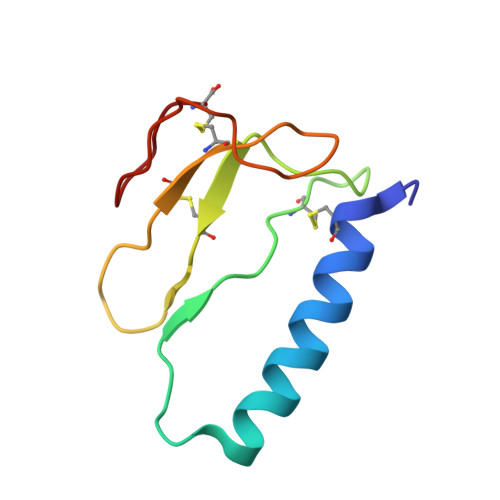
C-terminal domain of Insulin-like Growth Factor Binding Protein-1 isolated from human amniotic fluid complexed with Iron(II)


Experimental Data Snapshot

  • Method: X-RAY DIFFRACTION
  • Resolution: 1.82 Å
  • R-Value Free: 
    0.264 (Depositor), 0.265 (DCC) 
  • R-Value Work: 
    0.222 (Depositor), 0.227 (DCC) 
  • R-Value Observed: 
    0.223 (Depositor) 

wwPDB Validation 3D Report Full Report

Validation slider image for 1ZT5

This is version 1.3 of the entry. See complete history

Literature

Structure and Properties of the C-terminal Domain of Insulin-like Growth Factor-binding Protein-1 Isolated from Human Amniotic Fluid

Sala, A.Capaldi, S.Campagnoli, M.Faggion, B.Labo, S.Perduca, M.Romano, A.Carrizo, M.E.Valli, M.Visai, L.Minchiotti, L.Galliano, M.Monaco, H.L.

(2005) J Biological Chem 280: 29812-29819

  • DOI: https://doi.org/10.1074/jbc.M504304200
  • Primary Citation Related Structures: 
    1ZT3, 1ZT5

  • PubMed Abstract: 

    Insulin-like growth factor (IGF)-binding protein-1 (IGFBP-1) regulates the activity of the insulin-like growth factors in early pregnancy and is, thus, thought to play a key role at the fetal-maternal interface. The C-terminal domain of IGFBP-1 and three isoforms of the intact protein were isolated from human amniotic fluid, and sequencing of the four N-terminal polypeptide chains showed them to be highly pure. The addition of both intact IGFBP-1 and its C-terminal fragment to cultured fibroblasts has a similar stimulating effect on cell migration, and therefore, the domain has a biological activity on its own. The three-dimensional structure of the C-terminal domain was determined by x-ray crystallography to 1.8 Angstroms resolution. The fragment folds as a thyroglobulin type I domain and was found to bind the Fe(2+) ion in the crystals through the only histidine residue present in the polypeptide chain. Iron (II) decreases the binding of intact IGFBP-1 and the C-terminal domain to IGF-II, suggesting that the metal binding site is close to or part of the surface of interaction of the two molecules.


  • Organizational Affiliation
    • Department of Biochemistry A. Castellani, University of Pavia, Italy.

Macromolecule Content 

  • Total Structure Weight: 9.33 kDa 
  • Atom Count: 710 
  • Modeled Residue Count: 80 
  • Deposited Residue Count: 80 
  • Unique protein chains: 1

Macromolecules

Find similar proteins by:|  3D Structure
Entity ID: 1
MoleculeChains  Sequence LengthOrganismDetailsImage
Insulin-like growth factor binding protein 180Homo sapiensMutation(s): 0 
UniProt & NIH Common Fund Data Resources
Find proteins for P08833 (Homo sapiens)
Explore P08833 
Go to UniProtKB:  P08833
PHAROS:  P08833
GTEx:  ENSG00000146678 
Entity Groups
Sequence Clusters30% Identity50% Identity70% Identity90% Identity95% Identity100% Identity
UniProt GroupP08833
Sequence Annotations
Expand
Reference Sequence

Small Molecules

Ligands 2 Unique
IDChains Name / Formula / InChI Key2D Diagram3D Interactions
DIO

Query on DIO


Download:Ideal Coordinates CCD File
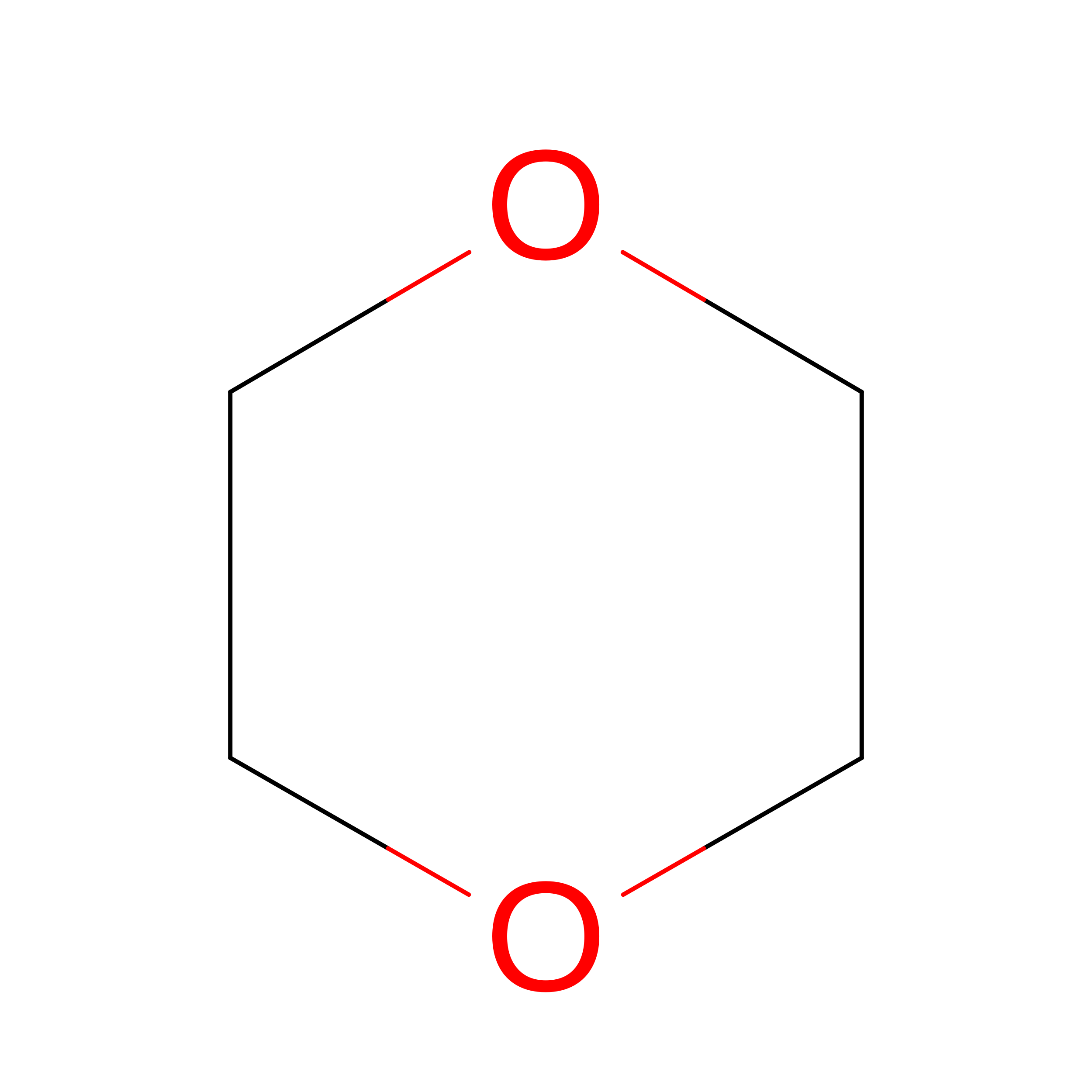
C [auth A]1,4-DIETHYLENE DIOXIDE
C4 H8 O2
RYHBNJHYFVUHQT-UHFFFAOYSA-N
FE2

Query on FE2


Download:Ideal Coordinates CCD File
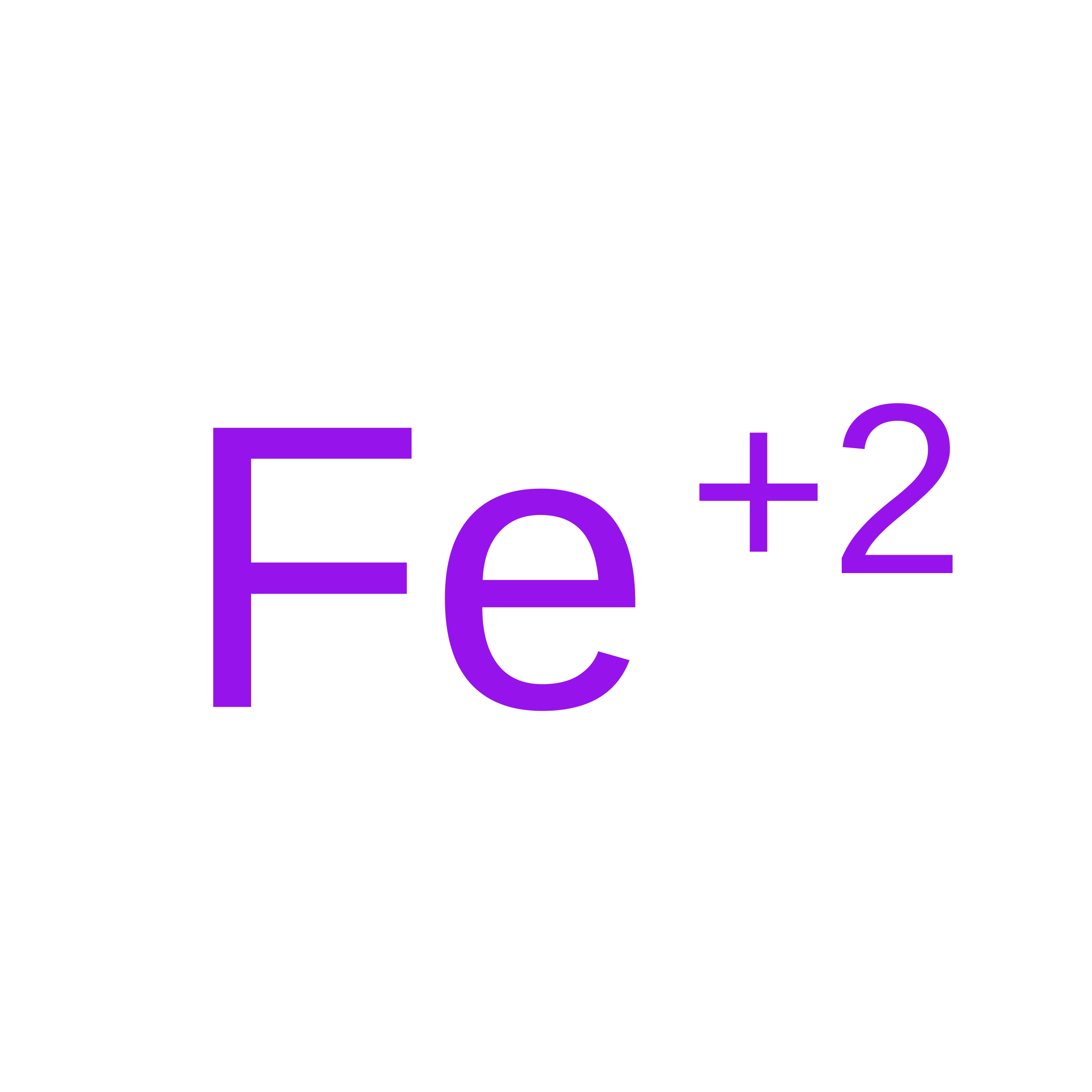
B [auth A]FE (II) ION
Fe
CWYNVVGOOAEACU-UHFFFAOYSA-N

Experimental Data & Validation

Experimental Data

  • Method: X-RAY DIFFRACTION
  • Resolution: 1.82 Å
  • R-Value Free:  0.264 (Depositor), 0.265 (DCC) 
  • R-Value Work:  0.222 (Depositor), 0.227 (DCC) 
  • R-Value Observed: 0.223 (Depositor) 
Space Group: P 21 21 2
Unit Cell:
Length ( Å )Angle ( ˚ )
a = 38.21α = 90
b = 59.6β = 90
c = 31.06γ = 90
Software Package:
Software NamePurpose
REFMACrefinement
MOSFLMdata reduction
CCP4data scaling
XFITdata reduction

Structure Validation

View Full Validation Report


Entry History 

Revision History  (Full details and data files)

  • Version 1.0: 2005-06-28
    Type: Initial release
  • Version 1.1: 2008-04-30
    Changes: Version format compliance
  • Version 1.2: 2011-07-13
    Changes: Version format compliance
  • Version 1.3: 2024-11-13
    Changes: Data collection, Database references, Derived calculations, Structure summary