1ZM9 | pdb_00001zm9

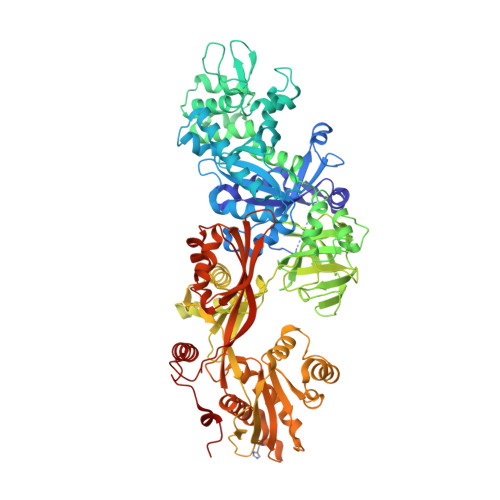
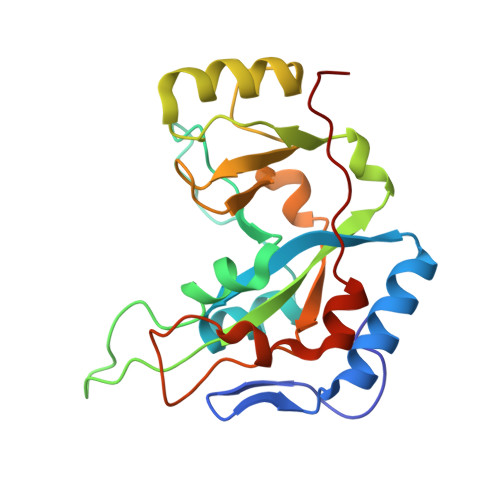
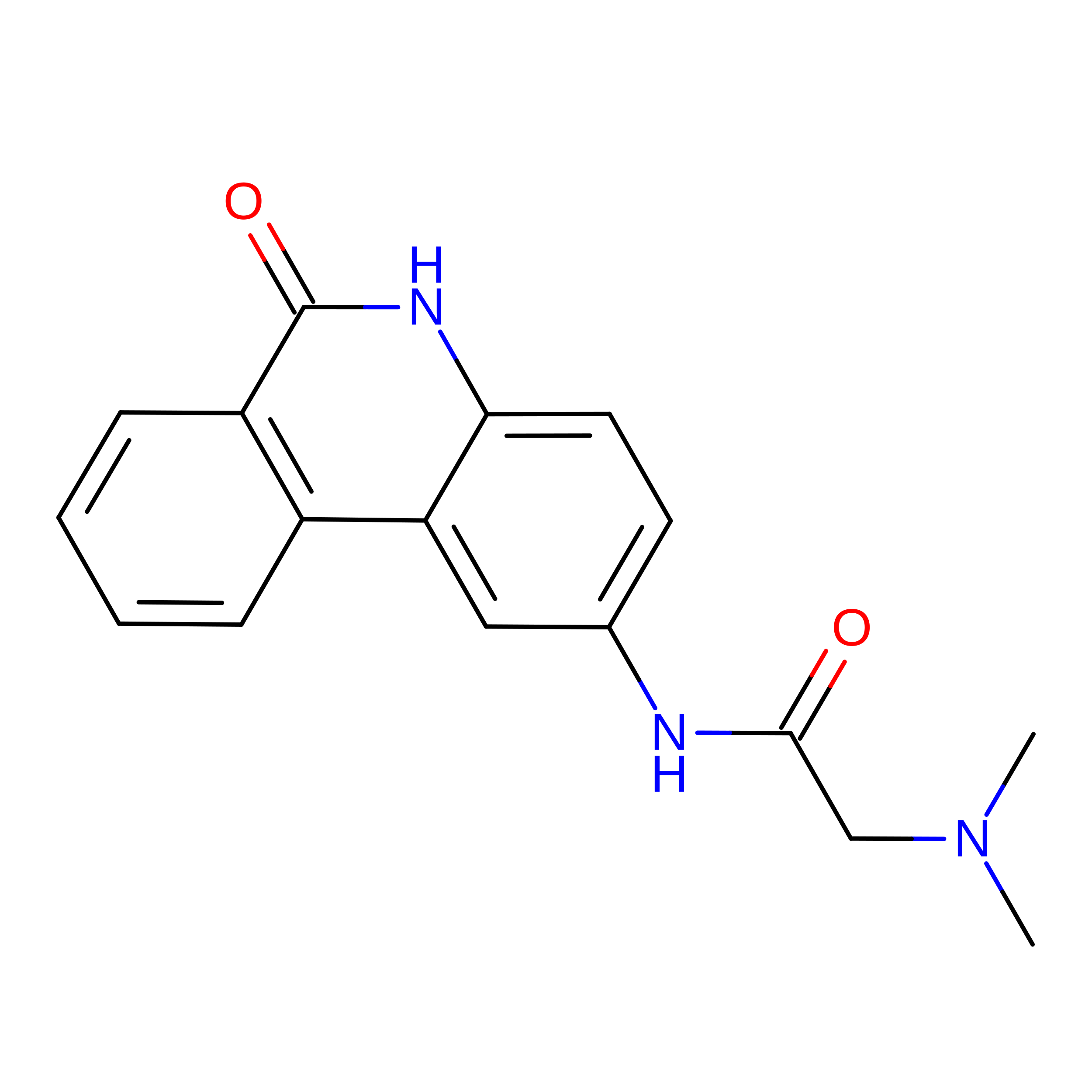
Structure of eEF2-ETA in complex with PJ34


Experimental Data Snapshot

  • Method: X-RAY DIFFRACTION
  • Resolution: 2.80 Å
  • R-Value Free: 
    0.274 (Depositor), 0.272 (DCC) 
  • R-Value Work: 
    0.254 (Depositor), 0.254 (DCC) 
  • R-Value Observed: 
    0.255 (Depositor) 

Starting Models: experimental
View more details

wwPDB Validation 3D Report Full Report

Validation slider image for 1ZM9

Ligand Structure Quality Assessment 


This is version 1.3 of the entry. See complete history

Literature

Exotoxin A-eEF2 complex structure indicates ADP ribosylation by ribosome mimicry.

Joergensen, R.Merrill, A.R.Yates, S.P.Marquez, V.E.Schwan, A.L.Boesen, T.Andersen, G.R.

(2005) Nature 436: 979-984

  • DOI: https://doi.org/10.1038/nature03871
  • Primary Citation Related Structures: 
    1ZM2, 1ZM3, 1ZM4, 1ZM9

  • PubMed Abstract: 

    The bacteria causing diphtheria, whooping cough, cholera and other diseases secrete mono-ADP-ribosylating toxins that modify intracellular proteins. Here, we describe four structures of a catalytically active complex between a fragment of Pseudomonas aeruginosa exotoxin A (ETA) and its protein substrate, translation elongation factor 2 (eEF2). The target residue in eEF2, diphthamide (a modified histidine), spans across a cleft and faces the two phosphates and a ribose of the non-hydrolysable NAD+ analogue, betaTAD. This suggests that the diphthamide is involved in triggering NAD+ cleavage and interacting with the proposed oxacarbenium intermediate during the nucleophilic substitution reaction, explaining the requirement of diphthamide for ADP ribosylation. Diphtheria toxin may recognize eEF2 in a manner similar to ETA. Notably, the toxin-bound betaTAD phosphates mimic the phosphate backbone of two nucleotides in a conformational switch of 18S rRNA, thereby achieving universal recognition of eEF2 by ETA.


  • Organizational Affiliation
    • Centre for Structural Biology, Department of Molecular Biology, University of Aarhus, Gustav Wieds Vej 10C, DK-8000, Denmark.

Macromolecule Content 

  • Total Structure Weight: 349.02 kDa 
  • Atom Count: 24,042 
  • Modeled Residue Count: 3,090 
  • Deposited Residue Count: 3,147 
  • Unique protein chains: 2

Macromolecules

Find similar proteins by:|  3D Structure
Entity ID: 1
MoleculeChains  Sequence LengthOrganismDetailsImage
Elongation factor 2
A, C, E
842Saccharomyces cerevisiaeMutation(s): 1 
EC: 3.6.5
UniProt
Find proteins for P32324 (Saccharomyces cerevisiae (strain ATCC 204508 / S288c))
Explore P32324 
Go to UniProtKB:  P32324
Entity Groups
Sequence Clusters30% Identity50% Identity70% Identity90% Identity95% Identity100% Identity
UniProt GroupP32324
Sequence Annotations
Expand
Reference Sequence
Find similar proteins by:|  3D Structure
Entity ID: 2
MoleculeChains  Sequence LengthOrganismDetailsImage
exotoxin A
B, D, F
207Pseudomonas aeruginosaMutation(s): 0 
EC: 2.4.2.36
UniProt
Find proteins for P11439 (Pseudomonas aeruginosa (strain ATCC 15692 / DSM 22644 / CIP 104116 / JCM 14847 / LMG 12228 / 1C / PRS 101 / PAO1))
Explore P11439 
Go to UniProtKB:  P11439
Entity Groups
Sequence Clusters30% Identity50% Identity70% Identity90% Identity95% Identity100% Identity
UniProt GroupP11439
Sequence Annotations
Expand
Reference Sequence

Small Molecules

Modified Residues  1 Unique
IDChains TypeFormula2D DiagramParent
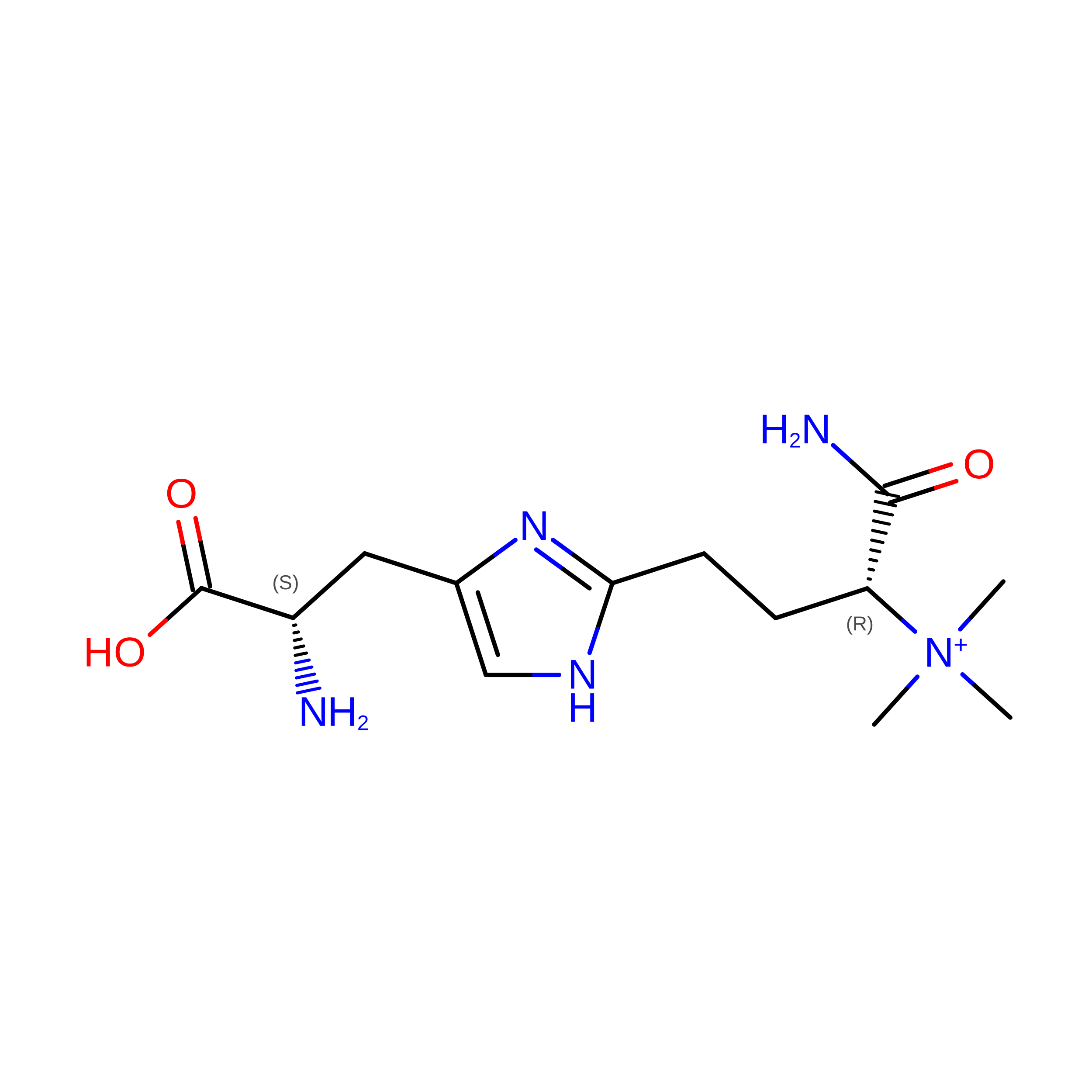
DDE
Query on DDE
A, C, E
L-PEPTIDE LINKINGC13 H24 N5 O3HIS

Experimental Data & Validation

Experimental Data

  • Method: X-RAY DIFFRACTION
  • Resolution: 2.80 Å
  • R-Value Free:  0.274 (Depositor), 0.272 (DCC) 
  • R-Value Work:  0.254 (Depositor), 0.254 (DCC) 
  • R-Value Observed: 0.255 (Depositor) 
Space Group: C 1 2 1
Unit Cell:
Length ( Å )Angle ( ˚ )
a = 330.84α = 90
b = 68.74β = 103.5
c = 191.46γ = 90
Software Package:
Software NamePurpose
XDSdata scaling
XDSdata reduction
MOLREPphasing
CNSrefinement

Structure Validation

View Full Validation Report


Ligand Structure Quality Assessment 


Entry History 

Deposition Data

Revision History  (Full details and data files)

  • Version 1.0: 2005-05-24
    Type: Initial release
  • Version 1.1: 2008-04-30
    Changes: Version format compliance
  • Version 1.2: 2011-07-13
    Changes: Version format compliance
  • Version 1.3: 2023-08-23
    Changes: Advisory, Data collection, Database references, Derived calculations, Refinement description