Download Mendeley
Rational Design of Inhibitors of HIV-1 Tar RNA Through the Stabilisation of Electrostatic "Hot Spots"
Davis, B., Afshar, M., Varani, G., Murchie, A.I.H., Karn, J., Lentzen, G., Drysdale, M.J., Bower, J., Potter, A.J., Aboul-Ela, F.(2004) J Mol Biol 336: 343
- PubMed: 14757049 Search on PubMed
- DOI: https://doi.org/10.1016/j.jmb.2003.12.046
- Primary Citation Related Structures:
1UUD, 1UUI - PubMed Abstract:
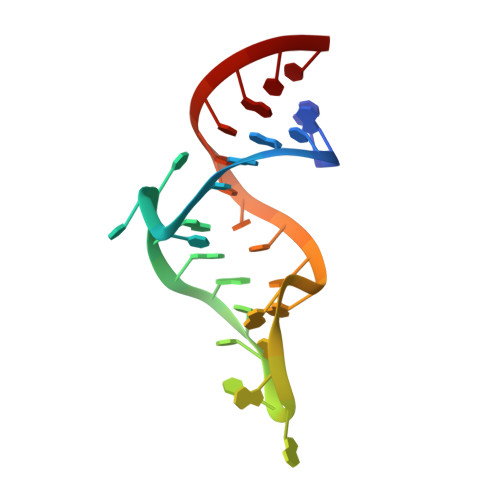
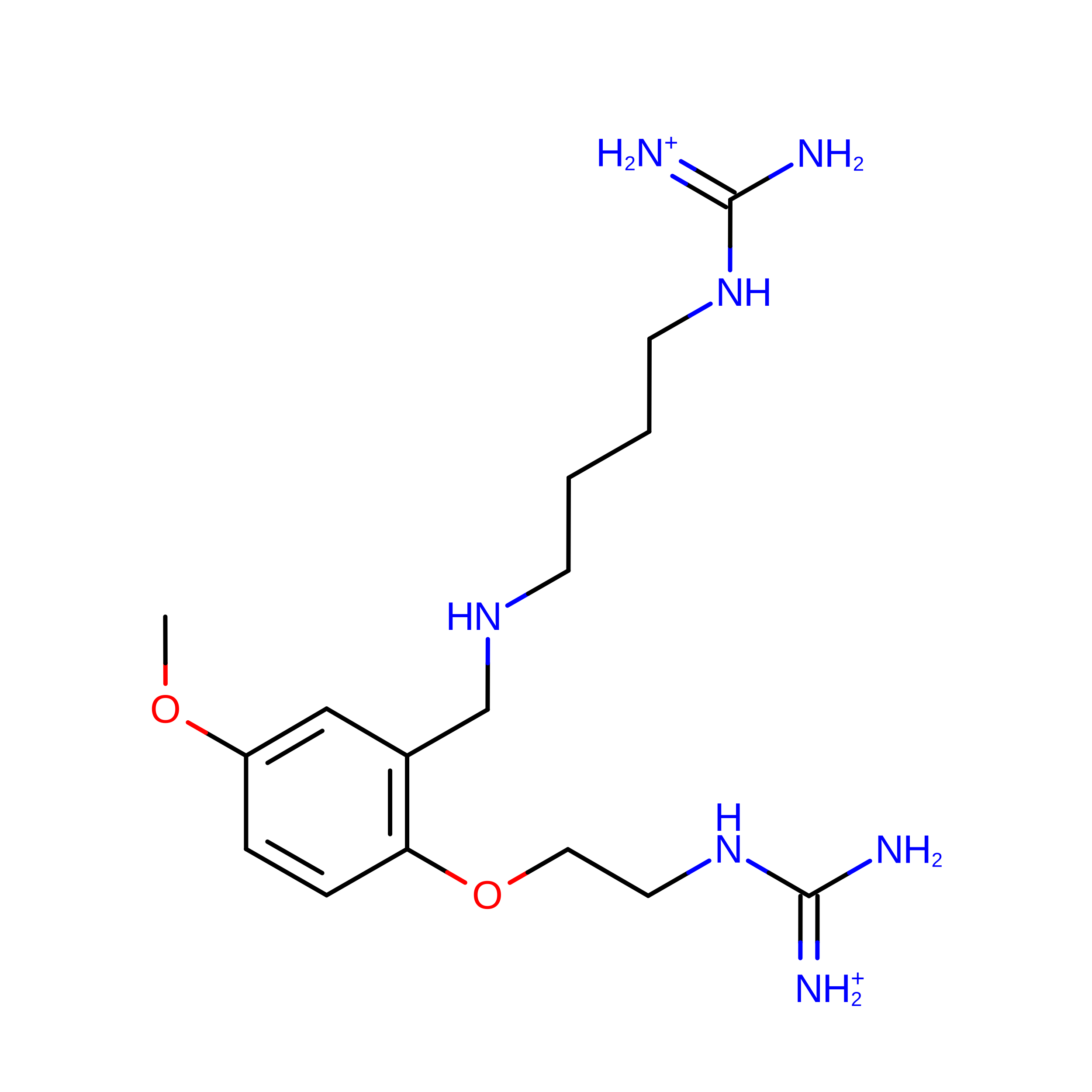
The targeting of RNA for the design of novel anti-viral compounds has until now proceeded largely without incorporating direct input from structure-based design methodology, partly because of lack of structural data, and complications arising from substrate flexibility. We propose a paradigm to explain the physical mechanism for ligand-induced refolding of trans-activation response element (TAR RNA) from human immunodeficiency virus 1 (HIV-1). Based upon Poisson-Boltzmann analysis of the TAR structure, as bound by a peptide derived from the transcriptional activator protein, Tat, our hypothesis shows that two specific electrostatic interactions are necessary to stabilise the conformation. This result contradicts the belief that a single argininamide residue is responsible for stabilising the TAR fold, as well as the conventional wisdom that electrostatic interactions with RNA are non-specific or dominated by phosphates. We test this hypothesis by using NMR and computational methods to model the interaction of a series of novel inhibitors of the in vitro RNA-binding activities for a peptide derived from Tat. A subset of inhibitors, including the bis-guanidine compound rbt203 and its analogues, induce a conformation in TAR similar to that brought about by the protein. Comparison of the interactions of two of these ligands with the RNA and structure-activity relationships observed within the compound series, confirm the importance of the two specific electrostatic interactions in the stabilisation of the Tat-bound RNA conformation. This work illustrates how the use of medicinal chemistry and structural analysis can provide a rational basis for prediction of ligand-induced conformational change, a necessary step towards the application of structure-based methods in the design of novel RNA or protein-binding drugs.
- RiboTargets Ltd, Granta Park, Abington, CB1 6GB, Cambridge, UK.
Organizational Affiliation: