1TIQ | pdb_00001tiq

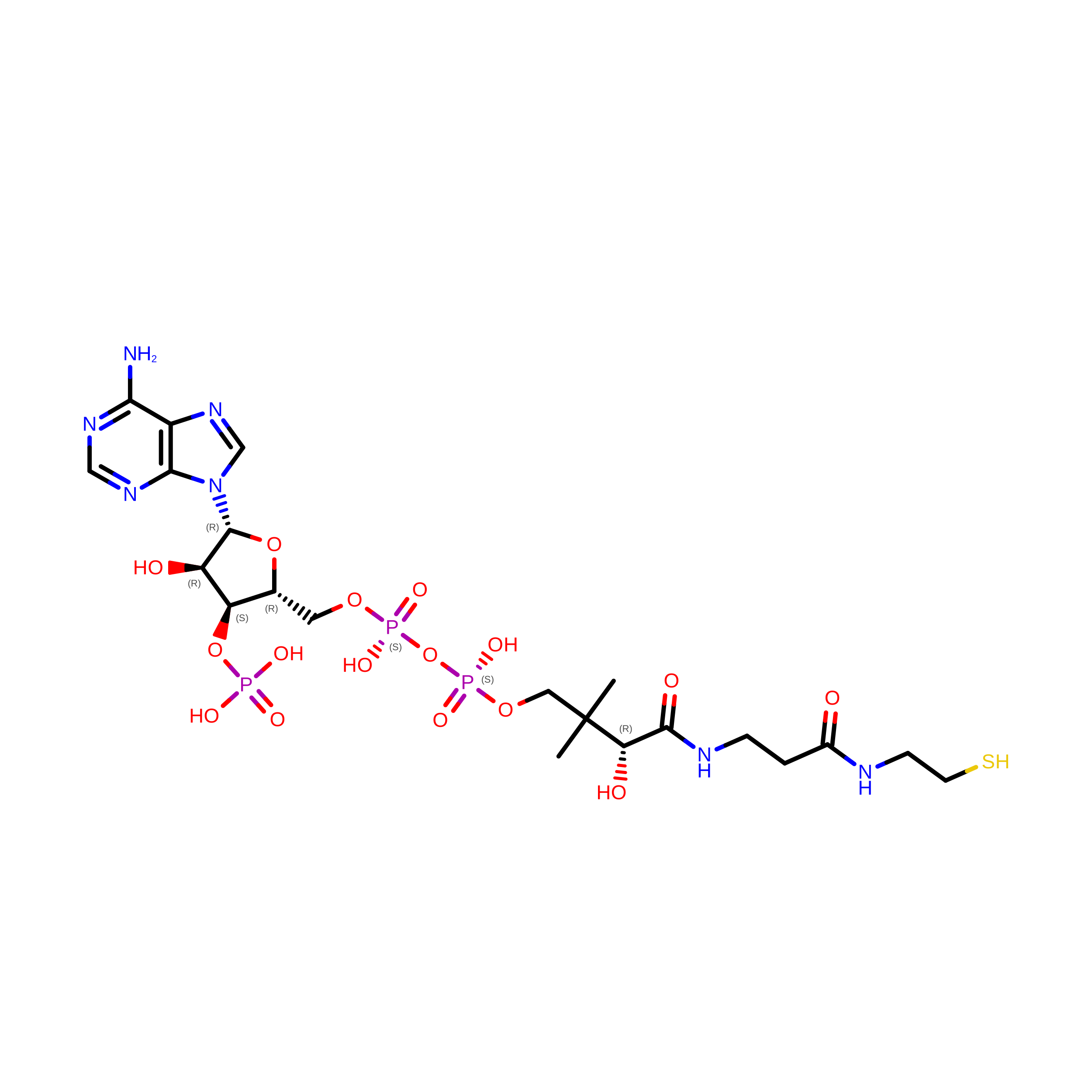
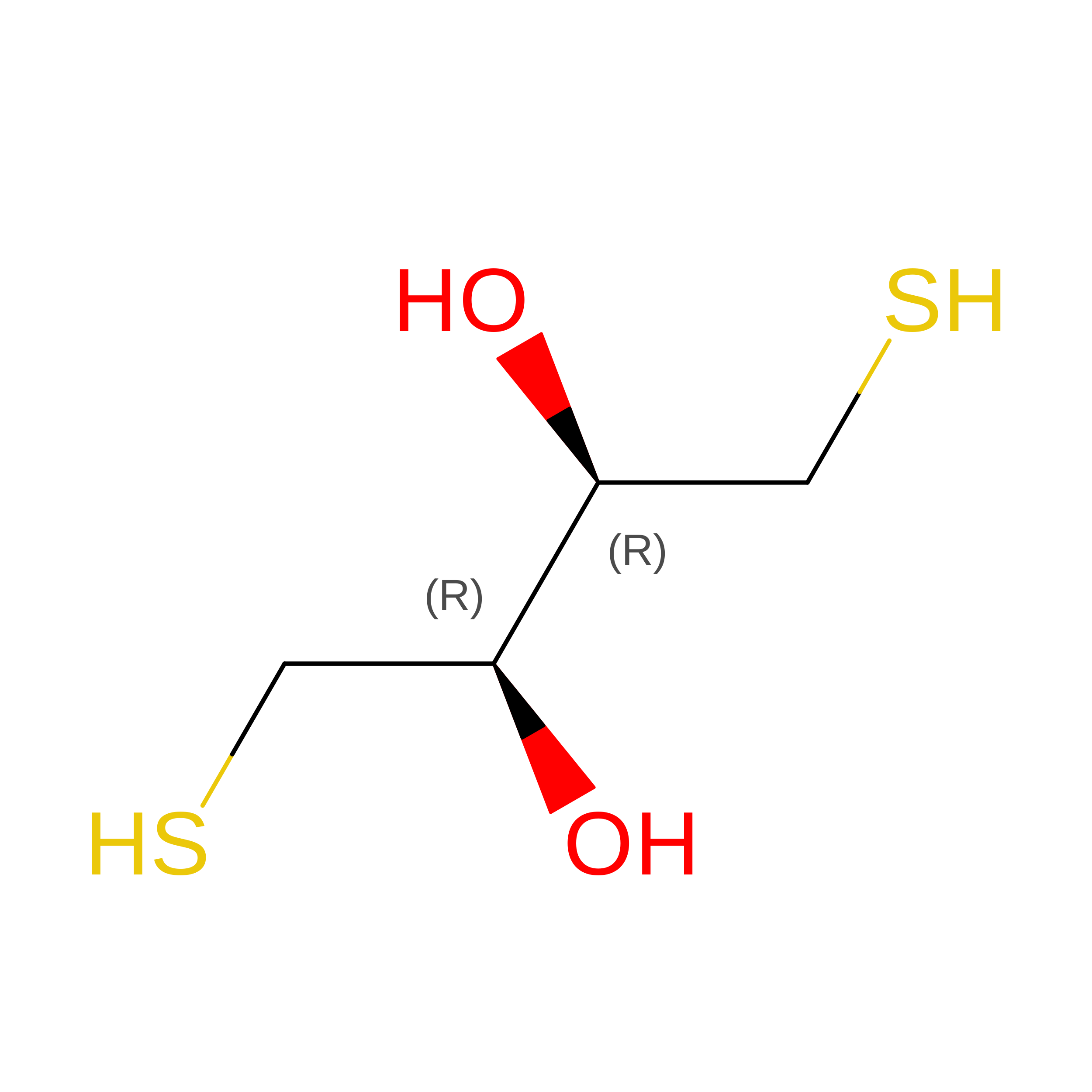
Crystal Structure of an Acetyltransferase (PaiA) in complex with CoA and DTT from Bacillus subtilis, Northeast Structural Genomics Target SR64.


Experimental Data Snapshot

  • Method: X-RAY DIFFRACTION
  • Resolution: 1.90 Å
  • R-Value Free: 
    0.241 (Depositor) 
  • R-Value Work: 
    0.206 (Depositor) 
  • R-Value Observed: 
    0.241 (Depositor) 

wwPDB Validation 3D Report Full Report

Validation slider image for 1TIQ

This is version 1.4 of the entry. See complete history

Literature

Structural and functional evidence for Bacillus subtilis PaiA as a novel N1-spermidine/spermine acetyltransferase.

Forouhar, F.Lee, I.S.Vujcic, J.Vujcic, S.Shen, J.Vorobiev, S.M.Xiao, R.Acton, T.B.Montelione, G.T.Porter, C.W.Tong, L.

(2005) J Biological Chem 280: 40328-40336

  • DOI: https://doi.org/10.1074/jbc.M505332200
  • Primary Citation Related Structures: 
    1TIQ

  • PubMed Abstract: 

    Bacillus subtilis PaiA has been implicated in the negative control of sporulation as well as production of degradative enzymes. PaiA shares recognizable sequence homology with N-acetyltransferases, including those that can acetylate spermidine/spermine substrates. We have determined the crystal structure of PaiA in complex with CoA at 1.9 A resolution and found that PaiA is a member of the N-acetyltransferase superfamily of enzymes. Unexpectedly, we observed the binding of an oxidized CoA dimer in the active site of PaiA, and the structural information suggests the substrates of the enzyme could be linear, positively charged compounds. Our biochemical characterization is also consistent with this possibility, since purified PaiA possesses N1-acetyltransferase activity toward polyamine substrates including spermidine and spermine. Further, conditional overexpression of PaiA in bacteria results in increased acetylation of endogenous spermidine pools. Thus, our structural and biochemical analyses indicate that PaiA is a novel N-acetyltransferase capable of acetylating both spermidine and spermine. In this way, the pai operon may function in regulating intracellular polyamine concentrations and/or binding capabilities. In addition to preventing toxicity due to polyamine excess, this function may also serve to regulate expression of certain bacterial gene products such as those involved in sporulation.


  • Organizational Affiliation
    • Department of Biological Sciences, Northeast Structural Genomics Consortium, Columbia University, New York, New York 10027, USA.

Macromolecule Content 

  • Total Structure Weight: 45.58 kDa 
  • Atom Count: 3,203 
  • Modeled Residue Count: 341 
  • Deposited Residue Count: 360 
  • Unique protein chains: 1

Macromolecules

Find similar proteins by:|  3D Structure
Entity ID: 1
MoleculeChains  Sequence LengthOrganismDetailsImage
Protease synthase and sporulation negative regulatory protein PAI 1
A, B
180Bacillus subtilisMutation(s): 7 
Gene Names: PAIABSU32150
EC: 2.3.1.57
UniProt
Find proteins for P21340 (Bacillus subtilis (strain 168))
Explore P21340 
Go to UniProtKB:  P21340
Entity Groups
Sequence Clusters30% Identity50% Identity70% Identity90% Identity95% Identity100% Identity
UniProt GroupP21340
Sequence Annotations
Expand
Reference Sequence

Experimental Data & Validation

Experimental Data

  • Method: X-RAY DIFFRACTION
  • Resolution: 1.90 Å
  • R-Value Free:  0.241 (Depositor) 
  • R-Value Work:  0.206 (Depositor) 
  • R-Value Observed: 0.241 (Depositor) 
Space Group: C 2 2 21
Unit Cell:
Length ( Å )Angle ( ˚ )
a = 39.87α = 90
b = 135.825β = 90
c = 132.395γ = 90
Software Package:
Software NamePurpose
DENZOdata reduction
SCALEPACKdata scaling
SnBphasing
CNSrefinement
SOLVEphasing
RESOLVEphasing

Structure Validation

View Full Validation Report


Entry History 

Revision History  (Full details and data files)

  • Version 1.0: 2004-07-13
    Type: Initial release
  • Version 1.1: 2008-04-30
    Changes: Version format compliance
  • Version 1.2: 2011-07-13
    Changes: Version format compliance
  • Version 1.3: 2017-10-11
    Changes: Refinement description
  • Version 1.4: 2024-10-30
    Changes: Data collection, Database references, Derived calculations, Structure summary