1T0W | pdb_00001t0w

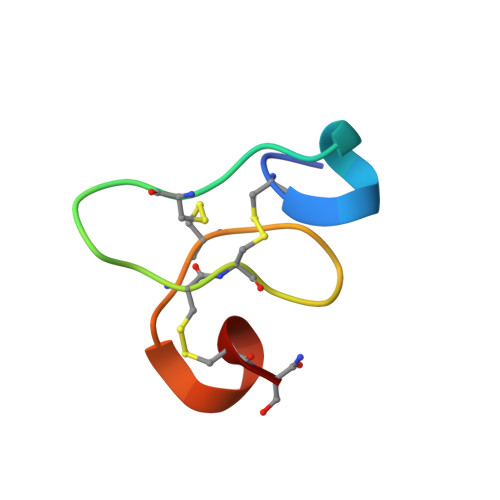
25 NMR structures of Truncated Hevein of 32 aa (Hevein-32) complex with N,N,N-triacetylglucosamina


Experimental Data Snapshot

  • Method: SOLUTION NMR
  • Conformers Calculated: 25 
  • Conformers Submitted: 25 
  • Selection Criteria: all calculated structures submitted 

wwPDB Validation 3D Report Full Report

Validation slider image for 1T0W

This is version 2.1 of the entry. See complete history

Literature

NMR and modeling studies of protein-carbohydrate interactions: synthesis, three-dimensional structure, and recognition properties of a minimum hevein domain with binding affinity for chitooligosaccharides

Aboitiz, N.Vila-Perello, M.Groves, P.Asensio, J.L.Andreu, D.Canada, F.J.Jimenez-Barbero, J.

(2004) Chembiochem 5: 1245-1245

  • DOI: https://doi.org/10.1002/cbic.200400025
  • Primary Citation Related Structures: 
    1T0W

  • PubMed Abstract: 

    HEV32, a 32-residue, truncated hevein lacking eleven C-terminal amino acids, was synthesized by solid-phase methodology and correctly folded with three cysteine bridge pairs. The affinities of HEV32 for small chitin fragments--in the forms of N,N',N"-triacetylchitotriose ((GlcNAc)3) (millimolar) and N,N',N",N"',N"",N""'-hexaacetylchitohexaose ((GlcNAc)6) (micromolar)--as measured by NMR and fluorescence methods, are comparable with those of native hevein. The HEV32 ligand-binding process is enthalpy driven, while entropy opposes binding. The NMR structure of ligand-bound HEV32 in aqueous solution was determined to be highly similar to the NMR structure of ligand-bound hevein. Solvated molecular-dynamics simulations were performed in order to monitor the changes in side-chain conformation of the binding site of HEV32 and hevein upon interaction with ligands. The calculations suggest that the Trp21 side-chain orientation of HEV32 in the free form differs from that in the bound state; this agrees with fluorescence and thermodynamic data. HEV32 provides a simple molecular model for studying protein-carbohydrate interactions and for understanding the physiological relevance of small native hevein domains lacking C-terminal residues.


  • Organizational Affiliation
    • Department of Protein Structure and Function, Centro de Investigaciones Biológicas, CSIC, Ramiro de Maeztu 9, 28040 Madrid, Spain.

Macromolecule Content 

  • Total Structure Weight: 4.11 kDa 
  • Atom Count: 282 
  • Modeled Residue Count: 33 
  • Deposited Residue Count: 33 
  • Unique protein chains: 1

Macromolecules

Find similar proteins by:|  3D Structure
Entity ID: 1
MoleculeChains  Sequence LengthOrganismDetailsImage
Hevein33N/AMutation(s): 0 
UniProt
Find proteins for P02877 (Hevea brasiliensis)
Explore P02877 
Go to UniProtKB:  P02877
Entity Groups
Sequence Clusters30% Identity50% Identity70% Identity90% Identity95% Identity100% Identity
UniProt GroupP02877
Sequence Annotations
Expand
Reference Sequence

Oligosaccharides

Help  
Entity ID: 2
MoleculeChains Length2D Diagram GlycosylationD Interactions
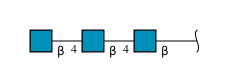
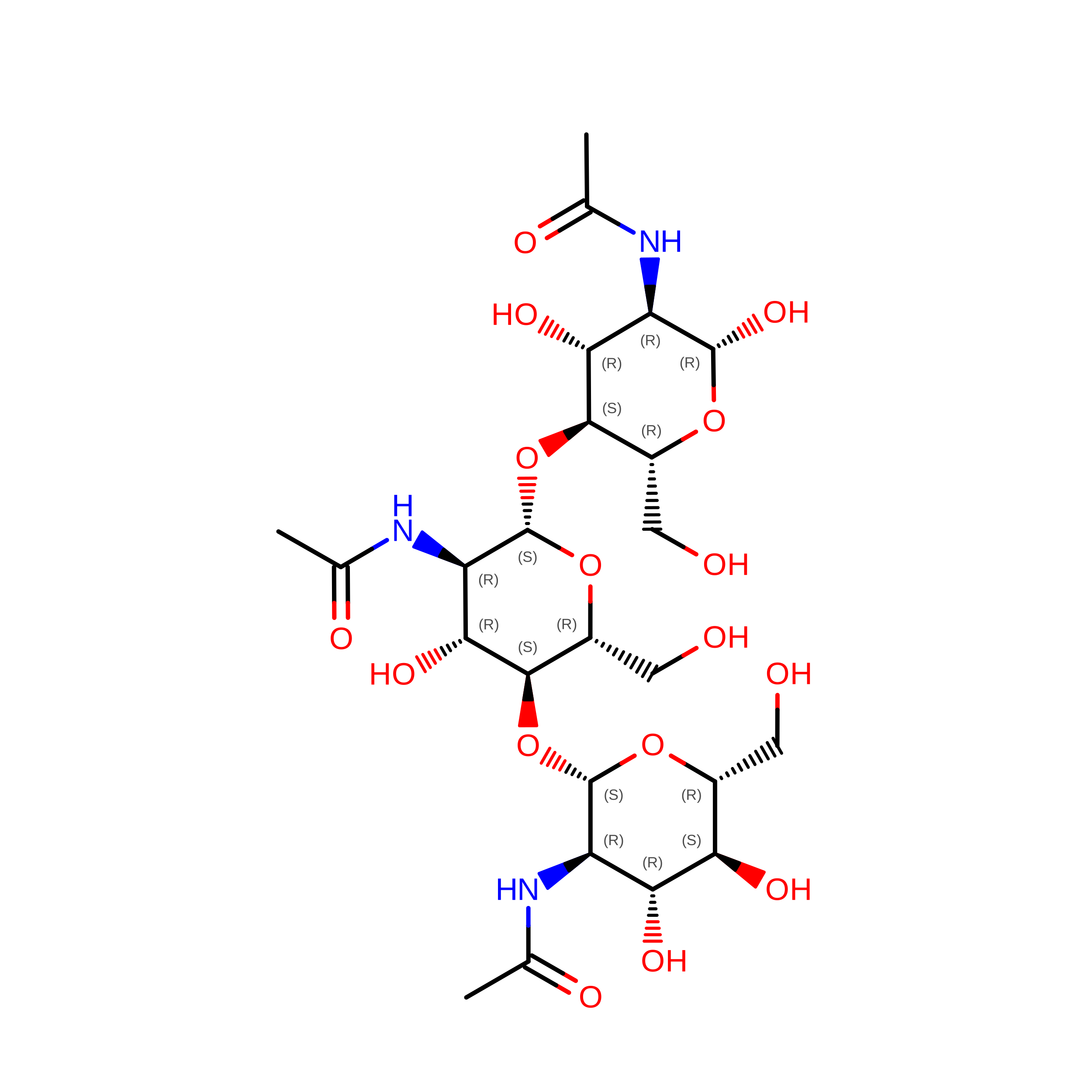
2-acetamido-2-deoxy-beta-D-glucopyranose-(1-4)-2-acetamido-2-deoxy-beta-D-glucopyranose-(1-4)-2-acetamido-2-deoxy-beta-D-glucopyranose
B
3N/A
Glycosylation Resources
GlyTouCan: G47362BJ
GlyCosmos: G47362BJ
GlyGen: G47362BJ

Biologically Interesting Molecules (External Reference) 

1 Unique

Experimental Data & Validation

Experimental Data

  • Method: SOLUTION NMR
  • Conformers Calculated: 25 
  • Conformers Submitted: 25 
  • Selection Criteria: all calculated structures submitted 

Structure Validation

View Full Validation Report


Entry History 

Deposition Data

Revision History  (Full details and data files)

  • Version 1.0: 2004-09-28
    Type: Initial release
  • Version 1.1: 2008-04-30
    Changes: Version format compliance
  • Version 1.2: 2011-07-13
    Changes: Non-polymer description, Version format compliance
  • Version 2.0: 2020-07-29
    Type: Remediation
    Reason: Carbohydrate remediation
    Changes: Advisory, Atomic model, Data collection, Derived calculations, Structure summary
  • Version 2.1: 2024-10-30
    Changes: Data collection, Database references, Structure summary