Download Mendeley
Crystal structures of Escherichia coli topoisomerase IV ParE subunit (24 and 43 kilodaltons): a single residue dictates differences in novobiocin potency against topoisomerase IV and DNA gyrase.
Bellon, S., Parsons, J.D., Wei, Y., Hayakawa, K., Swenson, L.L., Charifson, P.S., Lippke, J.A., Aldape, R., Gross, C.H.(2004) Antimicrob Agents Chemother 48: 1856-1864
- PubMed: 15105144 Search on PubMedSearch on PubMed Central
- DOI: https://doi.org/10.1128/AAC.48.5.1856-1864.2004
- Primary Citation Related Structures:
1S14, 1S16 - PubMed Abstract:
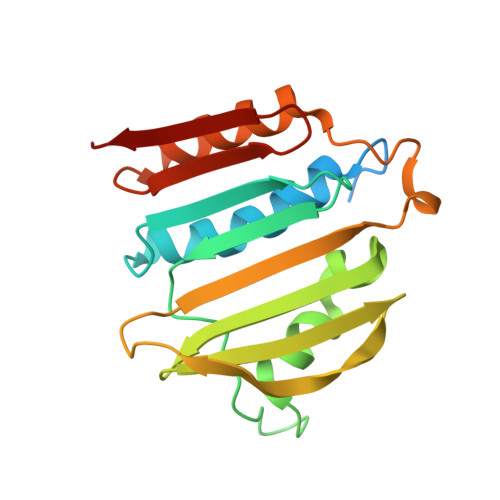
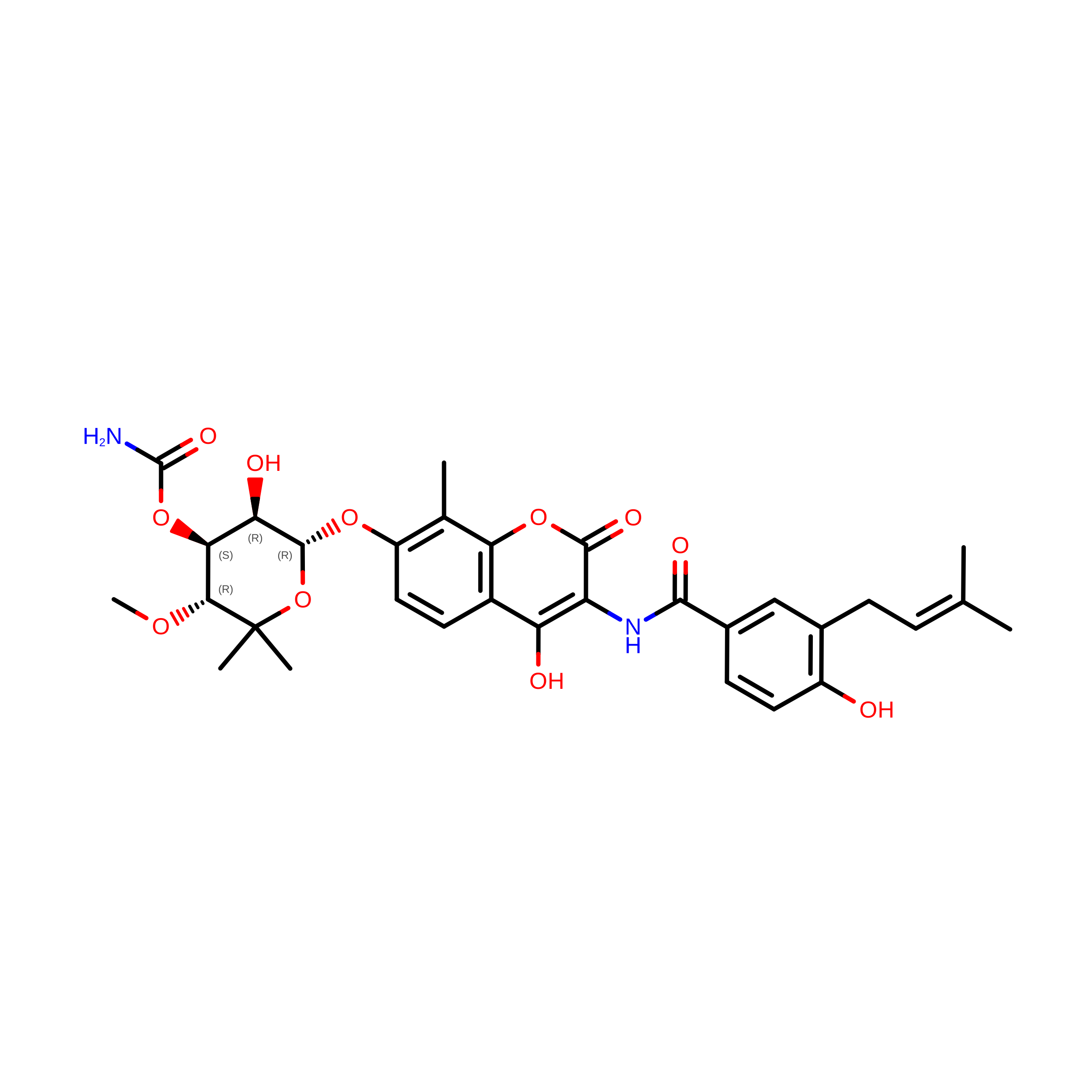
Topoisomerase IV and DNA gyrase are related bacterial type II topoisomerases that utilize the free energy from ATP hydrolysis to catalyze topological changes in the bacterial genome. The essential function of DNA gyrase is the introduction of negative DNA supercoils into the genome, whereas the essential function of topoisomerase IV is to decatenate daughter chromosomes following replication. Here, we report the crystal structures of a 43-kDa N-terminal fragment of Escherichia coli topoisomerase IV ParE subunit complexed with adenylyl-imidodiphosphate at 2.0-A resolution and a 24-kDa N-terminal fragment of the ParE subunit complexed with novobiocin at 2.1-A resolution. The solved ParE structures are strikingly similar to the known gyrase B (GyrB) subunit structures. We also identified single-position equivalent amino acid residues in ParE (M74) and in GyrB (I78) that, when exchanged, increased the potency of novobiocin against topoisomerase IV by nearly 20-fold (to 12 nM). The corresponding exchange in gyrase (I78 M) yielded a 20-fold decrease in the potency of novobiocin (to 1.0 micro M). These data offer an explanation for the observation that novobiocin is significantly less potent against topoisomerase IV than against DNA gyrase. Additionally, the enzyme kinetic parameters were affected. In gyrase, the ATP K(m) increased approximately 5-fold and the V(max) decreased approximately 30%. In contrast, the topoisomerase IV ATP K(m) decreased by a factor of 6, and the V(max) increased approximately 2-fold from the wild-type values. These data demonstrate that the ParE M74 and GyrB I78 side chains impart opposite effects on the enzyme's substrate affinity and catalytic efficiency.
- Vertex Pharmaceuticals Incorporated, Cambridge, Massachusetts 02139, USA.
Organizational Affiliation: