1O6F | pdb_00001o6f

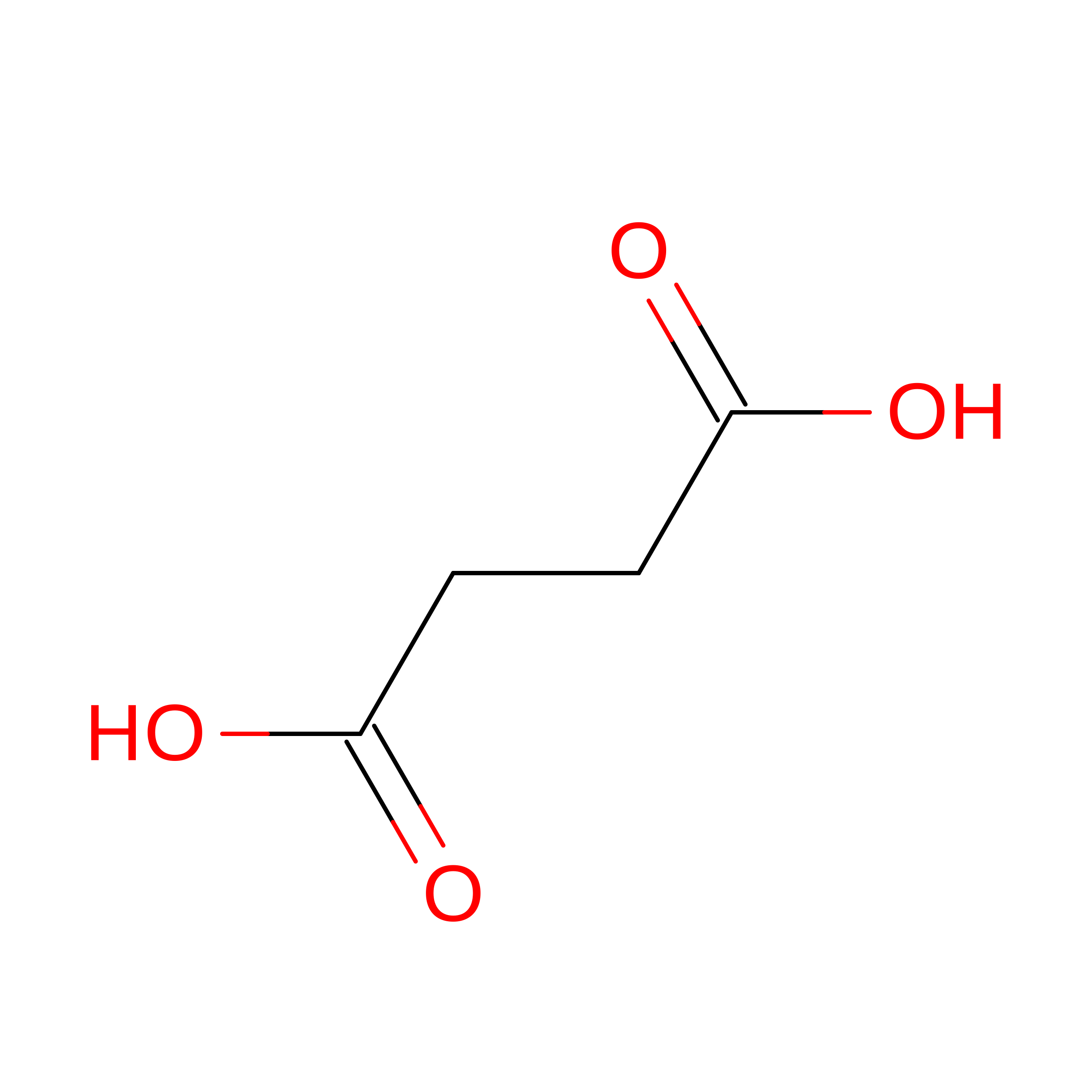
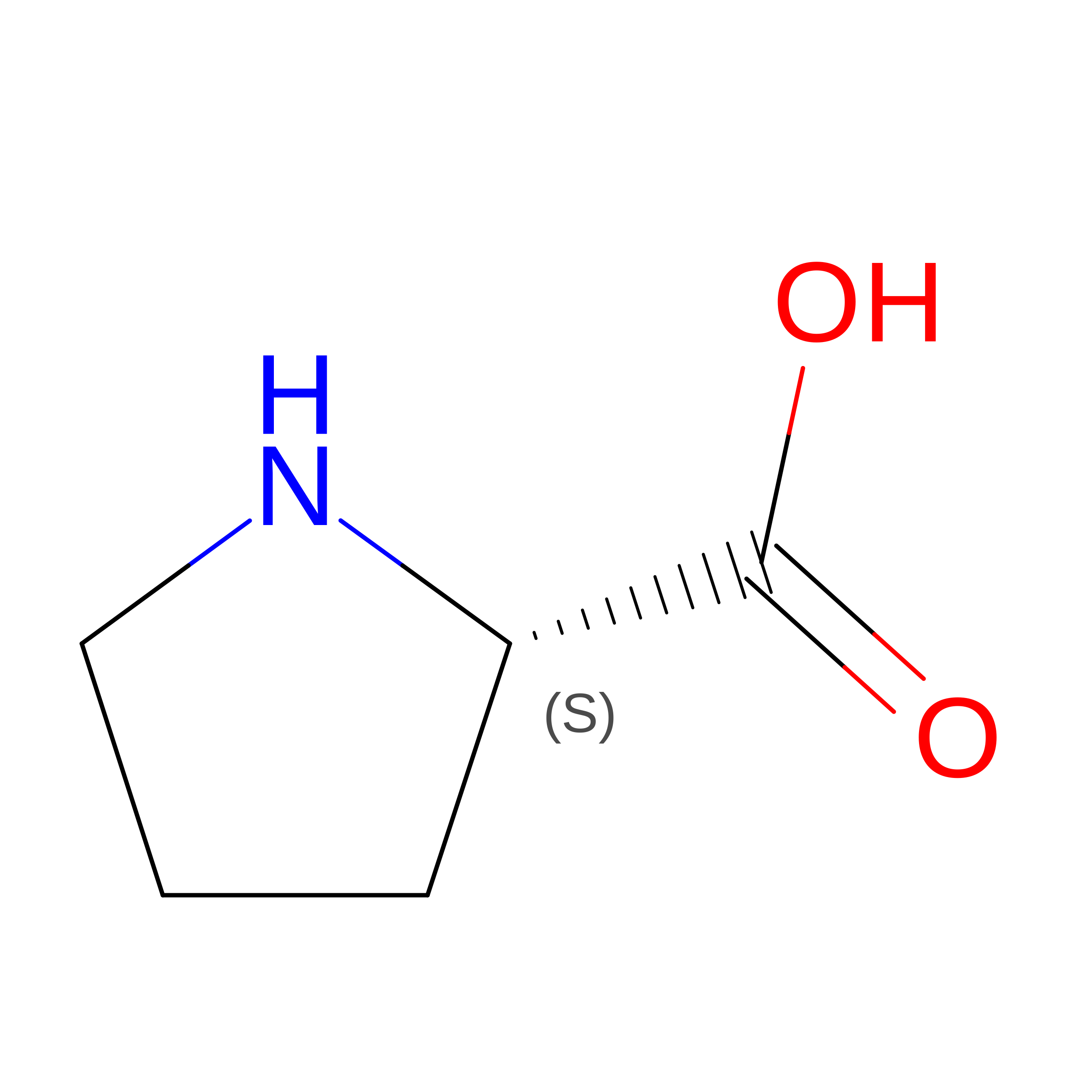
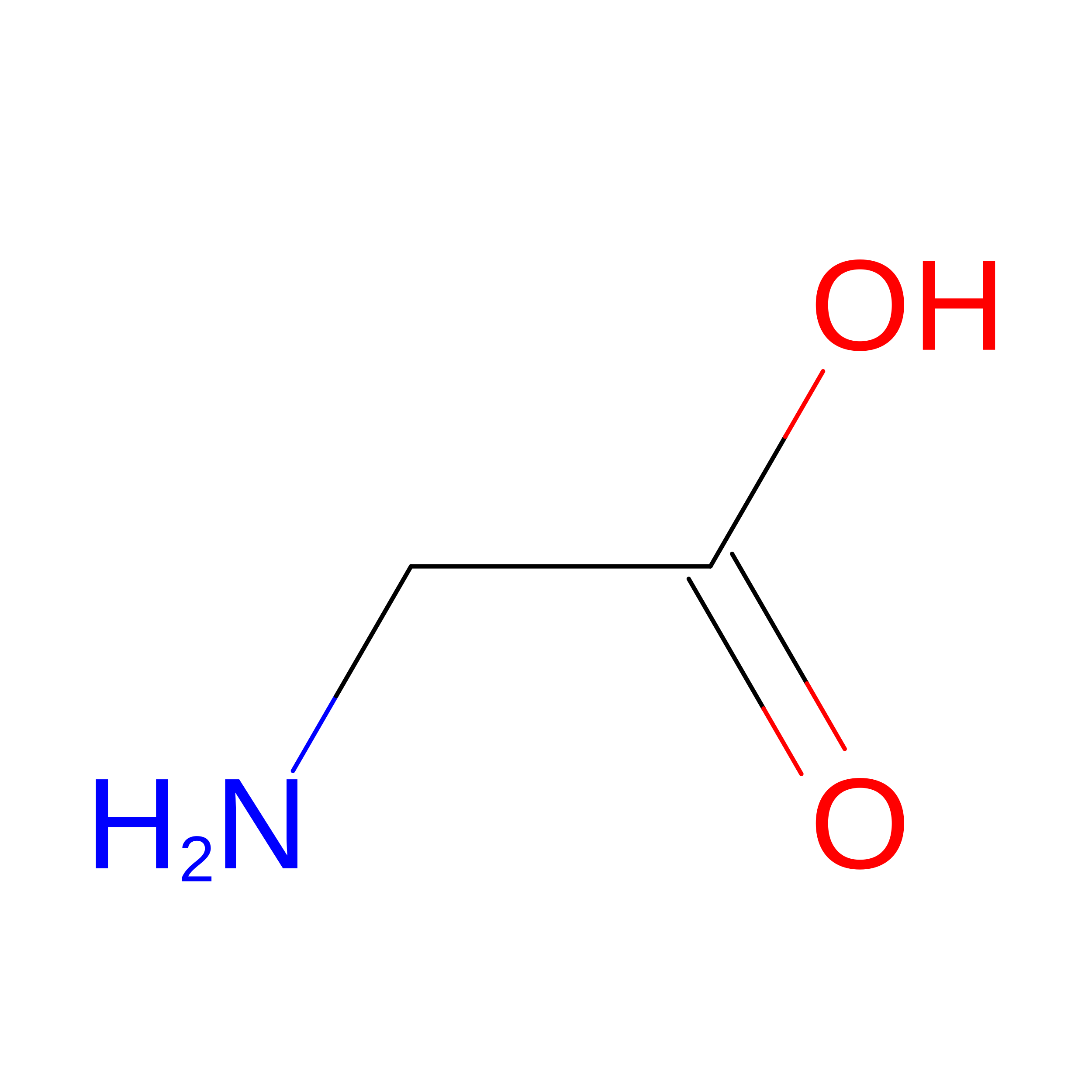
PROLYL OLIGOPEPTIDASE FROM PORCINE BRAIN, D641A MUTANT WITH BOUND PEPTIDE LIGAND SUC-GLY-PRO


Experimental Data Snapshot

  • Method: X-RAY DIFFRACTION
  • Resolution: 1.60 Å
  • R-Value Free: 
    0.221 (Depositor) 
  • R-Value Work: 
    0.202 (Depositor) 
  • R-Value Observed: 
    0.202 (Depositor) 

Starting Model: experimental
View more details

wwPDB Validation 3D Report Full Report

Validation slider image for 1O6F

This is version 1.5 of the entry. See complete history

Literature

Substrate-dependent competency of the catalytic triad of prolyl oligopeptidase.

Szeltner, Z.Rea, D.Juhasz, T.Renner, V.Mucsi, Z.Orosz, G.Fulop, V.Polgar, L.

(2002) J Biological Chem 277: 44597-44605

  • DOI: https://doi.org/10.1074/jbc.M207386200
  • Primary Citation Related Structures: 
    1O6F, 1O6G

  • PubMed Abstract: 

    Prolyl oligopeptidase, a serine peptidase unrelated to trypsin and subtilisin, is implicated in memory disorders and is an important target of drug design. The catalytic competence of the Asp(641) residue of the catalytic triad (Ser(554), Asp(641), His(680)) was studied using the D641N and D641A variants of the enzyme. Both variants displayed 3 orders of magnitude reduction in k(cat)/K(m) for benzyloxycarbonyl-Gly-Pro-2-naphthylamide. Using an octapeptide substrate, the decrease was 6 orders of magnitude, whereas with Z-Gly-Pro-4-nitrophenyl ester there was virtually no change in k(cat)/K(m). This indicates that the contribution of Asp(641) is very much dependent on the substrate-leaving group, which was not the case for the classic serine peptidase, trypsin. The rate constant for benzyloxycarbonyl-Gly-Pro-thiobenzylester conformed to this series as demonstrated by a method designed for monitoring the hydrolysis of thiolesters in the presence of thiol groups. Alkylation of His(680) with Z-Gly-Pro-CH(2)Cl was concluded with similar rate constants for wild-type and D641A variant. However, kinetic measurements with Z-Gly-Pro-OH, a product-like inhibitor, indicated that the His(680) is not accessible in the enzyme variants. Crystal structure determination of these mutants revealed subtle perturbations related to the catalytic activity. Many of these observations show differences in the catalysis between trypsin and prolyl oligopeptidase.


  • Organizational Affiliation
    • Institute of Enzymology, Biological Research Center, Hungarian Academy of Sciences, H-1518, P. O. Box 7, Budapest 112, Hungary.

Macromolecule Content 

  • Total Structure Weight: 81.4 kDa 
  • Atom Count: 6,461 
  • Modeled Residue Count: 710 
  • Deposited Residue Count: 710 
  • Unique protein chains: 1

Macromolecules

Find similar proteins by:|  3D Structure
Entity ID: 1
MoleculeChains  Sequence LengthOrganismDetailsImage
Prolyl endopeptidase710Sus scrofaMutation(s): 1 
Gene Names: PREP
EC: 3.4.21.26
UniProt
Find proteins for P23687 (Sus scrofa)
Explore P23687 
Go to UniProtKB:  P23687
Entity Groups
Sequence Clusters30% Identity50% Identity70% Identity90% Identity95% Identity100% Identity
UniProt GroupP23687
Sequence Annotations
Expand
Reference Sequence

Experimental Data & Validation

Experimental Data

  • Method: X-RAY DIFFRACTION
  • Resolution: 1.60 Å
  • R-Value Free:  0.221 (Depositor) 
  • R-Value Work:  0.202 (Depositor) 
  • R-Value Observed: 0.202 (Depositor) 
Space Group: P 21 21 21
Unit Cell:
Length ( Å )Angle ( ˚ )
a = 71.4α = 90
b = 100.2β = 90
c = 111.3γ = 90
Software Package:
Software NamePurpose
DENZOdata reduction
SCALEPACKdata scaling
CCP4phasing
X-PLORphasing
X-PLORrefinement

Structure Validation

View Full Validation Report


Entry History 

Deposition Data

Revision History  (Full details and data files)

  • Version 1.0: 2002-11-18
    Type: Initial release
  • Version 1.1: 2011-05-08
    Changes: Version format compliance
  • Version 1.2: 2011-07-13
    Changes: Version format compliance
  • Version 1.3: 2018-06-20
    Changes: Advisory, Data collection, Derived calculations
  • Version 1.4: 2018-12-12
    Changes: Data collection, Database references, Source and taxonomy, Structure summary
  • Version 1.5: 2023-12-13
    Changes: Data collection, Database references, Derived calculations, Refinement description