Download Mendeley
N-terminal arm exchange is observed in the 2.15 A crystal structure of oxidized nitrite reductase from Pseudomonas aeruginosa.
Nurizzo, D., Silvestrini, M.C., Mathieu, M., Cutruzzola, F., Bourgeois, D., Fulop, V., Hajdu, J., Brunori, M., Tegoni, M., Cambillau, C.(1997) Structure 5: 1157-1171
- PubMed: 9331415 Search on PubMed
- DOI: https://doi.org/10.1016/s0969-2126(97)00267-0
- Primary Citation Related Structures:
1NIR - PubMed Abstract:
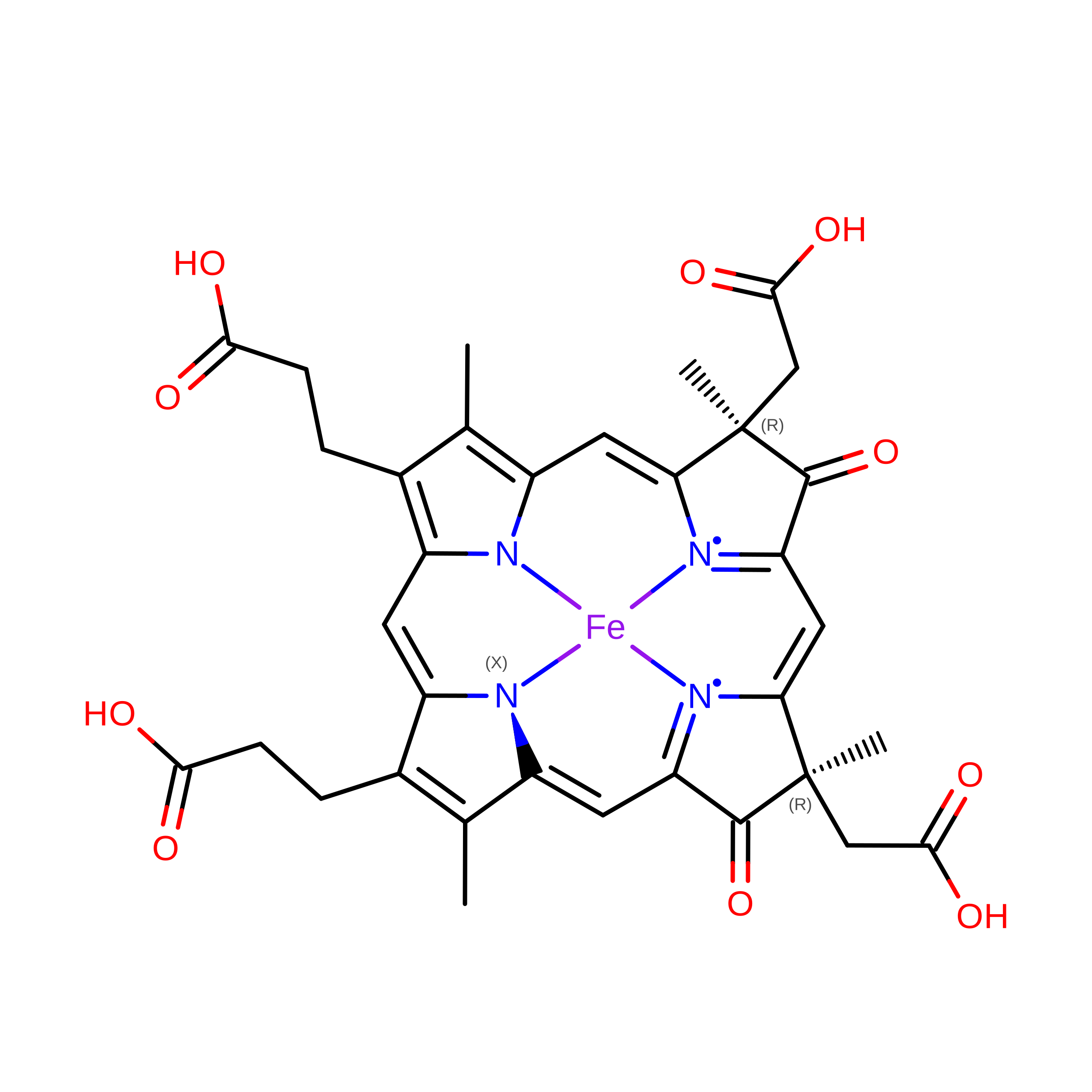
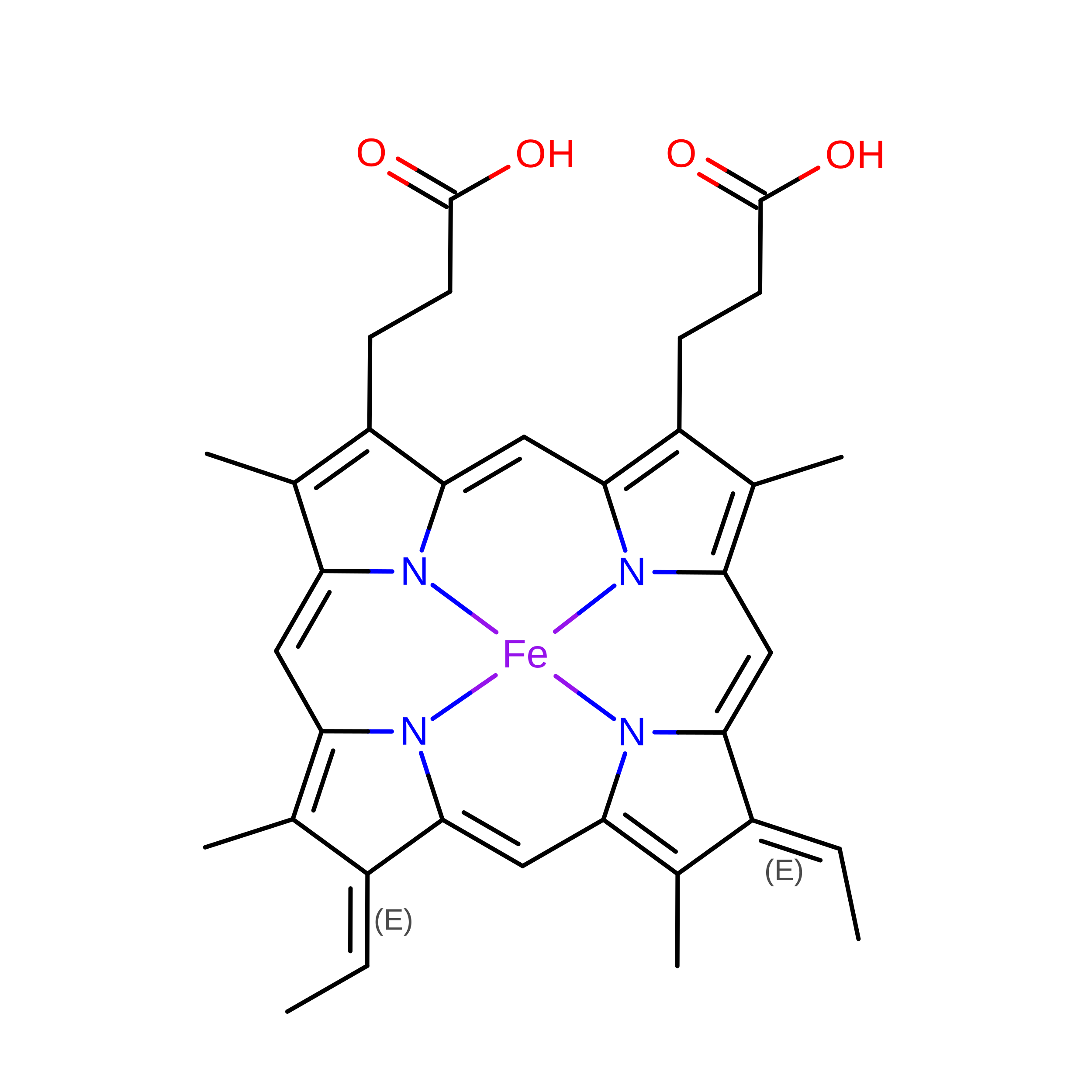
Nitrite reductase from Pseudomonas aeruginosa (NiR-Pa) is a dimer consisting of two identical 60 kDa subunits, each of which contains one c and one d1 heme group. This enzyme, a soluble component of the electron-transfer chain that uses nitrate as a source of energy, can be induced by the addition of nitrate to the bacterial growth medium. NiR-Pa catalyzes the reduction of nitrite (NO2-) to nitric oxide (NO); in vitro, both cytochrome c551 and azurin are efficient electron donors in this reaction. NiR is a key denitrification enzyme, which controls the rate of the production of toxic nitric oxide (NO) and ultimately regulates the release of NO into the atmosphere. The structure of the orthorhombic form (P2(1)2(1)2) of oxidized NiR-Pa was solved at 2.15 A resolution, using molecular replacement with the coordinates of the NiR from Thiosphaera pantotropha (NiR-Tp) as the starting model. Although the d1-heme domains are almost identical in both enzyme structures, the c domain of NiR-Pa is more like the classical class I cytochrome-c fold because it has His51 and Met88 as heme ligands, instead of His17 and His69 present in NiR-Tp. In addition, the methionine-bearing loop, which was displaced by His17 of the NiR-Tp N-terminal segment, is back to normal in our structure. The N-terminal residues (5/6-30) of NiR-Pa and NiR-Tp have little sequence identity. In Nir-Pa, this N-terminal segment of one monomer crosses the dimer interface and wraps itself around the other monomer. Tyr10 of this segment is hydrogen bonded to an hydroxide ion--the sixth ligand of the d1-heme Fe, whereas the equivalent residue in NiR-Tp, Tyr25, is directly bound to the Fe. Two ligands of hemes c and d1 differ between the two known NiR structures, which accounts for the fact that they have quite different spectroscopic and kinetic features. The unexpected domain-crossing by the N-terminal segment of NiR-Pa is comparable to that of 'domain swapping' or 'arm exchange' previously observed in other systems and may explain the observed cooperativity between monomers of dimeric NiR-Pa. In spite of having similar sequence and fold, the different kinetic behaviour and the spectral features of NiR-Pa and NiR-Tp are tuned by the N-terminal stretch of residues. A further example of this may come from another NiR, from Pseudomonas stutzeri, which has an N terminus very different from that of the two above mentioned NiRs.
- Architecture et Fonction des Macromolécules Biologiques, U.P.R. 9039-C.N.R.S., I.B.S.M., Marseille, France.
Organizational Affiliation: