Download Mendeley
Nanomolar inhibitors of AmpC beta-lactamase.
Morandi, F., Caselli, E., Morandi, S., Focia, P.J., Blazquez, J., Shoichet, B.K., Prati, F.(2003) J Am Chem Soc 125: 685-695
- PubMed: 12526668 Search on PubMed
- DOI: https://doi.org/10.1021/ja0288338
- Primary Citation Related Structures:
1MXO, 1MY8 - PubMed Abstract:
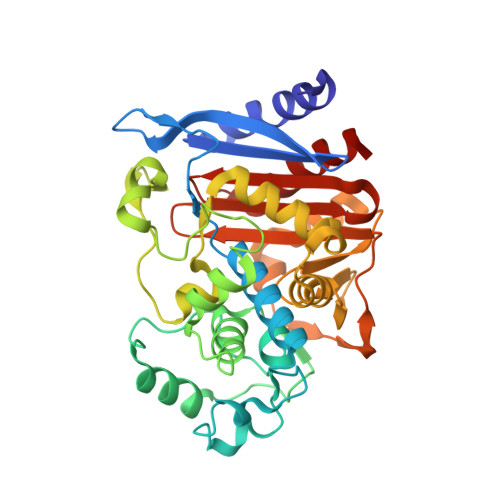
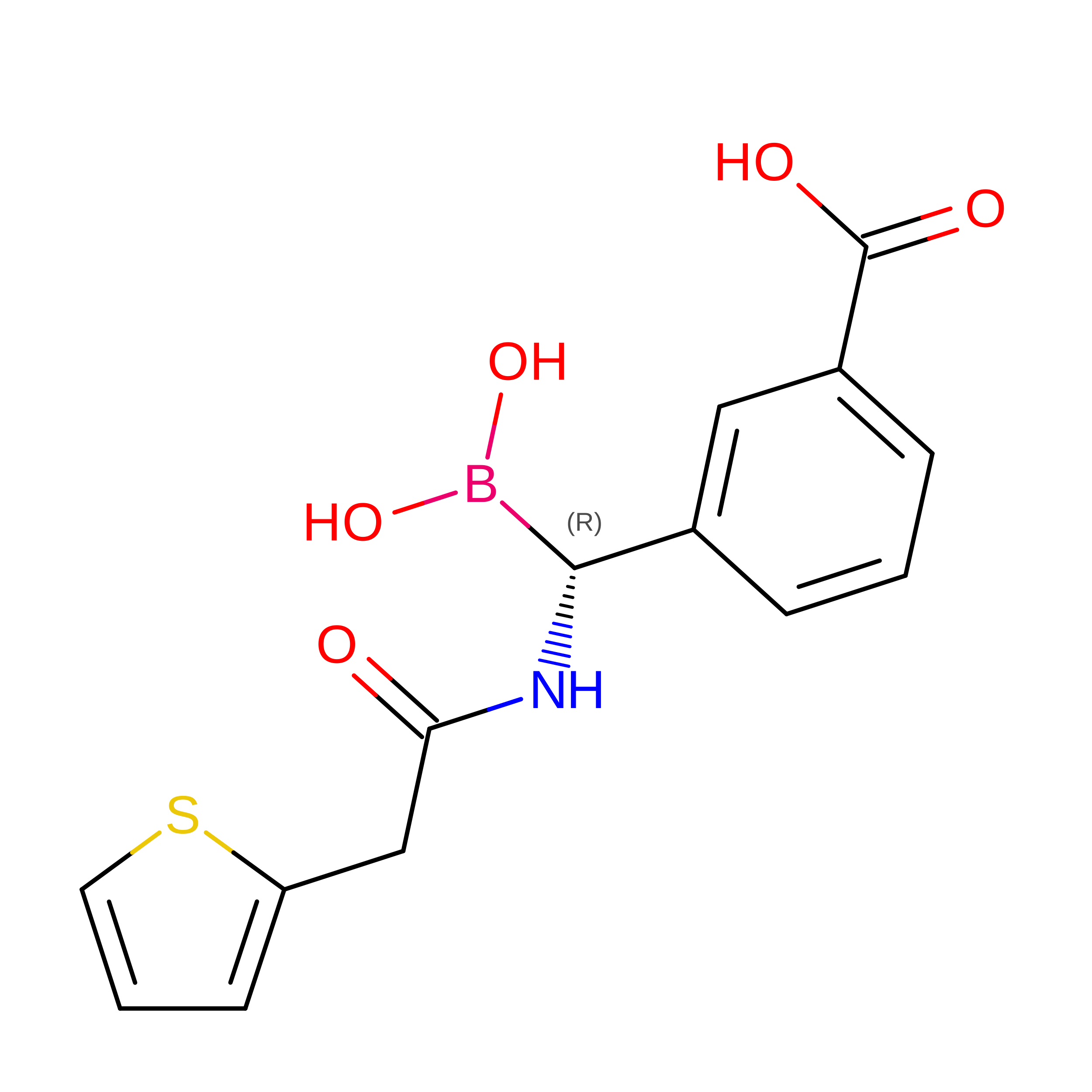
beta-lactamases are the most widespread resistance mechanism to beta-lactam antibiotics, such as the penicillins and the cephalosporins. In an effort to combat these enzymes, a combination of stereoselective organic synthesis, enzymology, microbiology, and X-ray crystallography was used to design and evaluate new carboxyphenyl-glycylboronic acid transition-state analogue inhibitors of the class C beta-lactamase AmpC. The new compounds improve inhibition by over 2 orders of magnitude compared to analogous glycylboronic acids, with K(i) values as low as 1 nM. On the basis of the differential binding of different analogues, the introduced carboxylate alone contributes about 2.1 kcal/mol in affinity. This carboxylate corresponds to the ubiquitous C3(4)' carboxylate of beta-lactams, and this energy represents the first thermodynamic measurement of the importance of this group in molecular recognition by class C beta-lactamases. The structures of AmpC in complex with two of these inhibitors were determined by X-ray crystallography at 1.72 and 1.83 A resolution. These structures suggest a structural basis for the high affinity of the new compounds and provide templates for further design. The highest affinity inhibitor was 5 orders of magnitude more selective for AmpC than for characteristic serine proteases, such as chymotrypsin. This inhibitor reversed the resistance of clinical pathogens to the third generation cephalosporin ceftazidime; it may serve as a lead compound for drug discovery to combat bacterial resistance to beta-lactam antibiotics.
- Department of Pharmaceutical Chemistry, University of California, San Francisco, Mission Bay Genentech Hall, 600 16th Street, Mail Box 2240, 94143, USA.
Organizational Affiliation: