Download Mendeley
Molecular basis for the stabilization and inhibition of 2, 3-dihydroxybiphenyl 1,2-dioxygenase by t-butanol.
Vaillancourt, F.H., Han, S., Fortin, P.D., Bolin, J.T., Eltis, L.D.(1998) J Biol Chem 273: 34887-34895
- PubMed: 9857017 Search on PubMed
- DOI: https://doi.org/10.1074/jbc.273.52.34887
- Primary Citation Related Structures:
1KMY, 1KND, 1KNF - PubMed Abstract:
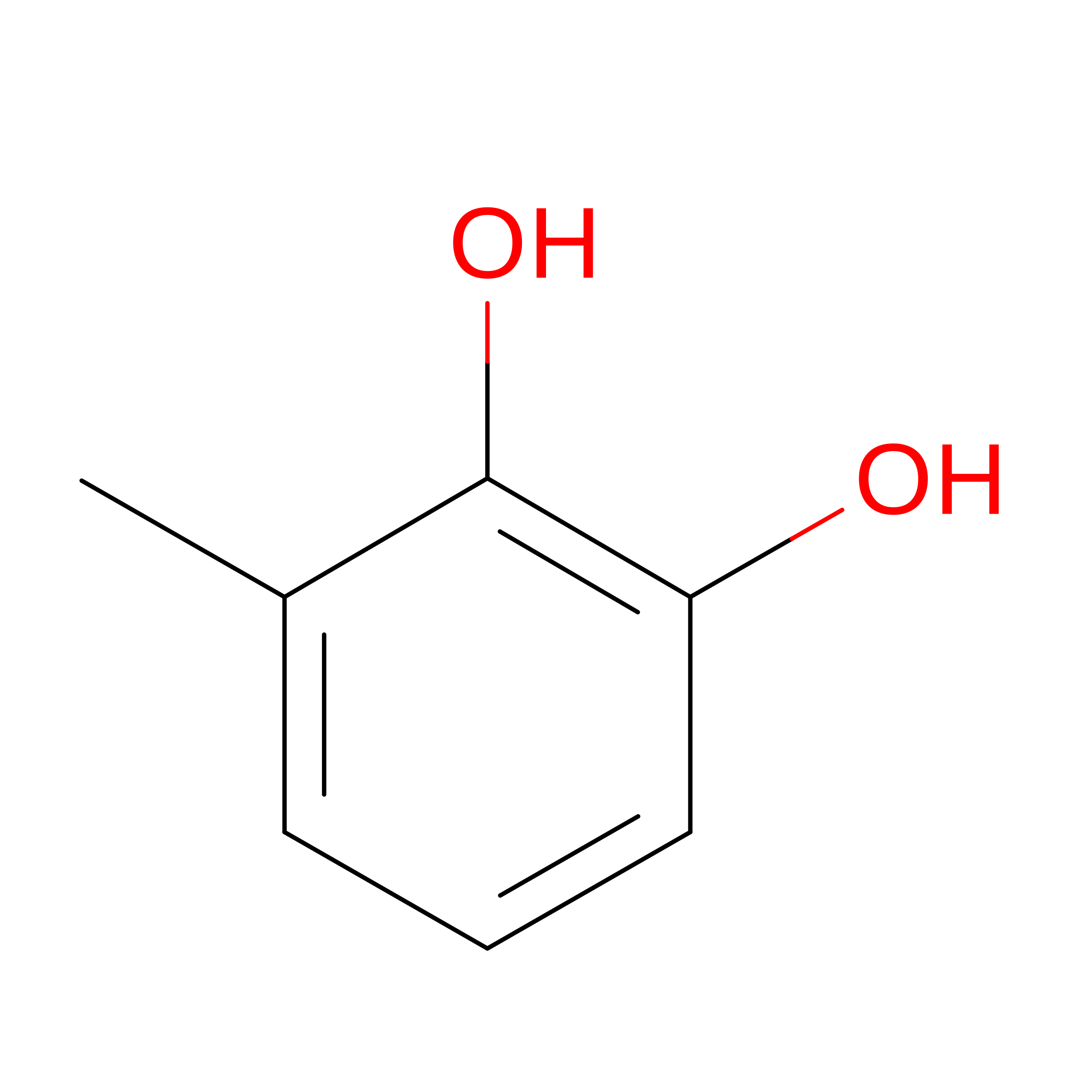
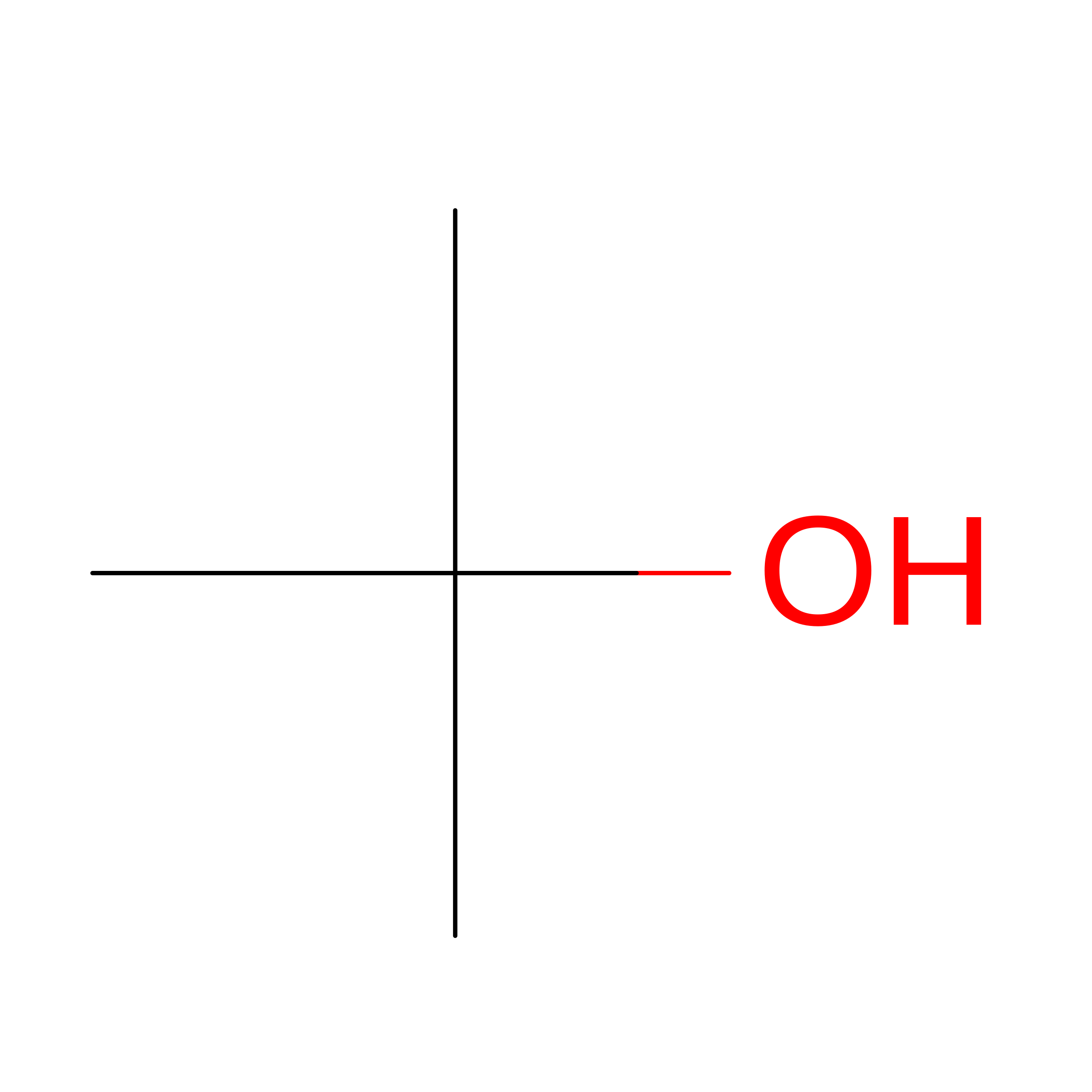
The steady-state cleavage of catechols by 2,3-dihydroxybiphenyl 1, 2-dioxygenase (DHBD), the extradiol dioxygenase of the biphenyl biodegradation pathway, was investigated using a highly active, anaerobically purified preparation of enzyme. The kinetic data obtained using 2,3-dihydroxybiphenyl (DHB) fit a compulsory order ternary complex mechanism in which substrate inhibition occurs. The Km for dioxygen was 1280 +/- 70 microM, which is at least 2 orders of magnitude higher than that reported for catechol 2,3-dioxygenases. Km and Kd for DHB were 22 +/- 2 and 8 +/- 1 microM, respectively. DHBD was subject to reversible substrate inhibition and mechanism-based inactivation. In air-saturated buffer, the partition ratios of catecholic substrates substituted at C-3 were inversely related to their apparent specificity constants. Small organic molecules that stabilized DHBD most effectively also inhibited the cleavage reaction most strongly. The steady-state kinetic data and crystallographic results suggest that the stabilization and inhibition are due to specific interactions between the organic molecule and the active site of the enzyme. t-Butanol stabilized the enzyme and inhibited the cleavage of DHB in a mixed fashion, consistent with the distinct binding sites occupied by t-butanol in the crystal structures of the substrate-free form of the enzyme and the enzyme-DHB complex. In contrast, crystal structures of complexes with catechol and 3-methylcatechol revealed relationships between the binding of these smaller substrates and t-butanol that are consistent with the observed competitive inhibition.
- Department of Biochemistry, Pavillon Marchand, Université Laval, Québec City, P.Q. G1K 7P4, Canada.
Organizational Affiliation: