1KGQ | pdb_00001kgq

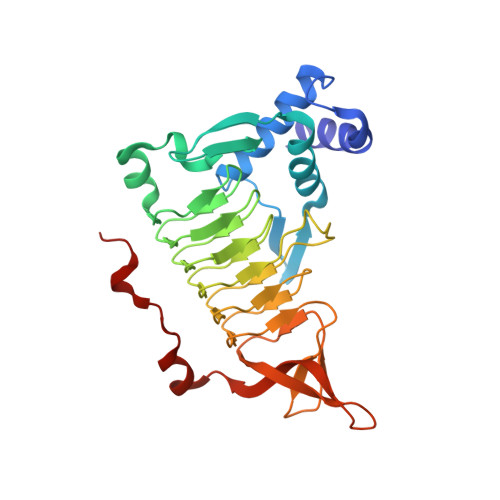
Crystal Structure of Tetrahydrodipicolinate N-Succinyltransferase in Complex with L-2-aminopimelate and Succinamide-CoA


Experimental Data Snapshot

  • Method: X-RAY DIFFRACTION
  • Resolution: 2.00 Å
  • R-Value Free: 
    0.250 (Depositor) 
  • R-Value Work: 
    0.174 (Depositor) 
  • R-Value Observed: 
    0.179 (Depositor) 

wwPDB Validation 3D Report Full Report

Validation slider image for 1KGQ

This is version 1.4 of the entry. See complete history

Literature

Acyl group specificity at the active site of tetrahydridipicolinate N-succinyltransferase.

Beaman, T.W.Vogel, K.W.Drueckhammer, D.G.Blanchard, J.S.Roderick, S.L.

(2002) Protein Sci 11: 974-979

  • DOI: https://doi.org/10.1110/ps.4310102
  • Primary Citation Related Structures: 
    1KGQ, 1KGT

  • PubMed Abstract: 

    Tetrahydrodipicolinate N-succinyltransferase (DapD) catalyzes the succinyl-CoA-dependent acylation of L-2-amino-6-oxopimelate to 2-N-succinyl-6-oxopimelate as part of the succinylase branch of the meso-diaminopimelate/lysine biosynthetic pathway of bacteria, blue-green algae, and plants. This pathway provides meso-diaminopimelate as a building block for cell wall peptidoglycan in most bacteria, and is regarded as a target pathway for antibacterial agents. We have solved the X-ray crystal structures of DapD in ternary complexes with pimelate/succinyl-CoA and L-2-aminopimelate with the nonreactive cofactor analog, succinamide-CoA. These structures define the binding conformation of the cofactor succinyl group and its interactions with the enzyme and place its thioester carbonyl carbon in close proximity to the nucleophilic 2-amino group of the acceptor, in support of a direct attack ternary complex mechanism. The acyl group specificity differences between homologous tetrahydrodipicolinate N-acetyl- and N-succinyltransferases can be rationalized with reference to at least three amino acids that interact with or give accessible active site volume to the cofactor succinyl group. These residues account at least in part for the substrate specificity that commits metabolic intermediates to either the succinylase or acetylase branches of the meso-diaminopimelate/lysine biosynthetic pathway.


  • Organizational Affiliation
    • Department of Biochemistry, Albert Einstein College of Medicine, Bronx, New York 10461, USA.

Macromolecule Content 

  • Total Structure Weight: 30.94 kDa 
  • Atom Count: 2,231 
  • Modeled Residue Count: 274 
  • Deposited Residue Count: 274 
  • Unique protein chains: 1

Macromolecules

Find similar proteins by:|  3D Structure
Entity ID: 1
MoleculeChains  Sequence LengthOrganismDetailsImage
2,3,4,5-TETRAHYDROPYRIDINE-2-CARBOXYLATE N-SUCCINYLTRANSFERASE274Mycobacterium tuberculosis variant bovisMutation(s): 0 
Gene Names: dapD
EC: 2.3.1.117
UniProt
Find proteins for P56220 (Unknown prokaryotic organism)
Explore P56220 
Go to UniProtKB:  P56220
Entity Groups
Sequence Clusters30% Identity50% Identity70% Identity90% Identity95% Identity100% Identity
UniProt GroupP56220
Sequence Annotations
Expand
Reference Sequence

Small Molecules

Ligands 2 Unique
IDChains Name / Formula / InChI Key2D Diagram3D Interactions
SCO

Query on SCO


Download:Ideal Coordinates CCD File
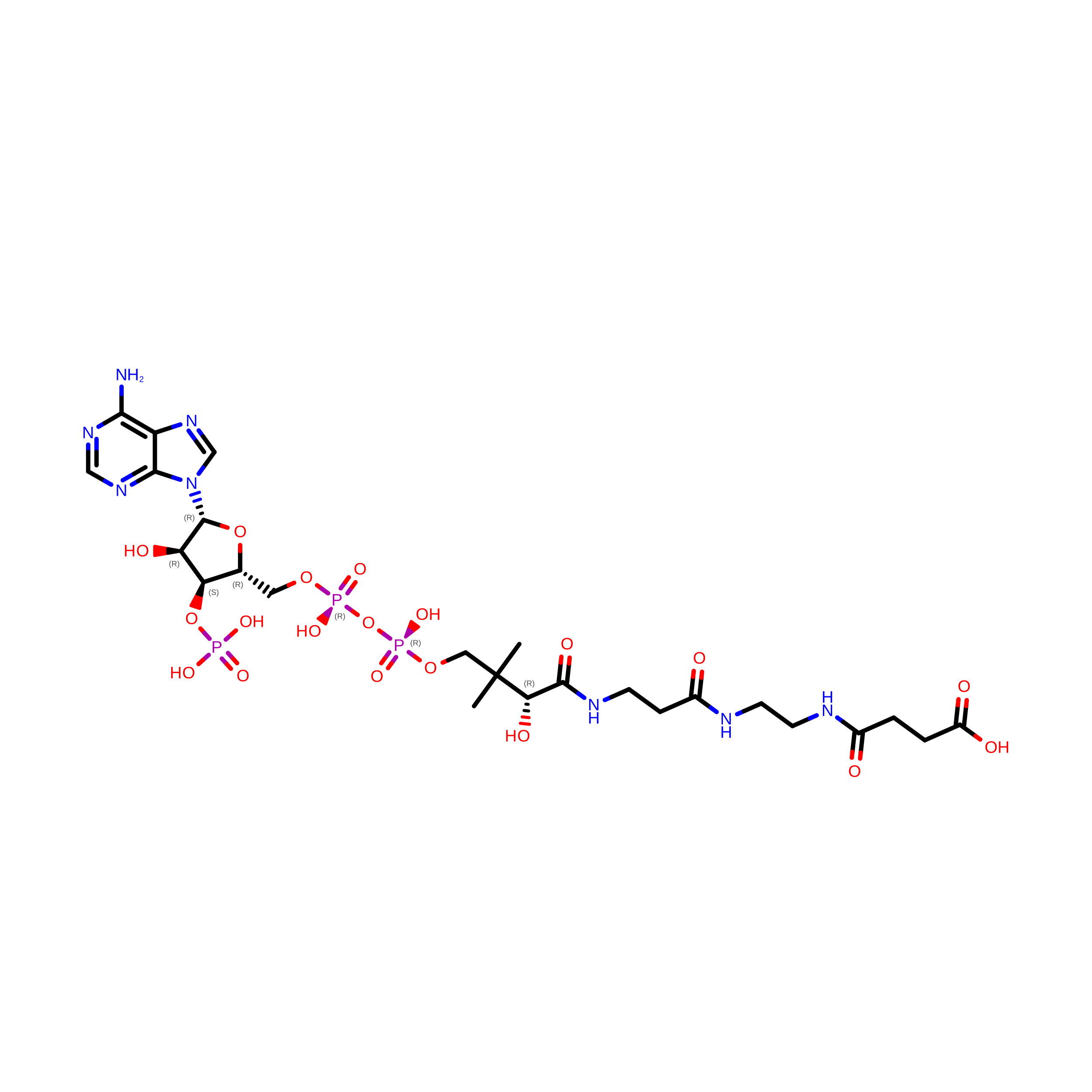
C [auth A]SUCCINAMIDE-COA
C25 H41 N8 O19 P3
WZEXTLJNSXEEHK-ITIYDSSPSA-N
NPI

Query on NPI


Download:Ideal Coordinates CCD File
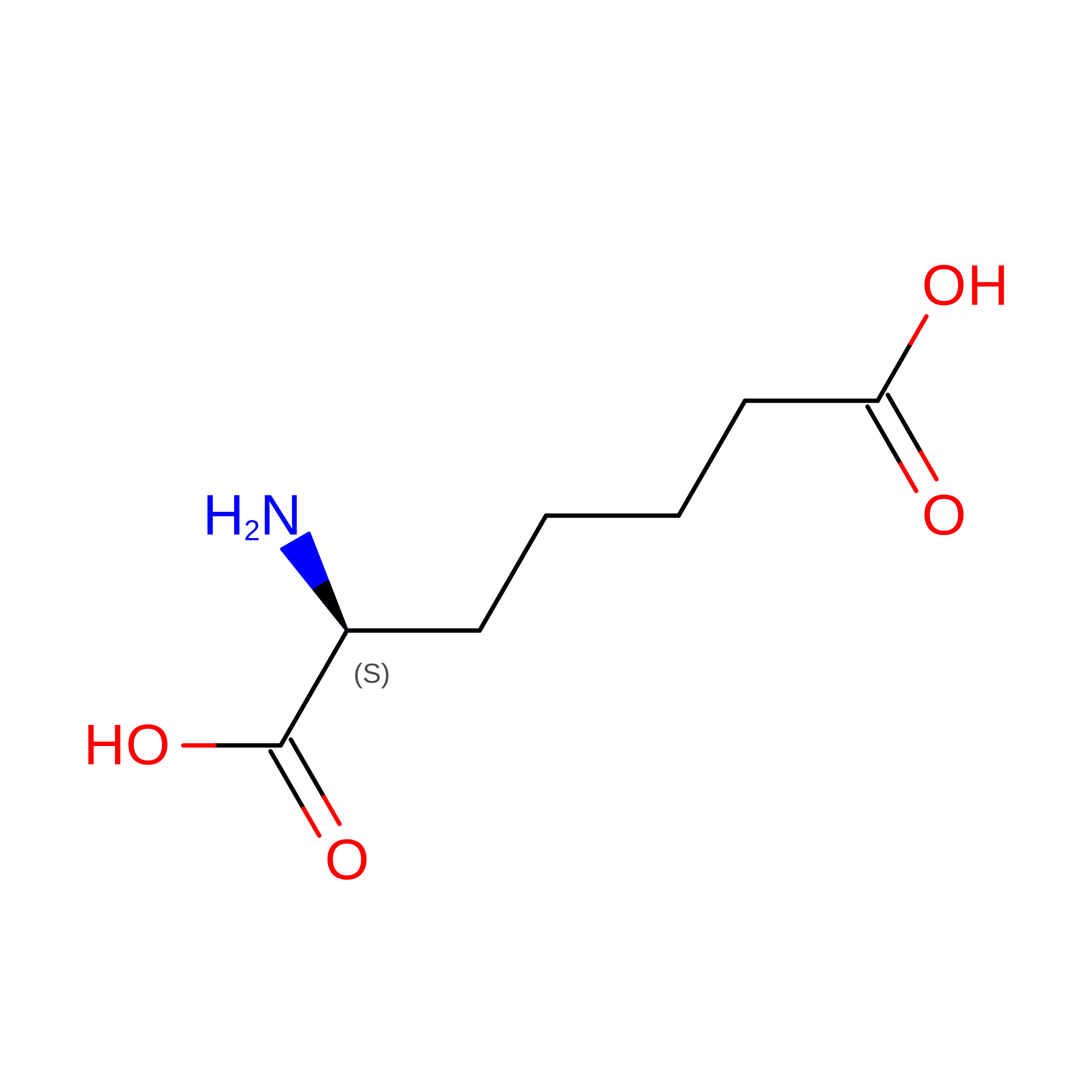
B [auth A](2S)-2-aminoheptanedioic acid
C7 H13 N O4
JUQLUIFNNFIIKC-YFKPBYRVSA-N

Experimental Data & Validation

Experimental Data

  • Method: X-RAY DIFFRACTION
  • Resolution: 2.00 Å
  • R-Value Free:  0.250 (Depositor) 
  • R-Value Work:  0.174 (Depositor) 
  • R-Value Observed: 0.179 (Depositor) 
Space Group: H 3
Unit Cell:
Length ( Å )Angle ( ˚ )
a = 95.84α = 90
b = 95.84β = 90
c = 72.64γ = 120
Software Package:
Software NamePurpose
TNTrefinement
X-GENdata reduction
XDSdata scaling
TNTphasing

Structure Validation

View Full Validation Report


Entry History 

Deposition Data

Revision History  (Full details and data files)

  • Version 1.0: 2002-04-03
    Type: Initial release
  • Version 1.1: 2008-04-27
    Changes: Version format compliance
  • Version 1.2: 2011-07-13
    Changes: Derived calculations, Version format compliance
  • Version 1.3: 2016-06-01
    Changes: Non-polymer description
  • Version 1.4: 2024-02-14
    Changes: Data collection, Database references, Derived calculations, Refinement description