Download Mendeley
Crystallographic and modeling studies of RNase III suggest a mechanism for double-stranded RNA cleavage.
Blaszczyk, J., Tropea, J.E., Bubunenko, M., Routzahn, K.M., Waugh, D.S., Court, D.L., Ji, X.(2001) Structure 9: 1225-1236
- PubMed: 11738048 Search on PubMed
- DOI: https://doi.org/10.1016/s0969-2126(01)00685-2
- Primary Citation Related Structures:
1I4S, 1JFZ - PubMed Abstract:
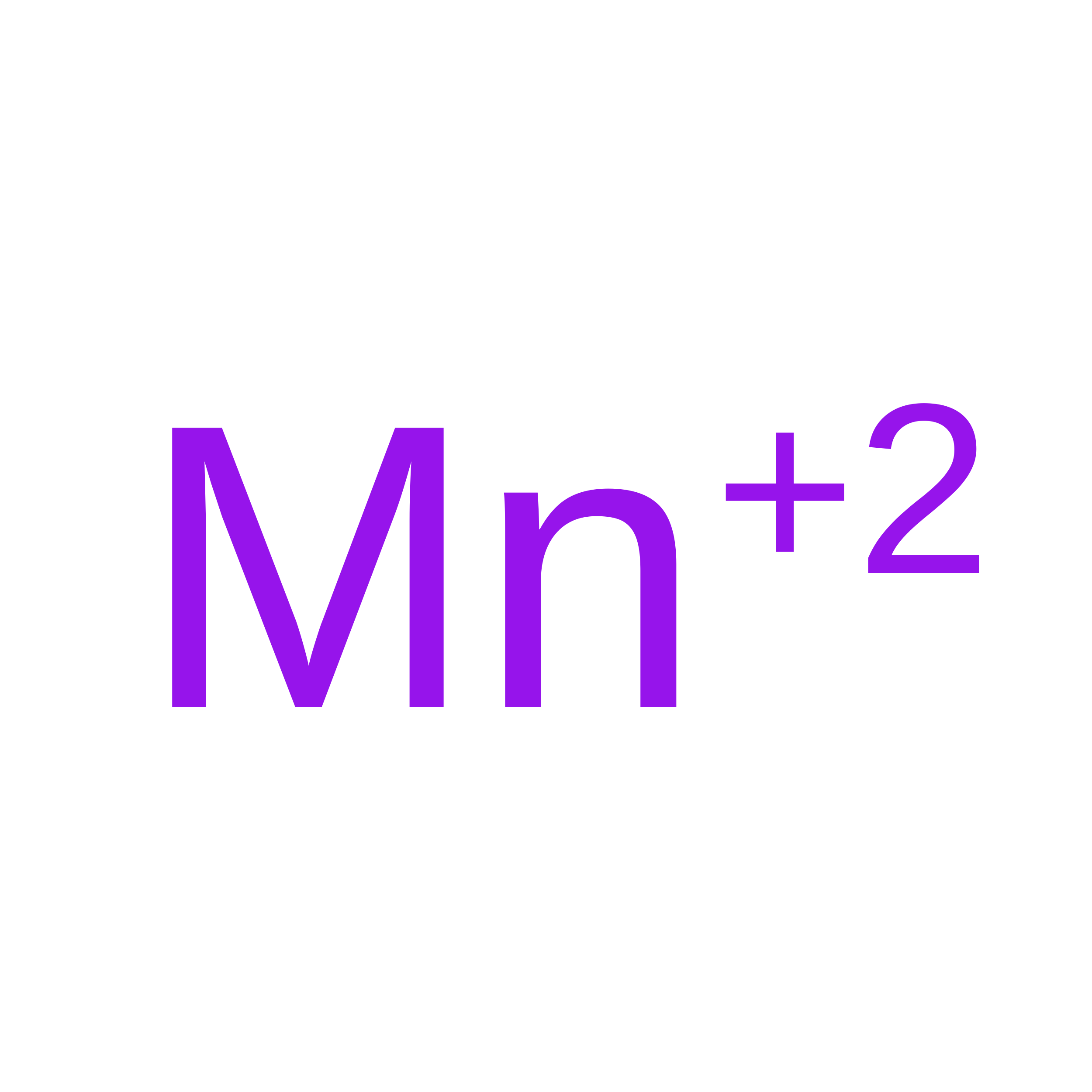
Aquifex aeolicus Ribonuclease III (Aa-RNase III) belongs to the family of Mg(2+)-dependent endonucleases that show specificity for double-stranded RNA (dsRNA). RNase III is conserved in all known bacteria and eukaryotes and has 1-2 copies of a 9-residue consensus sequence, known as the RNase III signature motif. The bacterial RNase III proteins are the simplest, consisting of two domains: an N-terminal endonuclease domain, followed by a double-stranded RNA binding domain (dsRBD). The three-dimensional structure of the dsRBD in Escherichia coli RNase III has been elucidated; no structural information is available for the endonuclease domain of any RNase III. We present the crystal structures of the Aa-RNase III endonuclease domain in its ligand-free form and in complex with Mn(2+). The structures reveal a novel protein fold and suggest a mechanism for dsRNA cleavage. On the basis of structural, genetic, and biological data, we have constructed a hypothetical model of Aa-RNase III in complex with dsRNA and Mg(2+) ion, which provides the first glimpse of RNase III in action. The functional Aa-RNase III dimer is formed via mainly hydrophobic interactions, including a "ball-and-socket" junction that ensures accurate alignment of the two monomers. The fold of the polypeptide chain and its dimerization create a valley with two compound active centers at each end of the valley. The valley can accommodate a dsRNA substrate. Mn(2+) binding has significant impact on crystal packing, intermolecular interactions, thermal stability, and the formation of two RNA-cutting sites within each compound active center.
- Macromolecular Crystallography Laboratory, Center for Cancer Research, National Cancer Institute, National Institutes of Health, Frederick, MD 21702, USA.
Organizational Affiliation: