1IQU | pdb_00001iqu

Crystal structure of photolyase-thymine complex


Experimental Data Snapshot

  • Method: X-RAY DIFFRACTION
  • Resolution: 2.20 Å
  • R-Value Free: 
    0.243 (Depositor) 
  • R-Value Work: 
    0.211 (Depositor) 
  • R-Value Observed: 
    0.212 (Depositor) 

Starting Model: experimental
View more details

wwPDB Validation 3D Report Full Report

Validation slider image for 1IQU

This is version 1.3 of the entry. See complete history

Literature

Crystal structure of thermostable DNA photolyase: pyrimidine-dimer recognition mechanism.

Komori, H.Masui, R.Kuramitsu, S.Yokoyama, S.Shibata, T.Inoue, Y.Miki, K.

(2001) Proc Natl Acad Sci U S A 98: 13560-13565

  • DOI: https://doi.org/10.1073/pnas.241371398
  • Primary Citation Related Structures: 
    1IQR, 1IQU

  • PubMed Abstract: 

    DNA photolyase is a pyrimidine-dimer repair enzyme that uses visible light. Photolyase generally contains two chromophore cofactors. One is a catalytic cofactor directly contributing to the repair of a pyrimidine-dimer. The other is a light-harvesting cofactor, which absorbs visible light and transfers energy to the catalytic cofactor. Photolyases are classified according to their second cofactor into either a folate- or deazaflavin-type. The native structures of both types of photolyases have already been determined, but the mechanism of substrate recognition remains largely unclear because of the lack of structural information regarding the photolyase-substrate complex. Photolyase from Thermus thermophilus, the first thermostable class I photolyase found, is favorable for function analysis, but even the type of the second cofactor has not been identified. Here, we report the crystal structures of T. thermophilus photolyase in both forms of the native enzyme and the complex along with a part of its substrate, thymine. A structural comparison with other photolyases suggests that T. thermophilus photolyase has structural features allowing for thermostability and that its light-harvesting cofactor binding site bears a close resemblance to a deazaflavin-type photolyase. One thymine base is found at the hole, a putative substrate-binding site near the catalytic cofactor in the complex form. This structural data for the photolyase-thymine complex allow us to propose a detailed model for the pyrimidine-dimer recognition mechanism.


  • Organizational Affiliation
    • Department of Chemistry, Graduate School of Science, Kyoto University, Sakyo-ku, Kyoto 606-8502, Japan.

Macromolecule Content 

  • Total Structure Weight: 48.98 kDa 
  • Atom Count: 3,500 
  • Modeled Residue Count: 415 
  • Deposited Residue Count: 420 
  • Unique protein chains: 1

Macromolecules

Find similar proteins by:|  3D Structure
Entity ID: 1
MoleculeChains  Sequence LengthOrganismDetailsImage
photolyase420Thermus thermophilusMutation(s): 0 
EC: 4.1.99.3
UniProt
Find proteins for P61497 (Thermus thermophilus (strain ATCC 27634 / DSM 579 / HB8))
Explore P61497 
Go to UniProtKB:  P61497
Entity Groups
Sequence Clusters30% Identity50% Identity70% Identity90% Identity95% Identity100% Identity
UniProt GroupP61497
Sequence Annotations
Expand
Reference Sequence

Small Molecules

Ligands 3 Unique
IDChains Name / Formula / InChI Key2D Diagram3D Interactions
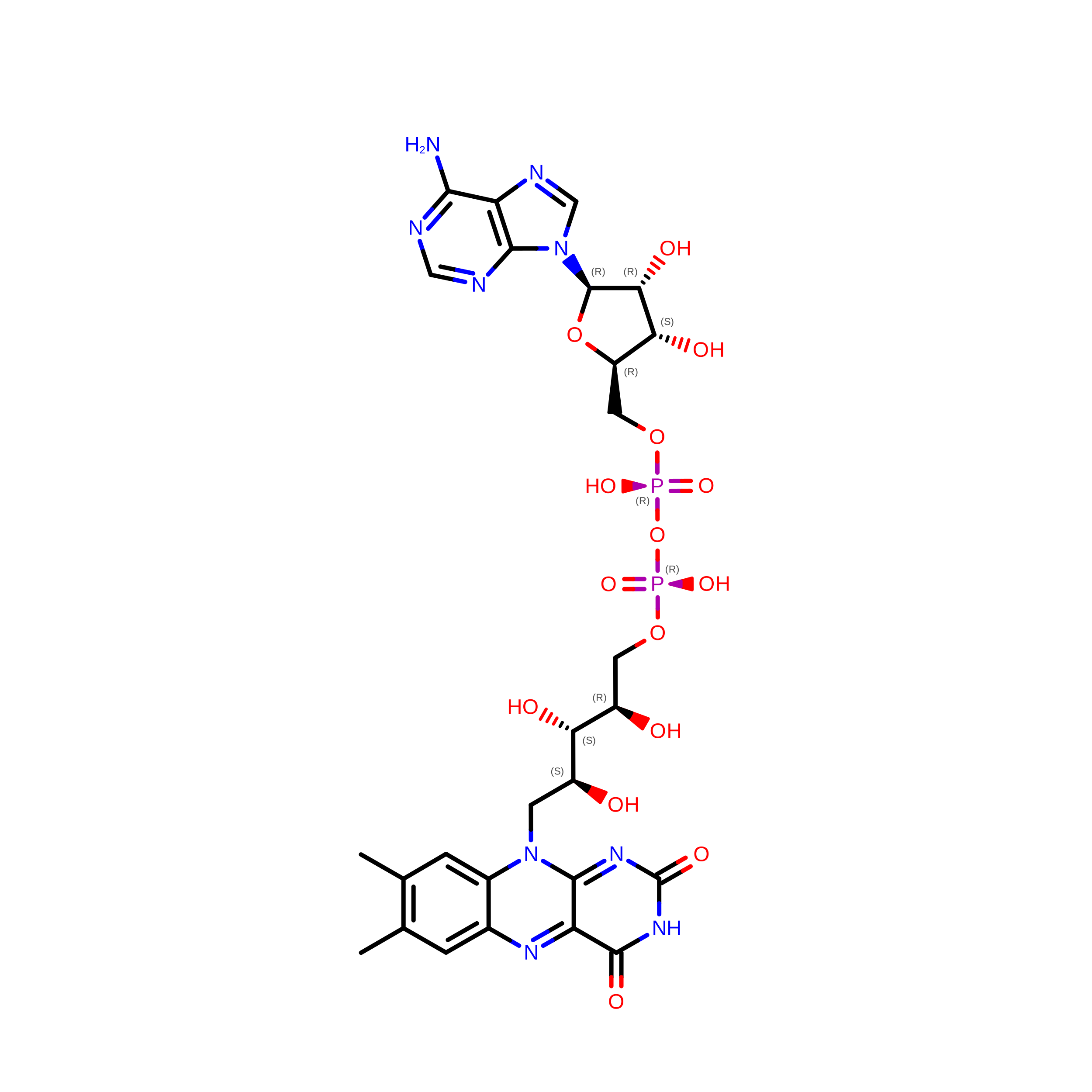
FAD

Query on FAD


Download:Ideal Coordinates CCD File
D [auth A]FLAVIN-ADENINE DINUCLEOTIDE
C27 H33 N9 O15 P2
VWWQXMAJTJZDQX-UYBVJOGSSA-N
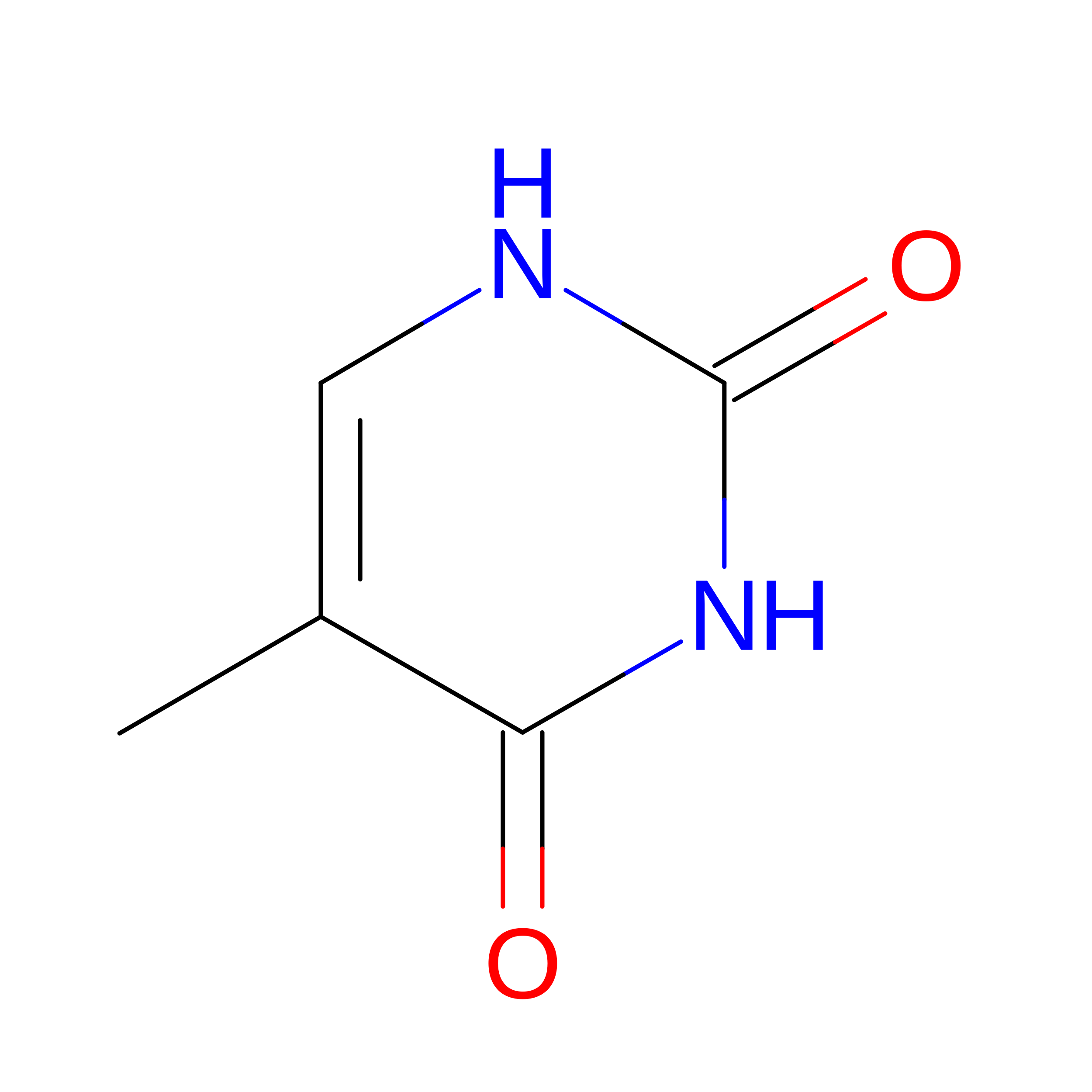
TDR

Query on TDR


Download:Ideal Coordinates CCD File
C [auth A]THYMINE
C5 H6 N2 O2
RWQNBRDOKXIBIV-UHFFFAOYSA-N
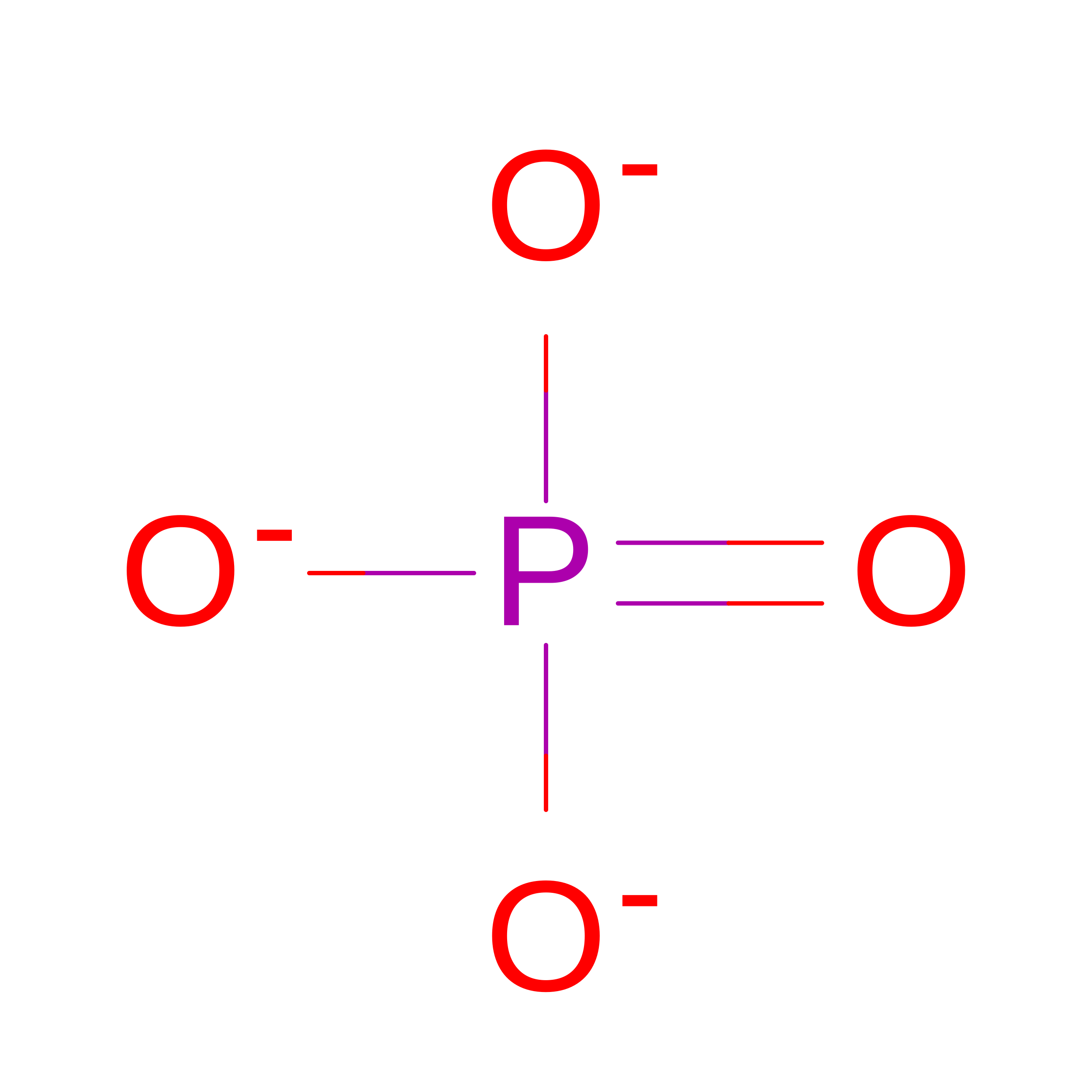
PO4

Query on PO4


Download:Ideal Coordinates CCD File
B [auth A]PHOSPHATE ION
O4 P
NBIIXXVUZAFLBC-UHFFFAOYSA-K

Experimental Data & Validation

Experimental Data

  • Method: X-RAY DIFFRACTION
  • Resolution: 2.20 Å
  • R-Value Free:  0.243 (Depositor) 
  • R-Value Work:  0.211 (Depositor) 
  • R-Value Observed: 0.212 (Depositor) 
Space Group: P 61 2 2
Unit Cell:
Length ( Å )Angle ( ˚ )
a = 113.099α = 90
b = 113.099β = 90
c = 142.554γ = 120
Software Package:
Software NamePurpose
MLPHAREphasing
CNSrefinement
MOSFLMdata reduction
CCP4data scaling

Structure Validation

View Full Validation Report


Entry History 

Revision History  (Full details and data files)

  • Version 1.0: 2002-05-08
    Type: Initial release
  • Version 1.1: 2008-04-27
    Changes: Version format compliance
  • Version 1.2: 2011-07-13
    Changes: Version format compliance
  • Version 1.3: 2023-10-25
    Changes: Data collection, Database references, Derived calculations, Refinement description