1IDB | pdb_00001idb

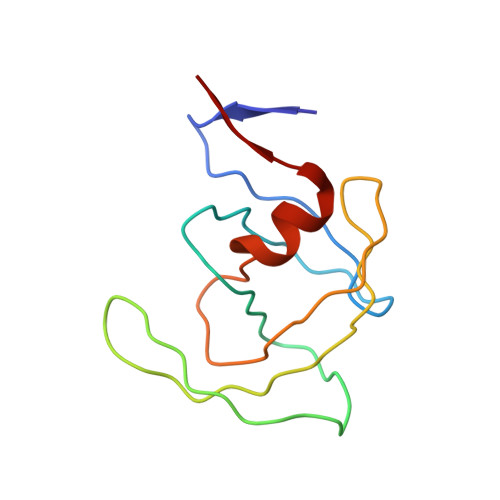
Crystal structures of HIV-2 protease in complex with inhibitors containing the hydroxyethylamine dipeptide isostere


Experimental Data Snapshot

  • Method: X-RAY DIFFRACTION
  • Resolution: 2.20 Å
  • R-Value Work: 
    0.180 (Depositor) 
  • R-Value Observed: 
    0.180 (Depositor) 

wwPDB Validation 3D Report Full Report

Validation slider image for 1IDB

This is version 1.7 of the entry. See complete history

Literature

Crystal structures of HIV-2 protease in complex with inhibitors containing the hydroxyethylamine dipeptide isostere.

Tong, L.Pav, S.Mui, S.Lamarre, D.Yoakim, C.Beaulieu, P.Anderson, P.C.

(1995) Structure 3: 33-40

  • DOI: https://doi.org/10.1016/s0969-2126(01)00133-2
  • Primary Citation Related Structures: 
    1IDA, 1IDB

  • PubMed Abstract: 

    The HIV protease is essential for the life cycle of the virus and is an important target for the development of therapeutic treatments against AIDS. The structures of HIV protease in complex with different inhibitors have helped in understanding the interactions between inhibitors and the protease and in the design and optimization of HIV protease inhibitors. We report here crystal structures at up to 1.7 A resolution of the homodimeric HIV-2 protease in complex with seven inhibitors containing the hydroxyethylamine dipeptide isostere. A novel dimethylphenoxyacetyl group that is present in some of these inhibitors is inserted between residues 48' and 49' in the flap of the protease and residues 29' and 30' (where a prime indicates a residue in the second monomer), which undergo a conformational change to accommodate the phenyl ring of the inhibitor. This study shows that besides the residues in the flap and residues 79-81 in the S1 substrate-binding pocket which undergo conformational changes upon inhibitor binding, residues 29 and 30 can also adapt their conformation to fit certain inhibitors. Conformational flexibility of the HIV protease plays an important role in inhibitor binding.


  • Organizational Affiliation
    • Department of Medicinal Chemistry, Boehringer Ingelheim Pharmaceuticals Inc., Ridgefield, CT 06877, USA.

Macromolecule Content 

  • Total Structure Weight: 22.11 kDa 
  • Atom Count: 1,598 
  • Modeled Residue Count: 198 
  • Deposited Residue Count: 198 
  • Unique protein chains: 1

Macromolecules

Find similar proteins by:|  3D Structure
Entity ID: 1
MoleculeChains  Sequence LengthOrganismDetailsImage
Protease
A, B
99Human immunodeficiency virus 2Mutation(s): 0 
Gene Names: pol
UniProt
Find proteins for P04584 (Human immunodeficiency virus type 2 subtype A (isolate ROD))
Explore P04584 
Go to UniProtKB:  P04584
Entity Groups
Sequence Clusters30% Identity50% Identity70% Identity90% Identity95% Identity100% Identity
UniProt GroupP04584
Sequence Annotations
Expand
Reference Sequence

Small Molecules

Ligands 1 Unique
IDChains Name / Formula / InChI Key2D Diagram3D Interactions
0DO

Query on 0DO


Download:Ideal Coordinates CCD File
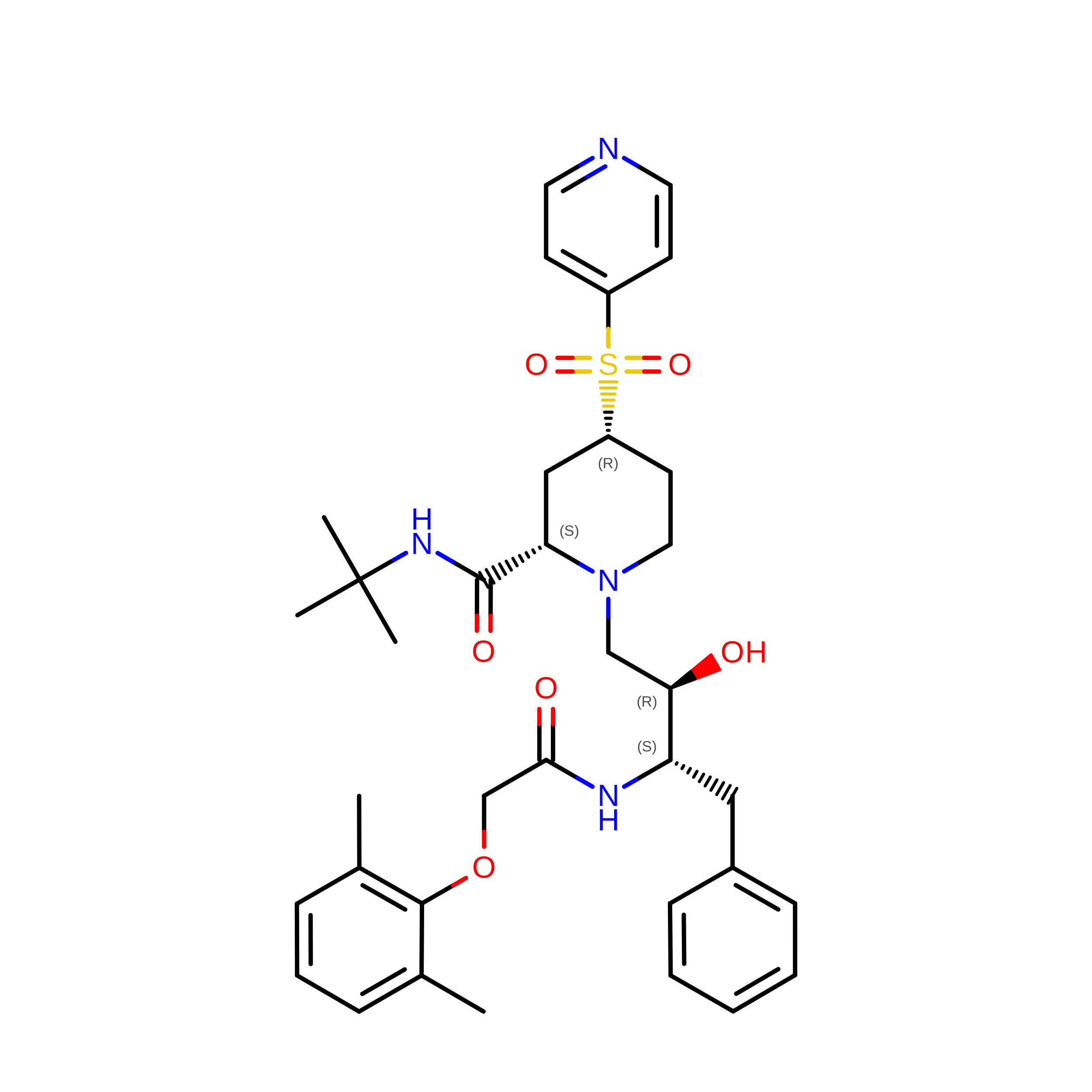
C [auth B](2R,4S)-N-tert-butyl-1-[(2S,3S)-3-{[(2,6-dimethylphenoxy)acetyl]amino}-2-hydroxy-4-phenylbutyl]-4-(pyridin-4-ylsulfonyl)piperidine-2-carboxamide
C35 H46 N4 O6 S
HJVDBHNPRUSMDC-QNRWOPMTSA-N

Biologically Interesting Molecules (External Reference) 

1 Unique

Experimental Data & Validation

Experimental Data

  • Method: X-RAY DIFFRACTION
  • Resolution: 2.20 Å
  • R-Value Work:  0.180 (Depositor) 
  • R-Value Observed: 0.180 (Depositor) 
Space Group: P 43 21 2
Unit Cell:
Length ( Å )Angle ( ˚ )
a = 62.6α = 90
b = 62.6β = 90
c = 115.8γ = 90
Software Package:
Software NamePurpose
X-PLORmodel building
TNTrefinement
X-PLORrefinement
X-PLORphasing

Structure Validation

View Full Validation Report


Entry History 

Deposition Data

Revision History  (Full details and data files)

  • Version 1.0: 1995-01-26
    Type: Initial release
  • Version 1.1: 2008-05-22
    Changes: Version format compliance
  • Version 1.2: 2011-07-13
    Changes: Atomic model, Database references, Derived calculations, Non-polymer description, Structure summary, Version format compliance
  • Version 1.3: 2012-12-12
    Changes: Other
  • Version 1.4: 2019-07-17
    Changes: Data collection, Other, Refinement description
  • Version 1.5: 2019-08-14
    Changes: Data collection, Refinement description
  • Version 1.6: 2020-06-24
    Changes: Database references, Source and taxonomy, Structure summary
  • Version 1.7: 2024-02-07
    Changes: Data collection, Database references, Derived calculations