1HWY | pdb_00001hwy

BOVINE GLUTAMATE DEHYDROGENASE COMPLEXED WITH NAD AND 2-OXOGLUTARATE


Experimental Data Snapshot

  • Method: X-RAY DIFFRACTION
  • Resolution: 3.20 Å
  • R-Value Free: 
    0.290 (Depositor) 
  • R-Value Work: 
    0.230 (Depositor) 

wwPDB Validation 3D Report Full Report

Validation slider image for 1HWY

This is version 1.3 of the entry. See complete history

Literature

Structures of bovine glutamate dehydrogenase complexes elucidate the mechanism of purine regulation.

Smith, T.J.Peterson, P.E.Schmidt, T.Fang, J.Stanley, C.A.

(2001) J Mol Biology 307: 707-720

  • DOI: https://doi.org/10.1006/jmbi.2001.4499
  • Primary Citation Related Structures: 
    1HWY, 6DHD, 6DHQ

  • PubMed Abstract: 

    Glutamate dehydrogenase is found in all organisms and catalyses the oxidative deamination of l-glutamate to 2-oxoglutarate. However, only animal GDH utilizes both NAD(H) or NADP(H) with comparable efficacy and exhibits a complex pattern of allosteric inhibition by a wide variety of small molecules. The major allosteric inhibitors are GTP and NADH and the two main allosteric activators are ADP and NAD(+). The structures presented here have refined and modified the previous structural model of allosteric regulation inferred from the original boGDH.NADH.GLU.GTP complex. The boGDH.NAD(+).alpha-KG complex structure clearly demonstrates that the second coenzyme-binding site lies directly under the "pivot helix" of the NAD(+) binding domain. In this complex, phosphates are observed to occupy the inhibitory GTP site and may be responsible for the previously observed structural stabilization by polyanions. The boGDH.NADPH.GLU.GTP complex shows the location of the additional phosphate on the active site coenzyme molecule and the GTP molecule bound to the GTP inhibitory site. As expected, since NADPH does not bind well to the second coenzyme site, no evidence of a bound molecule is observed at the second coenzyme site under the pivot helix. Therefore, these results suggest that the inhibitory GTP site is as previously identified. However, ADP, NAD(+), and NADH all bind under the pivot helix, but a second GTP molecule does not. Kinetic analysis of a hyperinsulinism/hyperammonemia mutant strongly suggests that ATP can inhibit the reaction by binding to the GTP site. Finally, the fact that NADH, NAD(+), and ADP all bind to the same site requires a re-analysis of the previous models for NADH inhibition.


  • Organizational Affiliation
    • Department of Biological Sciences, Purdue University, West Lafayette, IN 47907, USA. tom@bragg.bio.purdue.edu

Macromolecule Content 

  • Total Structure Weight: 344.95 kDa 
  • Atom Count: 24,468 
  • Modeled Residue Count: 3,006 
  • Deposited Residue Count: 3,006 
  • Unique protein chains: 1

Macromolecules

Find similar proteins by:|  3D Structure
Entity ID: 1
MoleculeChains  Sequence LengthOrganismDetailsImage
GLUTAMATE DEHYDROGENASE
A, B, C, D, E
A, B, C, D, E, F
501Bos taurusMutation(s): 0 
EC: 1.4.1.3
UniProt
Find proteins for P00366 (Bos taurus)
Explore P00366 
Go to UniProtKB:  P00366
Entity Groups
Sequence Clusters30% Identity50% Identity70% Identity90% Identity95% Identity100% Identity
UniProt GroupP00366
Sequence Annotations
Expand
Reference Sequence

Small Molecules

Ligands 3 Unique
IDChains Name / Formula / InChI Key2D Diagram3D Interactions
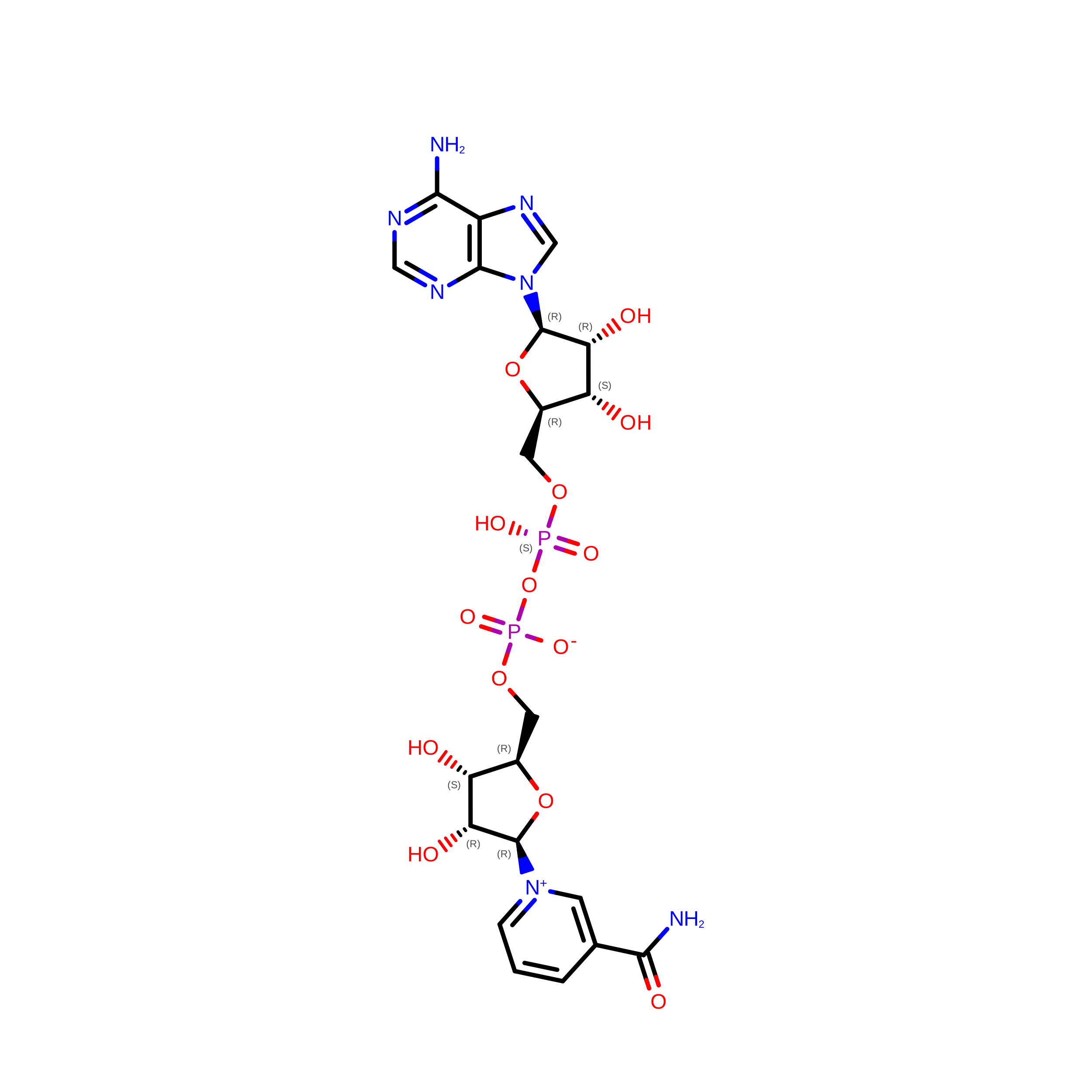
NAD

Query on NAD


Download:Ideal Coordinates CCD File
AA [auth C]
GA [auth D]
HA [auth D]
L [auth A]
M [auth A]
AA [auth C],
GA [auth D],
HA [auth D],
L [auth A],
M [auth A],
NA [auth E],
OA [auth E],
S [auth B],
T [auth B],
UA [auth F],
VA [auth F],
Z [auth C]
NICOTINAMIDE-ADENINE-DINUCLEOTIDE
C21 H27 N7 O14 P2
BAWFJGJZGIEFAR-NNYOXOHSSA-N
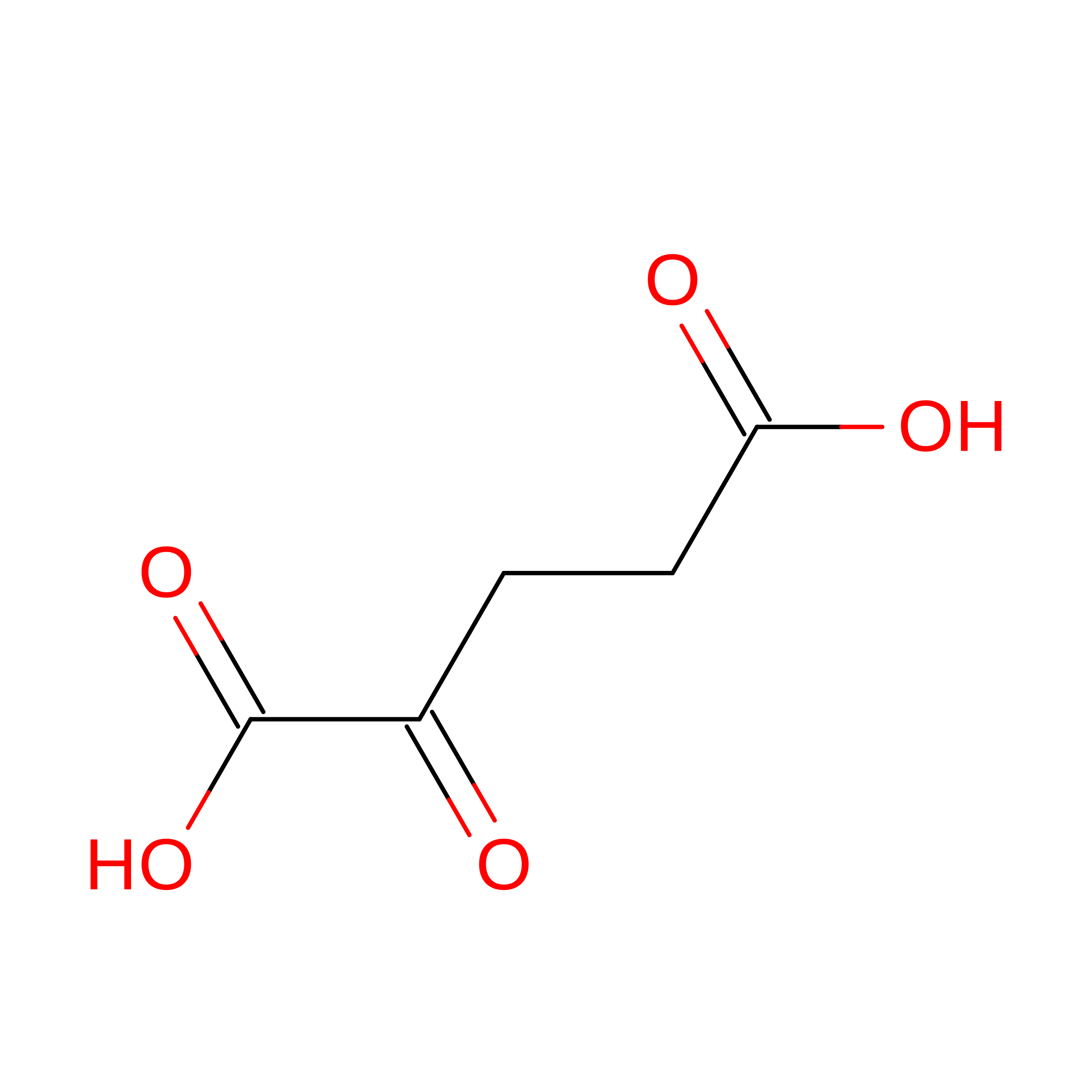
AKG

Query on AKG


Download:Ideal Coordinates CCD File
FA [auth D]
K [auth A]
MA [auth E]
R [auth B]
TA [auth F]
FA [auth D],
K [auth A],
MA [auth E],
R [auth B],
TA [auth F],
Y [auth C]
2-OXOGLUTARIC ACID
C5 H6 O5
KPGXRSRHYNQIFN-UHFFFAOYSA-N
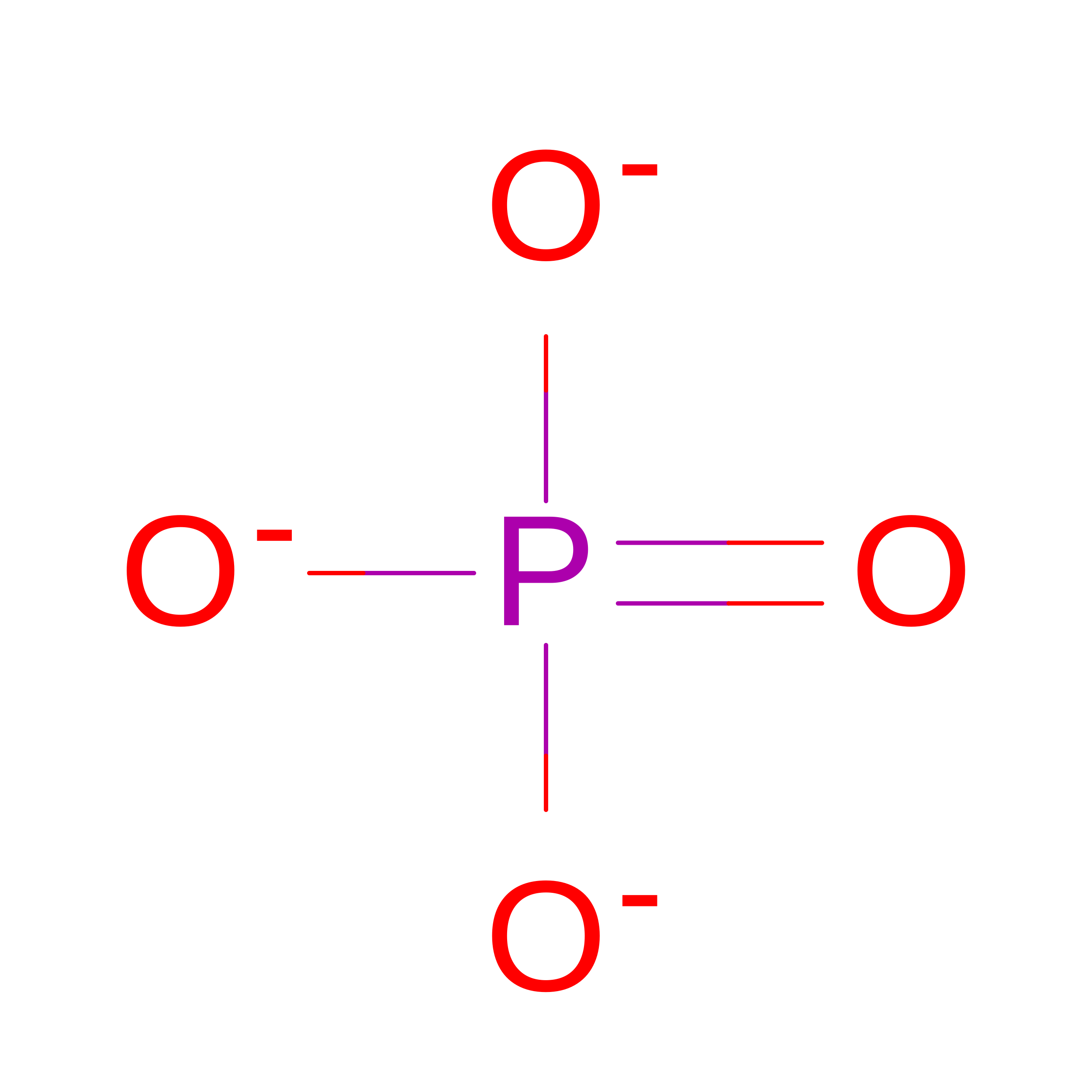
PO4

Query on PO4


Download:Ideal Coordinates CCD File
BA [auth D]
CA [auth D]
DA [auth D]
EA [auth D]
G [auth A]
BA [auth D],
CA [auth D],
DA [auth D],
EA [auth D],
G [auth A],
H [auth A],
I [auth A],
IA [auth E],
J [auth A],
JA [auth E],
KA [auth E],
LA [auth E],
N [auth B],
O [auth B],
P [auth B],
PA [auth F],
Q [auth B],
QA [auth F],
RA [auth F],
SA [auth F],
U [auth C],
V [auth C],
W [auth C],
X [auth C]
PHOSPHATE ION
O4 P
NBIIXXVUZAFLBC-UHFFFAOYSA-K

Experimental Data & Validation

Experimental Data

  • Method: X-RAY DIFFRACTION
  • Resolution: 3.20 Å
  • R-Value Free:  0.290 (Depositor) 
  • R-Value Work:  0.230 (Depositor) 
Space Group: P 1 21 1
Unit Cell:
Length ( Å )Angle ( ˚ )
a = 122.5α = 90
b = 101β = 102.2
c = 164.6γ = 90
Software Package:
Software NamePurpose
X-PLORmodel building
X-PLORrefinement
DENZOdata reduction
SCALEPACKdata scaling
X-PLORphasing

Structure Validation

View Full Validation Report


Entry History 

Deposition Data

Revision History  (Full details and data files)

  • Version 1.0: 2001-01-31
    Type: Initial release
  • Version 1.1: 2008-04-27
    Changes: Version format compliance
  • Version 1.2: 2011-07-13
    Changes: Non-polymer description, Version format compliance
  • Version 1.3: 2024-02-07
    Changes: Data collection, Database references, Derived calculations