1HFE | pdb_00001hfe

1.6 A RESOLUTION STRUCTURE OF THE FE-ONLY HYDROGENASE FROM DESULFOVIBRIO DESULFURICANS


Experimental Data Snapshot

  • Method: X-RAY DIFFRACTION
  • Resolution: 1.60 Å
  • R-Value Free: 
    0.182 (Depositor) 
  • R-Value Work: 
    0.158 (Depositor) 

wwPDB Validation 3D Report Full Report

Validation slider image for 1HFE

This is version 1.4 of the entry. See complete history

Literature

Desulfovibrio desulfuricans iron hydrogenase: the structure shows unusual coordination to an active site Fe binuclear center.

Nicolet, Y.Piras, C.Legrand, P.Hatchikian, C.E.Fontecilla-Camps, J.C.

(1999) Structure 7: 13-23

  • DOI: https://doi.org/10.1016/s0969-2126(99)80005-7
  • Primary Citation Related Structures: 
    1HFE

  • PubMed Abstract: 

    Many microorganisms have the ability to either oxidize molecular hydrogen to generate reducing power or to produce hydrogen in order to remove low-potential electrons. These reactions are catalyzed by two unrelated enzymes: the Ni-Fe hydrogenases and the Fe-only hydrogenases. We report here the structure of the heterodimeric Fe-only hydrogenase from Desulfovibrio desulfuricans - the first for this class of enzymes. With the exception of a ferredoxin-like domain, the structure represents a novel protein fold. The so-called H cluster of the enzyme is composed of a typical [4Fe-4S] cubane bridged to a binuclear active site Fe center containing putative CO and CN ligands and one bridging 1, 3-propanedithiol molecule. The conformation of the subunits can be explained by the evolutionary changes that have transformed monomeric cytoplasmic enzymes into dimeric periplasmic enzymes. Plausible electron- and proton-transfer pathways and a putative channel for the access of hydrogen to the active site have been identified. The unrelated active sites of Ni-Fe and Fe-only hydrogenases have several common features: coordination of diatomic ligands to an Fe ion; a vacant coordination site on one of the metal ions representing a possible substrate-binding site; a thiolate-bridged binuclear center; and plausible proton- and electron-transfer pathways and substrate channels. The diatomic coordination to Fe ions makes them low spin and favors low redox states, which may be required for catalysis. Complex electron paramagnetic resonance signals typical of Fe-only hydrogenases arise from magnetic interactions between the [4Fe-4S] cluster and the active site binuclear center. The paucity of protein ligands to this center suggests that it was imported from the inorganic world as an already functional unit.


  • Organizational Affiliation
    • Laboratoire de Cristallographie et de Cristallogènese des Protéines, Institut de Biologie Structurale Jean-Pierre Ebel, CEA-CNRS 41, Grenoble, France.

Macromolecule Content 

  • Total Structure Weight: 122.39 kDa 
  • Atom Count: 9,079 
  • Modeled Residue Count: 970 
  • Deposited Residue Count: 1,088 
  • Unique protein chains: 2

Macromolecules

Find similar proteins by:|  3D Structure
Entity ID: 1
MoleculeChains  Sequence LengthOrganismDetailsImage
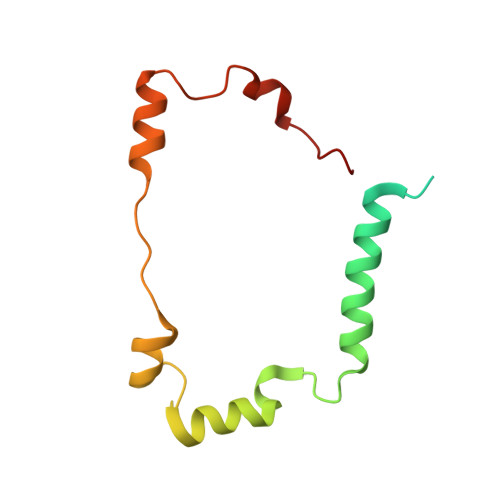
PROTEIN (FE-ONLY HYDROGENASE (E.C.1.18.99.1) (SMALLER SUBUNIT))A [auth S],
C [auth T]
123Nitratidesulfovibrio vulgaris str. HildenboroughMutation(s): 0 
EC: 1.18.99.1 (PDB Primary Data), 1.12.7.2 (UniProt)
UniProt
Find proteins for P07603 (Nitratidesulfovibrio vulgaris (strain ATCC 29579 / DSM 644 / CCUG 34227 / NCIMB 8303 / VKM B-1760 / Hildenborough))
Explore P07603 
Go to UniProtKB:  P07603
Entity Groups
Sequence Clusters30% Identity50% Identity70% Identity90% Identity95% Identity100% Identity
UniProt GroupP07603
Sequence Annotations
Expand
Reference Sequence
Find similar proteins by:|  3D Structure
Entity ID: 2
MoleculeChains  Sequence LengthOrganismDetailsImage
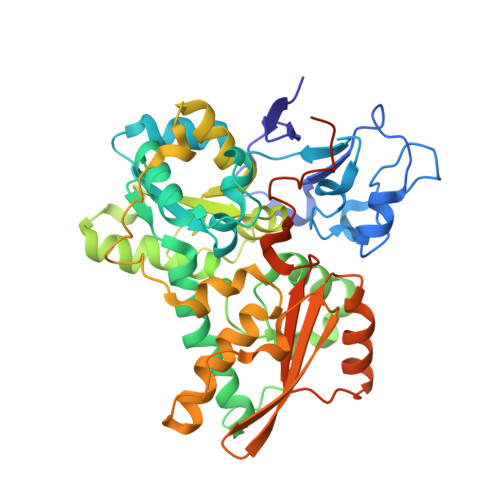
PROTEIN (FE-ONLY HYDROGENASE (E.C.1.18.99.1) (LARGER SUBUNIT))B [auth L],
D [auth M]
421Nitratidesulfovibrio vulgaris str. HildenboroughMutation(s): 0 
EC: 1.18.99.1 (PDB Primary Data), 1.12.7.2 (UniProt)
UniProt
Find proteins for P07598 (Nitratidesulfovibrio vulgaris (strain ATCC 29579 / DSM 644 / CCUG 34227 / NCIMB 8303 / VKM B-1760 / Hildenborough))
Explore P07598 
Go to UniProtKB:  P07598
Entity Groups
Sequence Clusters30% Identity50% Identity70% Identity90% Identity95% Identity100% Identity
UniProt GroupP07598
Sequence Annotations
Expand
Reference Sequence

Small Molecules

Ligands 7 Unique
IDChains Name / Formula / InChI Key2D Diagram3D Interactions
SF4

Query on SF4


Download:Ideal Coordinates CCD File
J [auth L]
K [auth L]
L
U [auth M]
V [auth M]
J [auth L],
K [auth L],
L,
U [auth M],
V [auth M],
W [auth M]
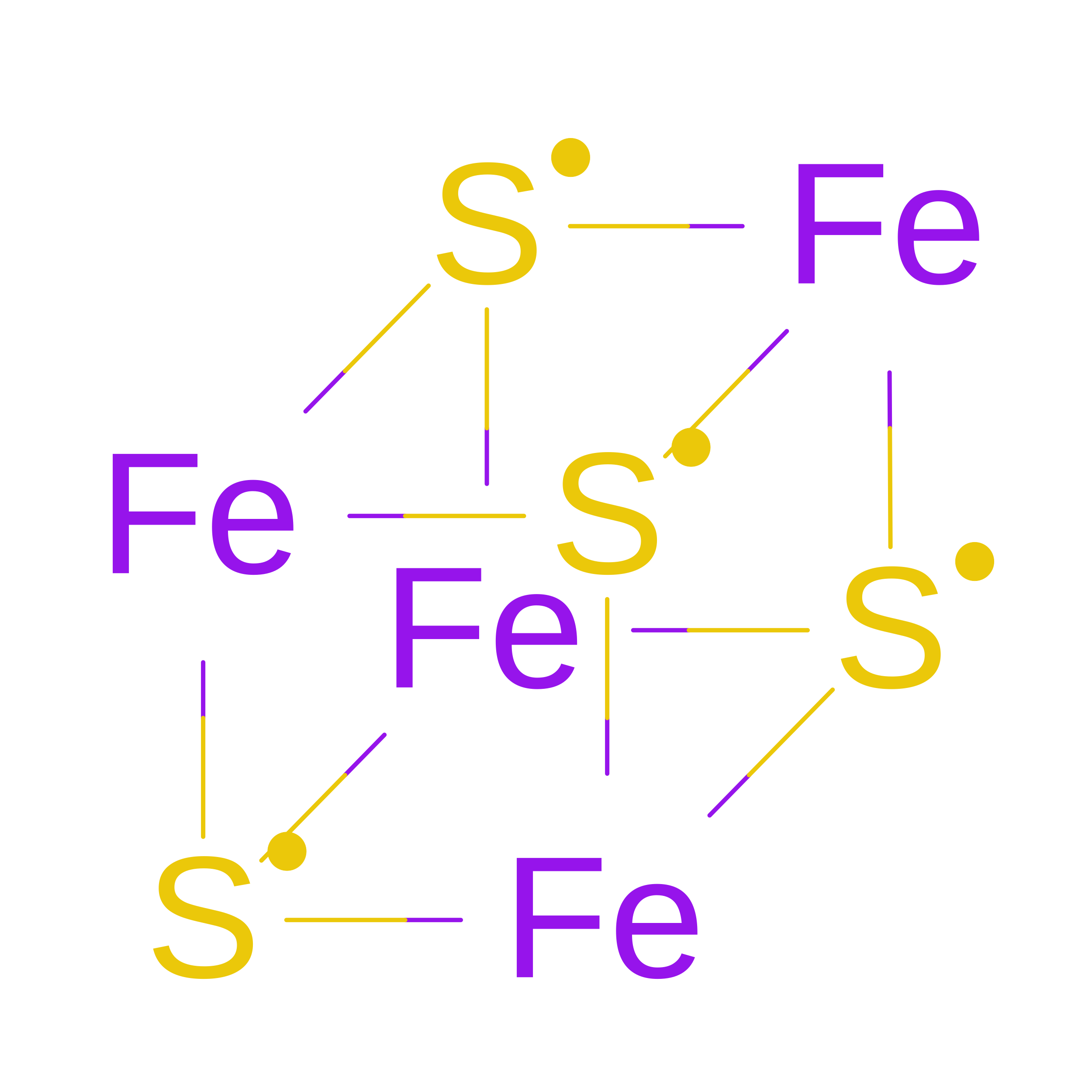
IRON/SULFUR CLUSTER
Fe4 S4
LJBDFODJNLIPKO-UHFFFAOYSA-N
CYS

Query on CYS


Download:Ideal Coordinates CCD File
AA [auth M],
P [auth L]
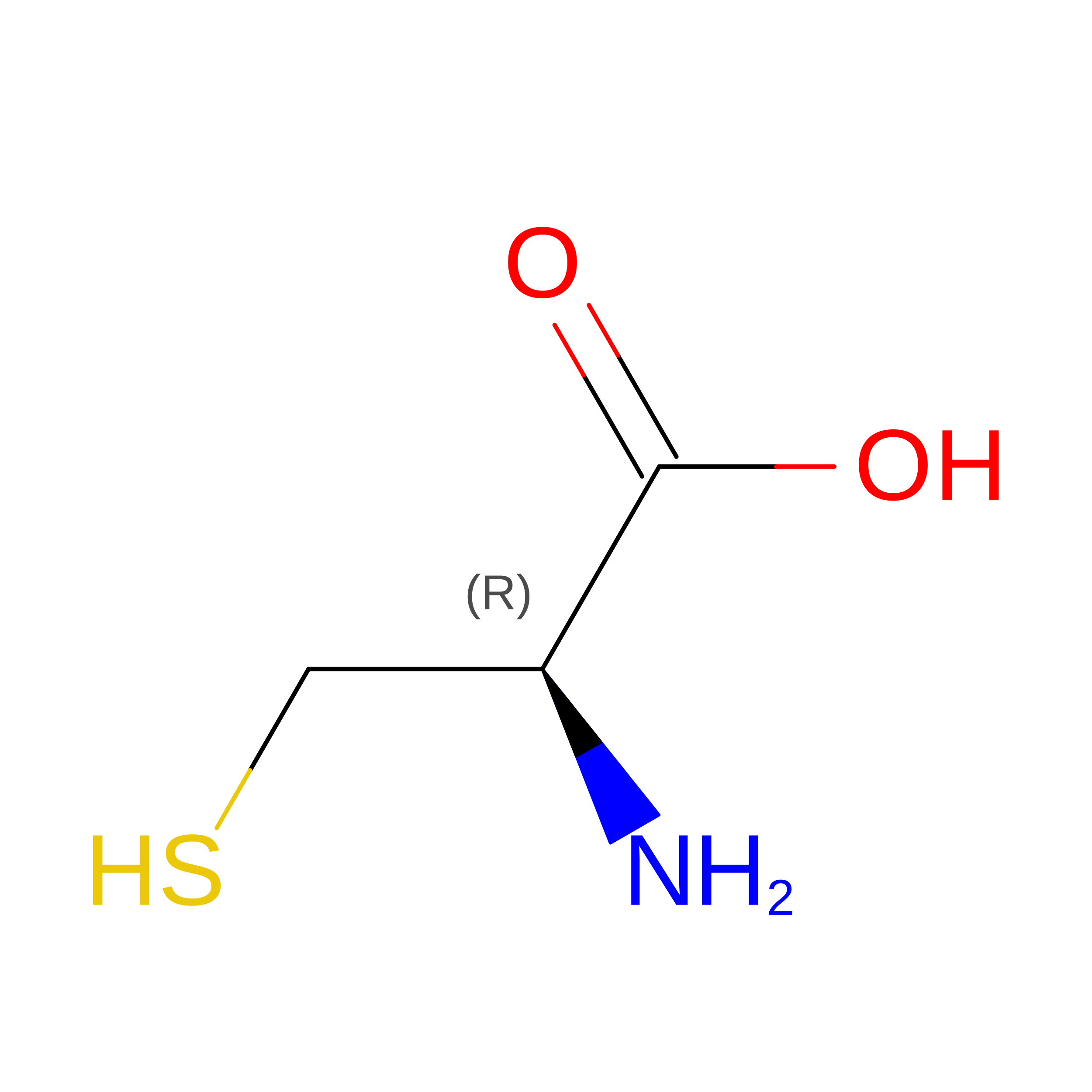
CYSTEINE
C3 H7 N O2 S
XUJNEKJLAYXESH-REOHCLBHSA-N
PDT

Query on PDT


Download:Ideal Coordinates CCD File
M [auth L],
X [auth M]
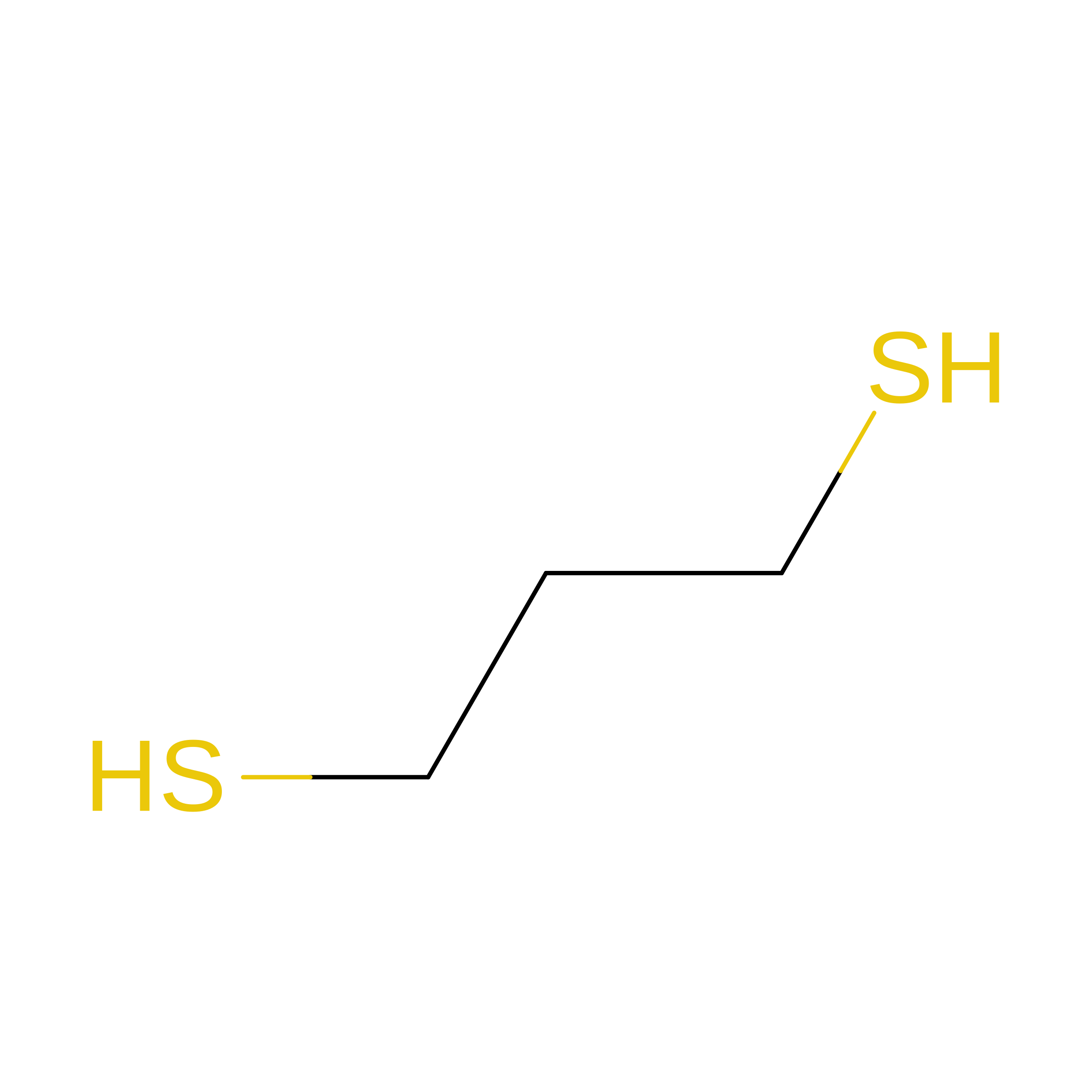
1,3-PROPANEDITHIOL
C3 H8 S2
ZJLMKPKYJBQJNH-UHFFFAOYSA-N
ZN

Query on ZN


Download:Ideal Coordinates CCD File
E [auth S]ZINC ION
Zn
PTFCDOFLOPIGGS-UHFFFAOYSA-N
FE2

Query on FE2


Download:Ideal Coordinates CCD File
F [auth L],
G [auth L],
Q [auth M],
R [auth M]
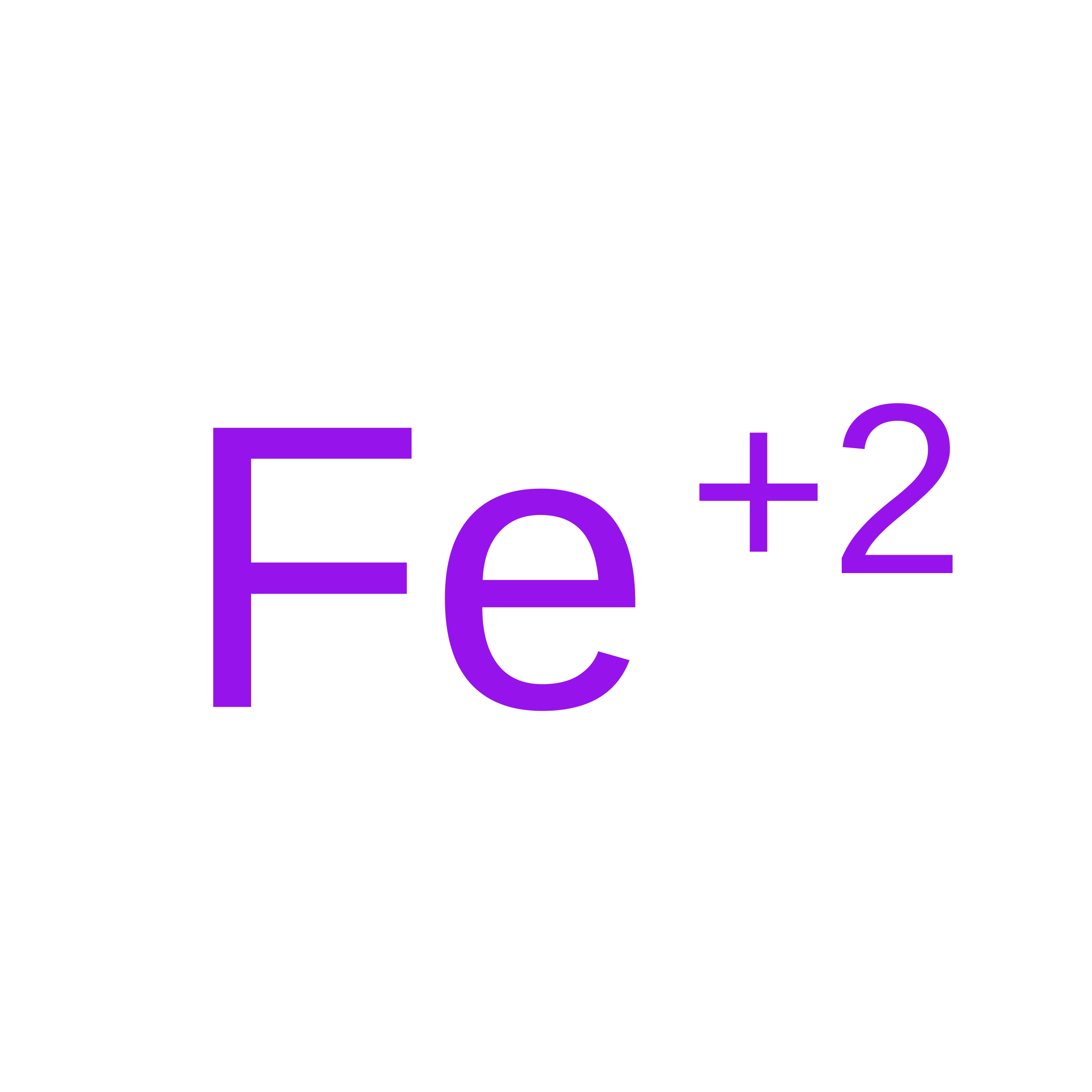
FE (II) ION
Fe
CWYNVVGOOAEACU-UHFFFAOYSA-N
CMO

Query on CMO


Download:Ideal Coordinates CCD File
N [auth L],
O [auth L],
Y [auth M],
Z [auth M]
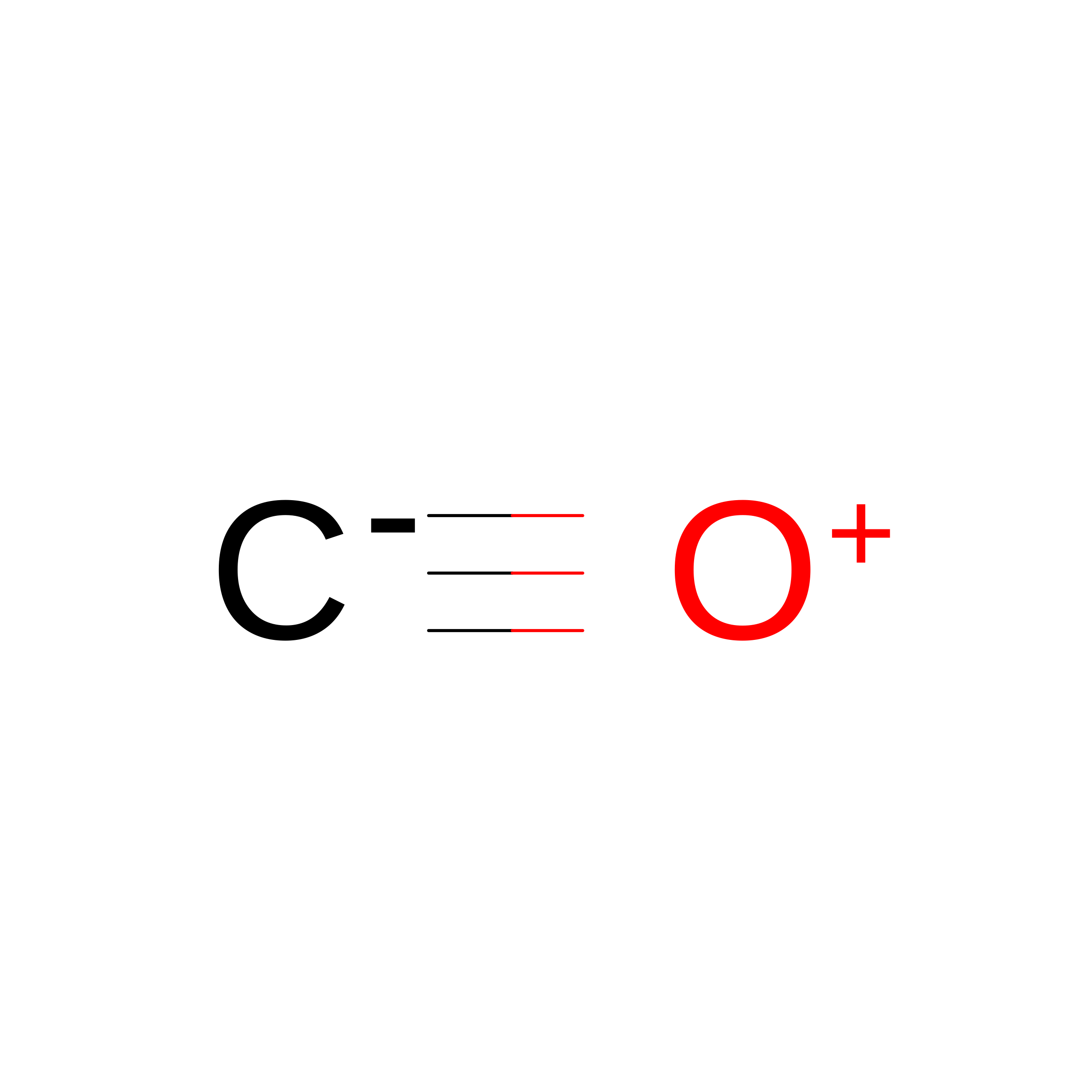
CARBON MONOXIDE
C O
UGFAIRIUMAVXCW-UHFFFAOYSA-N
CYN

Query on CYN


Download:Ideal Coordinates CCD File
H [auth L],
I [auth L],
S [auth M],
T [auth M]
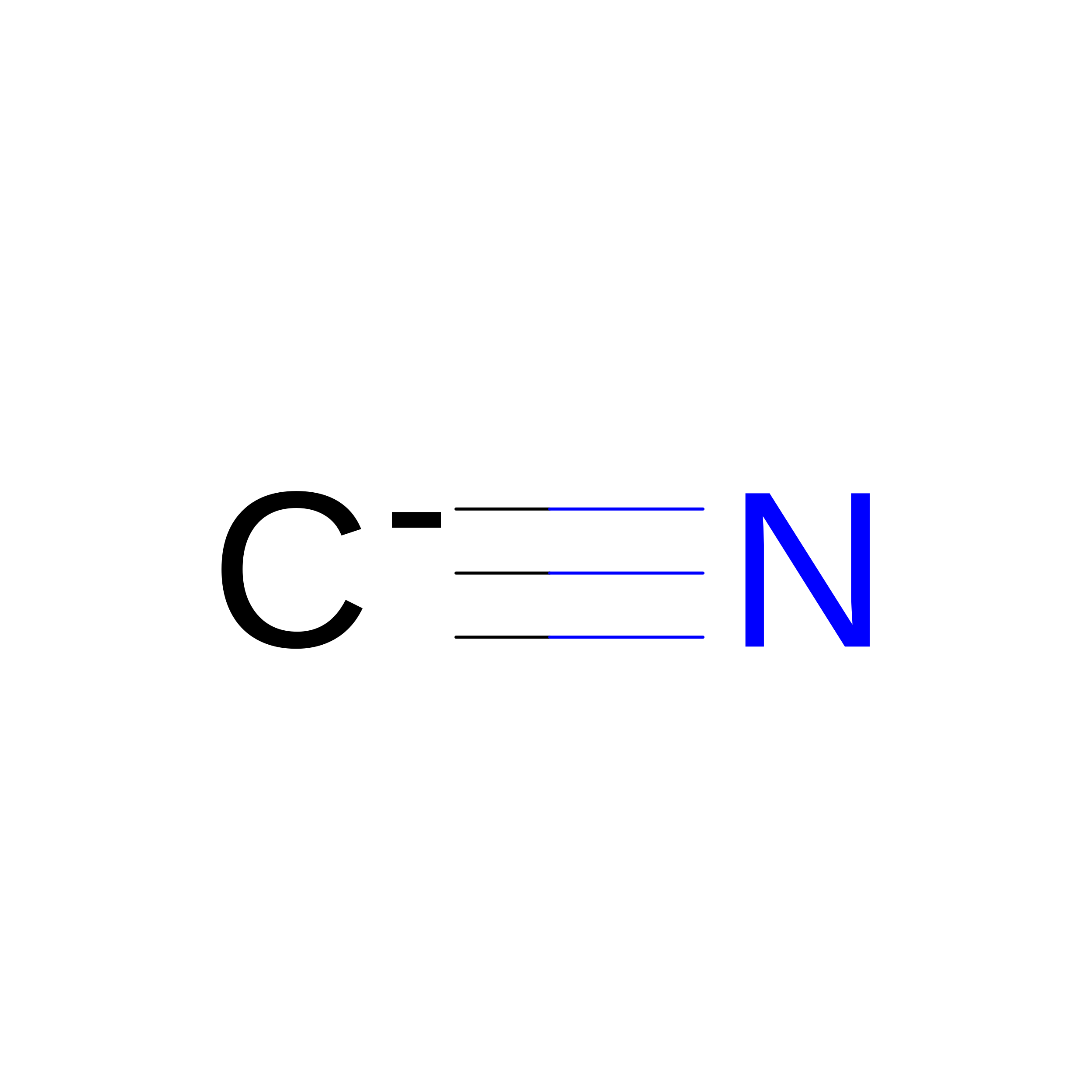
CYANIDE ION
C N
XFXPMWWXUTWYJX-UHFFFAOYSA-N

Experimental Data & Validation

Experimental Data

  • Method: X-RAY DIFFRACTION
  • Resolution: 1.60 Å
  • R-Value Free:  0.182 (Depositor) 
  • R-Value Work:  0.158 (Depositor) 
Space Group: P 21 21 2
Unit Cell:
Length ( Å )Angle ( ˚ )
a = 128.97α = 90
b = 123.07β = 90
c = 65.07γ = 90
Software Package:
Software NamePurpose
MLPHAREphasing
X-PLORrefinement
MOSFLMdata reduction
CCP4data scaling

Structure Validation

View Full Validation Report


Entry History 

Deposition Data

Revision History  (Full details and data files)

  • Version 1.0: 1999-04-20
    Type: Initial release
  • Version 1.1: 2008-04-26
    Changes: Version format compliance
  • Version 1.2: 2011-07-13
    Changes: Version format compliance
  • Version 1.3: 2019-11-20
    Changes: Advisory, Derived calculations
  • Version 1.4: 2023-12-27
    Changes: Advisory, Data collection, Database references, Derived calculations