1GS5 | pdb_00001gs5

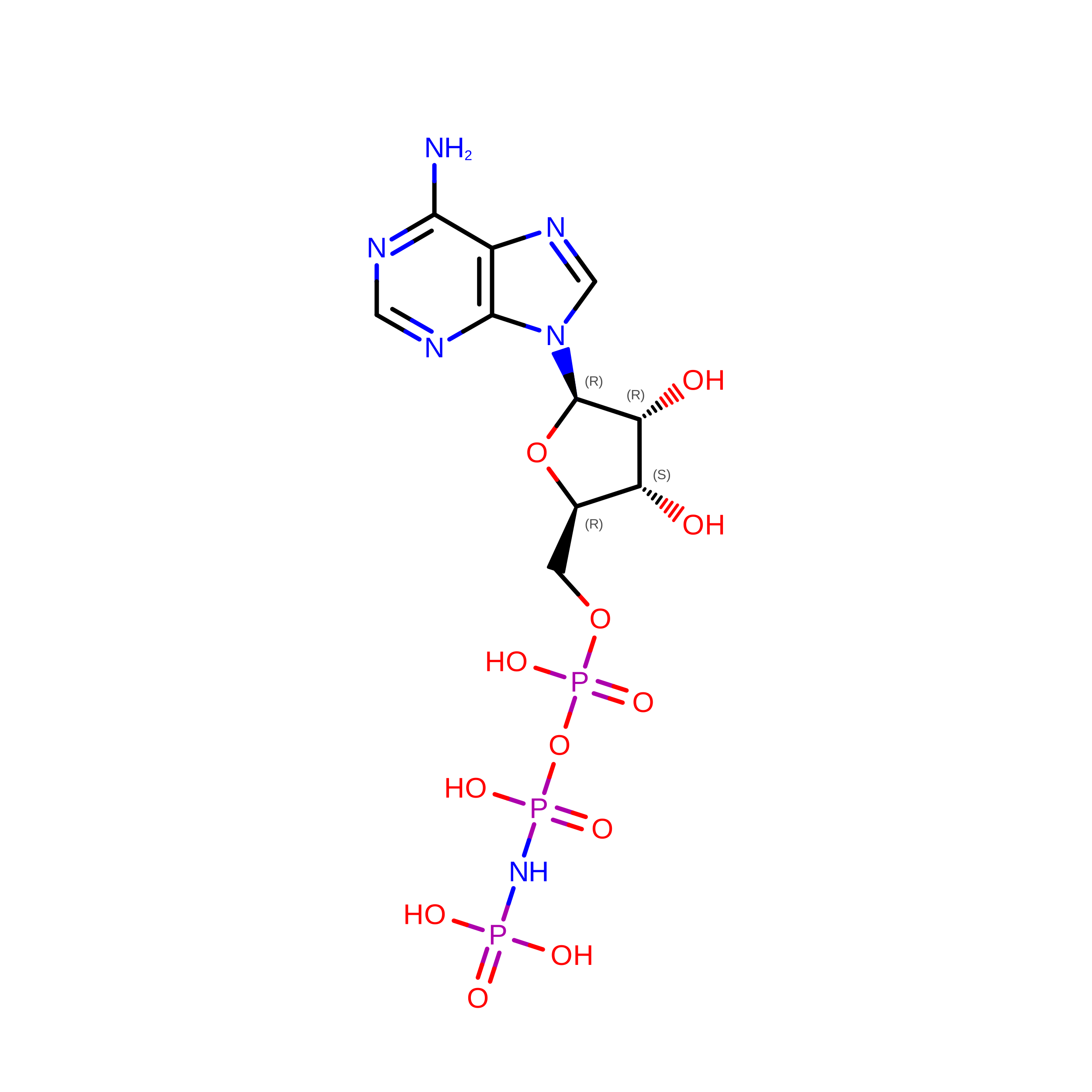
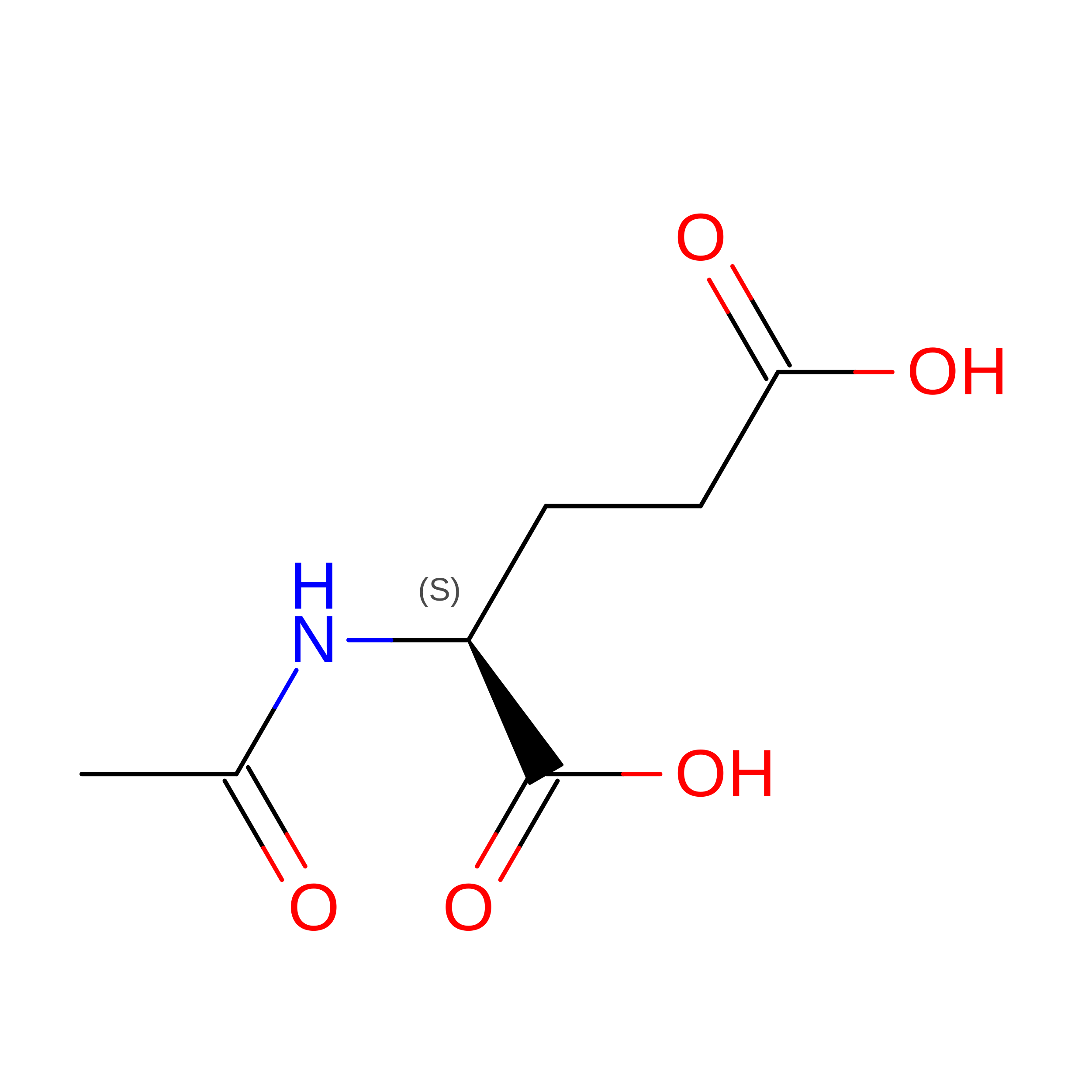
N-acetyl-L-glutamate kinase from Escherichia coli complexed with its substrate N-acetylglutamate and its substrate analog AMPPNP


Experimental Data Snapshot

  • Method: X-RAY DIFFRACTION
  • Resolution: 1.50 Å
  • R-Value Free: 
    0.213 (Depositor), 0.222 (DCC) 
  • R-Value Work: 
    0.209 (Depositor), 0.198 (DCC) 

Starting Model: experimental
View more details

wwPDB Validation 3D Report Full Report

Validation slider image for 1GS5

Ligand Structure Quality Assessment 


This is version 1.2 of the entry. See complete history

Literature

Structure of Acetylglutamate Kinase, a Key Enzyme for Arginine Biosynthesis and a Prototype for the Amino Acid Kinase Enzyme Family, During Catalysis

Ramon-Maiques, S.Marina, A.Gil-Ortiz, F.Fita, I.Rubio, V.

(2002) Structure 10: 329

  • DOI: https://doi.org/10.1016/s0969-2126(02)00721-9
  • Primary Citation Related Structures: 
    1GS5, 1GSJ

  • PubMed Abstract: 

    N-Acetyl-L-glutamate kinase (NAGK), a member of the amino acid kinase family, catalyzes the second and frequently controlling step of arginine synthesis. The Escherichia coli NAGK crystal structure to 1.5 A resolution reveals a 258-residue subunit homodimer nucleated by a central 16-stranded molecular open beta sheet sandwiched between alpha helices. In each subunit, AMPPNP, as an alphabetagamma-phosphate-Mg2+ complex, binds along the sheet C edge, and N-acetyl-L-glutamate binds near the dyadic axis with its gamma-COO- aligned at short distance from the gamma-phosphoryl, indicating associative phosphoryl transfer assisted by: (1) Mg2+ complexation; (2) the positive charges on Lys8, Lys217, and on two helix dipoles; and (3) by hydrogen bonding with the y-phosphate. The structural resemblance with carbamate kinase and the alignment of the sequences suggest that NAGK is a structural and functional prototype for the amino acid kinase family, which differs from other acylphosphate-making devices represented by phosphoglycerate kinase, acetate kinase, and biotin carboxylase.


  • Organizational Affiliation
    • Instituto de Biomedicina de Valencia, Consejo Superior de Investigaciones Científicas (IBV-CSIC), Spain.

Macromolecule Content 

  • Total Structure Weight: 27.91 kDa 
  • Atom Count: 2,189 
  • Modeled Residue Count: 258 
  • Deposited Residue Count: 258 
  • Unique protein chains: 1

Macromolecules

Find similar proteins by:|  3D Structure
Entity ID: 1
MoleculeChains  Sequence LengthOrganismDetailsImage
ACETYLGLUTAMATE KINASE258Escherichia coli BL21(DE3)Mutation(s): 0 
EC: 2.7.2.8
UniProt
Find proteins for P0A6C8 (Escherichia coli (strain K12))
Explore P0A6C8 
Go to UniProtKB:  P0A6C8
Entity Groups
Sequence Clusters30% Identity50% Identity70% Identity90% Identity95% Identity100% Identity
UniProt GroupP0A6C8
Sequence Annotations
Expand
Reference Sequence

Experimental Data & Validation

Experimental Data

  • Method: X-RAY DIFFRACTION
  • Resolution: 1.50 Å
  • R-Value Free:  0.213 (Depositor), 0.222 (DCC) 
  • R-Value Work:  0.209 (Depositor), 0.198 (DCC) 
Space Group: C 2 2 21
Unit Cell:
Length ( Å )Angle ( ˚ )
a = 59.564α = 90
b = 72.332β = 90
c = 107.418γ = 90
Software Package:
Software NamePurpose
REFMACrefinement
MOSFLMdata reduction
SCALAdata scaling
AMoREphasing

Structure Validation

View Full Validation Report


Ligand Structure Quality Assessment 


Entry History 

Deposition Data

Revision History  (Full details and data files)

  • Version 1.0: 2002-05-16
    Type: Initial release
  • Version 1.1: 2014-02-05
    Changes: Data collection, Derived calculations, Non-polymer description, Other, Source and taxonomy, Structure summary, Version format compliance
  • Version 1.2: 2023-12-13
    Changes: Data collection, Database references, Derived calculations, Refinement description