1GKM | pdb_00001gkm

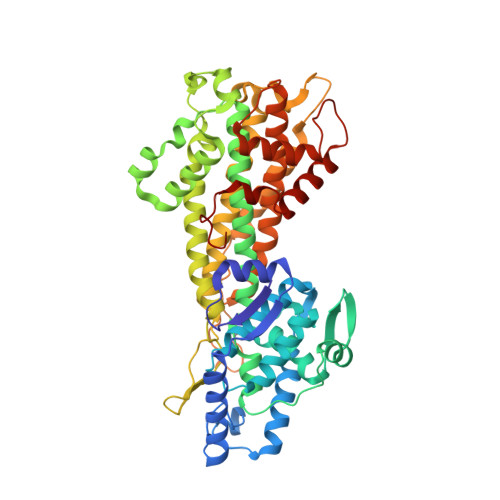
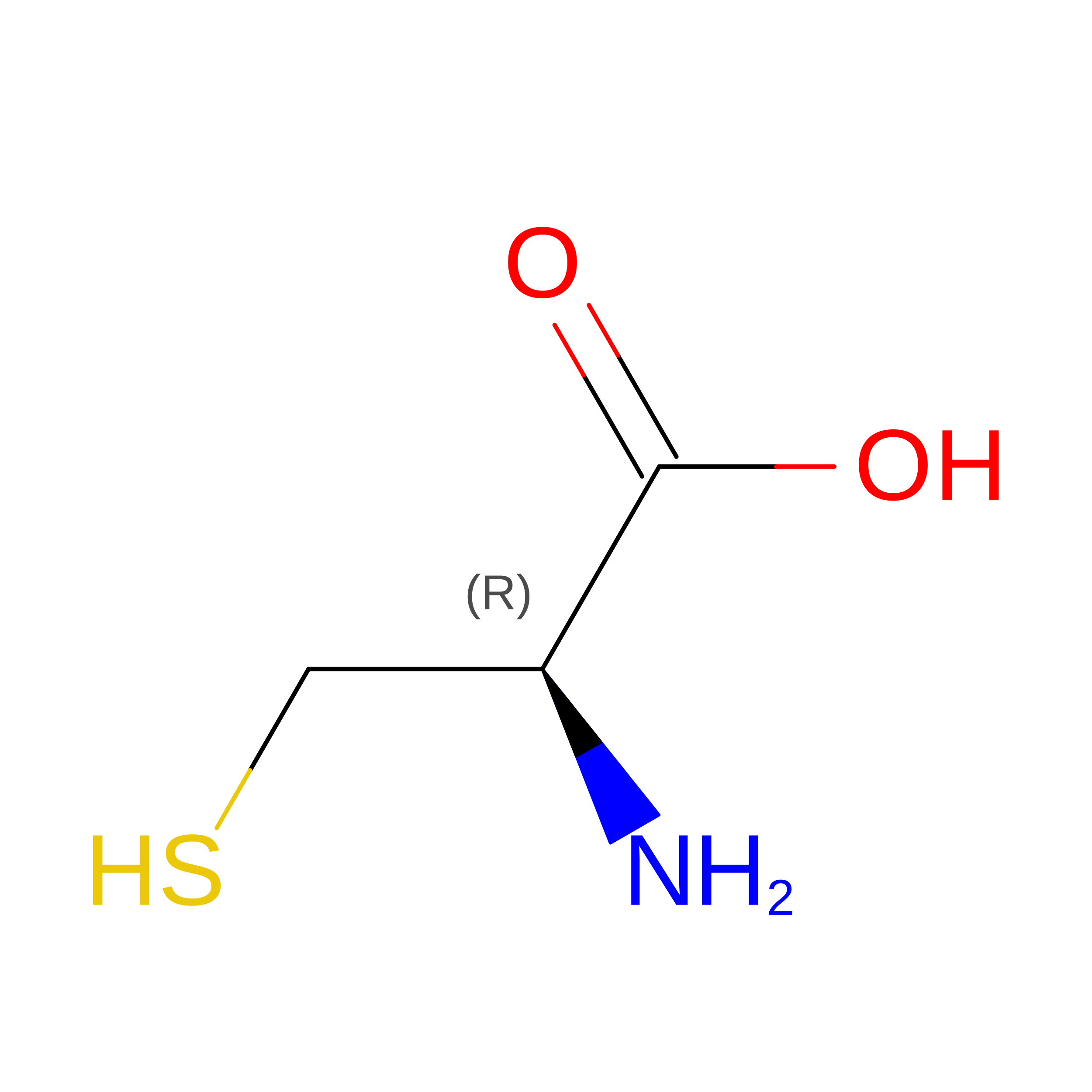
HISTIDINE AMMONIA-LYASE (HAL) FROM PSEUDOMONAS PUTIDA INHIBITED WITH L-CYSTEINE


Experimental Data Snapshot

  • Method: X-RAY DIFFRACTION
  • Resolution: 1.00 Å
  • R-Value Free: 
    0.135 (Depositor), 0.223 (DCC) 
  • R-Value Work: 
    0.227 (DCC) 
  • R-Value Observed: 
    0.119 (Depositor) 

wwPDB Validation 3D Report Full Report

Validation slider image for 1GKM

This is version 3.1 of the entry. See complete history

Literature

Structures of Two Histidine Ammonia-Lyase Modifications and Implications for the Catalytic Mechanism

Baedeker, M.Schulz, G.E.

(2002) Eur J Biochem 269: 1790

  • DOI: https://doi.org/10.1046/j.1432-1327.2002.02827.x
  • Primary Citation Related Structures: 
    1GKJ, 1GKM

  • PubMed Abstract: 

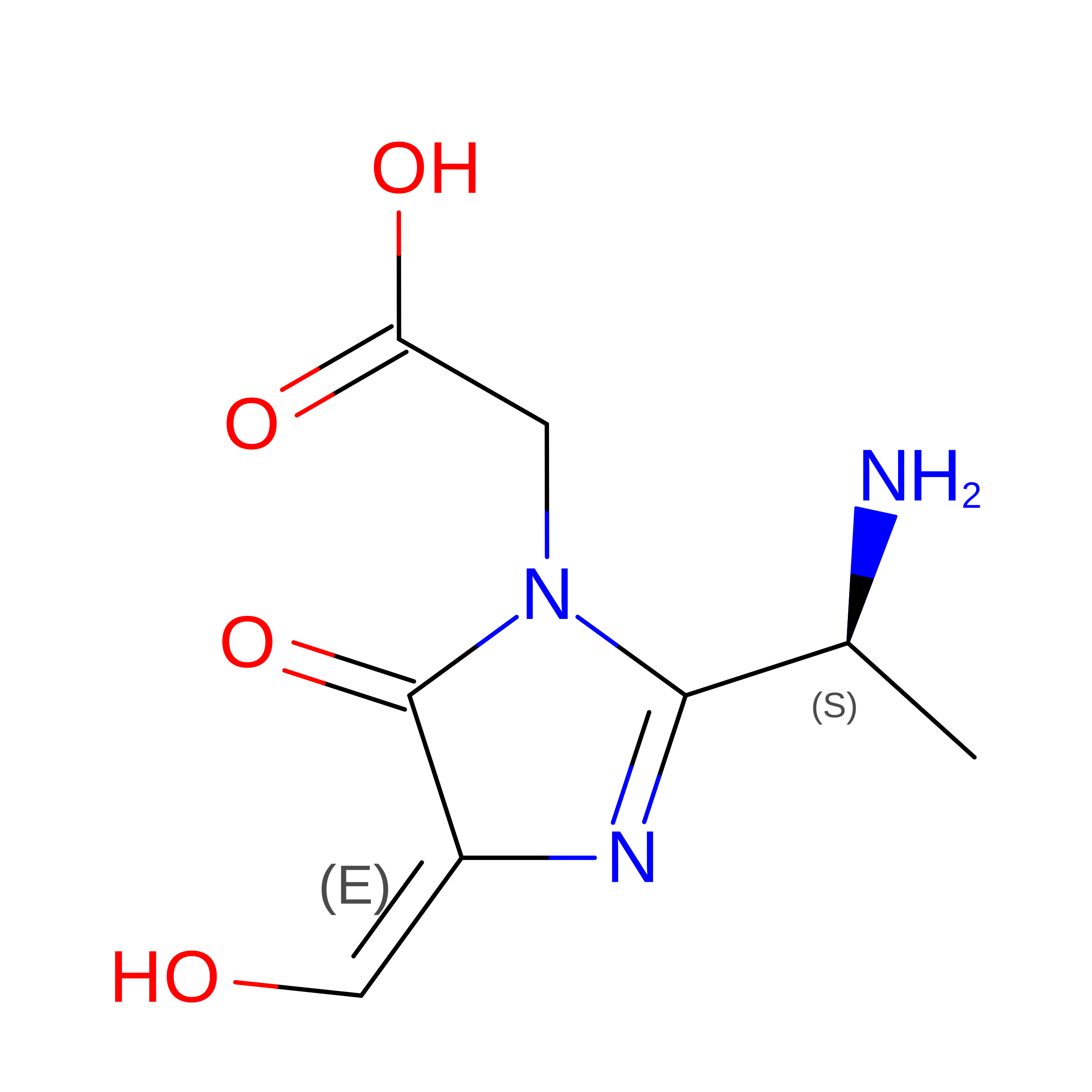
    Histidine ammonia-lyase (EC 4.3.1.3) catalyzes the nonoxidative elimination of the alpha-amino group of histidine using a 4-methylidene-imidazole-5-one (MIO), which is formed autocatalytically from the internal peptide segment 142Ala-Ser-Gly. The structure of the enzyme inhibited by a reaction with l-cysteine was established at the very high resolution of 1.0 A. Five active center mutants were produced and their catalytic activities were measured. Among them, mutant Tyr280-->Phe could be crystallized and its structure could be determined at 1.7 A resolution. It contains a planar sp2-hybridized 144-N atom of MIO, in contrast to the pyramidal sp3-hybridized 144-N of the wild-type. With the planar 144-N atom, MIO assumes the conformation of a putative intermediate aromatic state of the reaction, demonstrating that the conformational barrier between aromatic and wild-type states is very low. The data led to a new proposal for the geometry for the catalyzed reaction, which also applies to the closely related phenylalanine ammonia-lyase (EC 4.3.1.5). Moreover, it suggested an intermediate binding site for the released ammonia.


  • Organizational Affiliation
    • Institut für Organische Chemie und Biochemie, Albert-Ludwigs-Universität, Freiburg im Breisgau, Germany.

Macromolecule Content 

  • Total Structure Weight: 53.94 kDa 
  • Atom Count: 4,360 
  • Modeled Residue Count: 507 
  • Deposited Residue Count: 507 
  • Unique protein chains: 1

Macromolecules

Find similar proteins by:|  3D Structure
Entity ID: 1
MoleculeChains  Sequence LengthOrganismDetailsImage
Histidine ammonia-lyaseA [auth B]507Pseudomonas putidaMutation(s): 0 
Gene Names: hutH
EC: 4.3.1.3
UniProt
Find proteins for P21310 (Pseudomonas putida)
Explore P21310 
Go to UniProtKB:  P21310
Entity Groups
Sequence Clusters30% Identity50% Identity70% Identity90% Identity95% Identity100% Identity
UniProt GroupP21310
Sequence Annotations
Expand
Reference Sequence

Small Molecules

Modified Residues  1 Unique
IDChains TypeFormula2D DiagramParent
ZRF
Query on ZRF
A [auth B]L-PEPTIDE LINKINGC8 H11 N3 O4ALA, SER, GLY

Experimental Data & Validation

Experimental Data

  • Method: X-RAY DIFFRACTION
  • Resolution: 1.00 Å
  • R-Value Free:  0.135 (Depositor), 0.223 (DCC) 
  • R-Value Work:  0.227 (DCC) 
  • R-Value Observed: 0.119 (Depositor) 
Space Group: I 2 2 2
Unit Cell:
Length ( Å )Angle ( ˚ )
a = 79.267α = 90
b = 116.788β = 90
c = 129.532γ = 90
Software Package:
Software NamePurpose
SHELXrefinement
MOSFLMdata reduction
SCALAdata scaling

Structure Validation

View Full Validation Report


Entry History 

Deposition Data

Revision History  (Full details and data files)

  • Version 1.0: 2002-04-05
    Type: Initial release
  • Version 1.1: 2011-09-07
    Changes: Advisory, Atomic model, Database references, Derived calculations, Non-polymer description, Other, Refinement description, Structure summary, Version format compliance
  • Version 1.2: 2019-07-24
    Changes: Data collection, Derived calculations
  • Version 1.3: 2019-10-23
    Changes: Data collection, Database references, Other
  • Version 2.0: 2023-11-15
    Changes: Atomic model, Data collection, Database references, Derived calculations
  • Version 3.0: 2024-06-26
    Changes: Advisory, Atomic model, Data collection, Database references, Derived calculations, Non-polymer description, Polymer sequence, Source and taxonomy, Structure summary
  • Version 3.1: 2025-10-01
    Changes: Derived calculations, Structure summary