Download Mendeley
Crystal structure of phosphoserine phosphatase from Methanococcus jannaschii, a hyperthermophile, at 1.8 A resolution.
Wang, W., Kim, R., Jancarik, J., Yokota, H., Kim, S.H.(2001) Structure 9: 65-72
- PubMed: 11342136 Search on PubMed
- DOI: https://doi.org/10.1016/s0969-2126(00)00558-x
- Primary Citation Related Structures:
1F5S - PubMed Abstract:
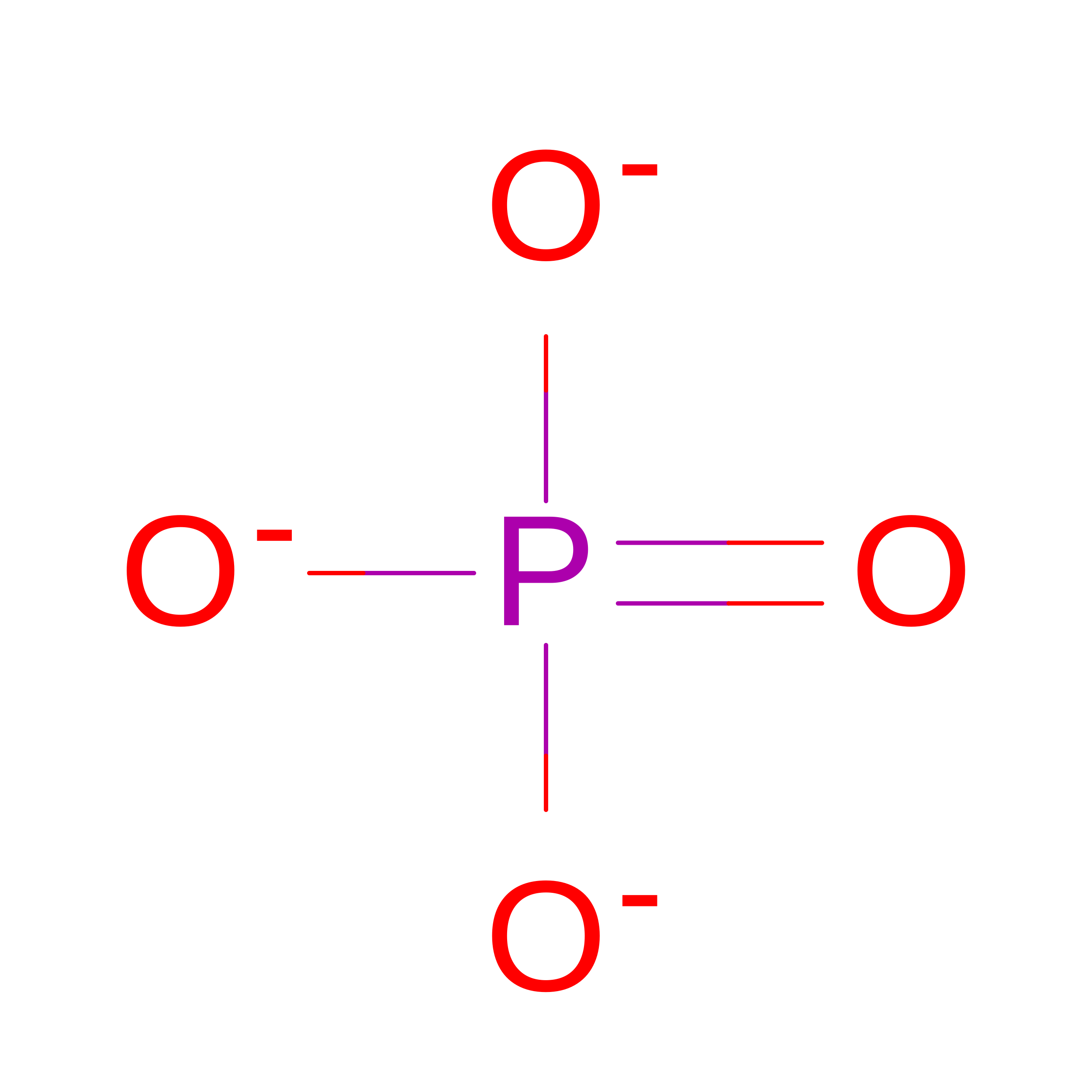
D-Serine is a co-agonist of the N-methyl-D-aspartate subtype of glutamate receptors, a major neurotransmitter receptor family in mammalian nervous systems. D-Serine is converted from L-serine, 90% of which is the product of the enzyme phosphoserine phosphatase (PSP). PSP from M. jannaschii (MJ) shares significant sequence homology with human PSP. PSPs and P-type ATPases are members of the haloacid dehalogenase (HAD)-like hydrolase family, and all members share three conserved sequence motifs. PSP and P-type ATPases utilize a common mechanism that involves Mg(2+)-dependent phosphorylation and autodephosphorylation at an aspartyl side chain in the active site. The strong resemblance in sequence and mechanism implies structural similarity among these enzymes. The PSP crystal structure resembles the NAD(P) binding Rossmann fold with a large insertion of a four-helix-bundle domain and a beta hairpin. Three known conserved sequence motifs are arranged next to each other in space and outline the active site. A phosphate and a magnesium ion are bound to the active site. The active site is within a closed environment between the core alpha/beta domain and the four-helix-bundle domain. The crystal structure of MJ PSP was determined at 1.8 A resolution. Critical residues were assigned based on the active site structure and ligand binding geometry. The PSP structure is in a closed conformation that may resemble the phosphoserine bound state or the state after autodephosphorylation. Compared to a P-type ATPase (Ca(2+)-ATPase) structure, which is in an open state, this PSP structure appears also to be a good model for the closed conformation of P-type ATPase.
- Department of Chemistry, University of California, Berkeley, 94720, USA.
Organizational Affiliation: