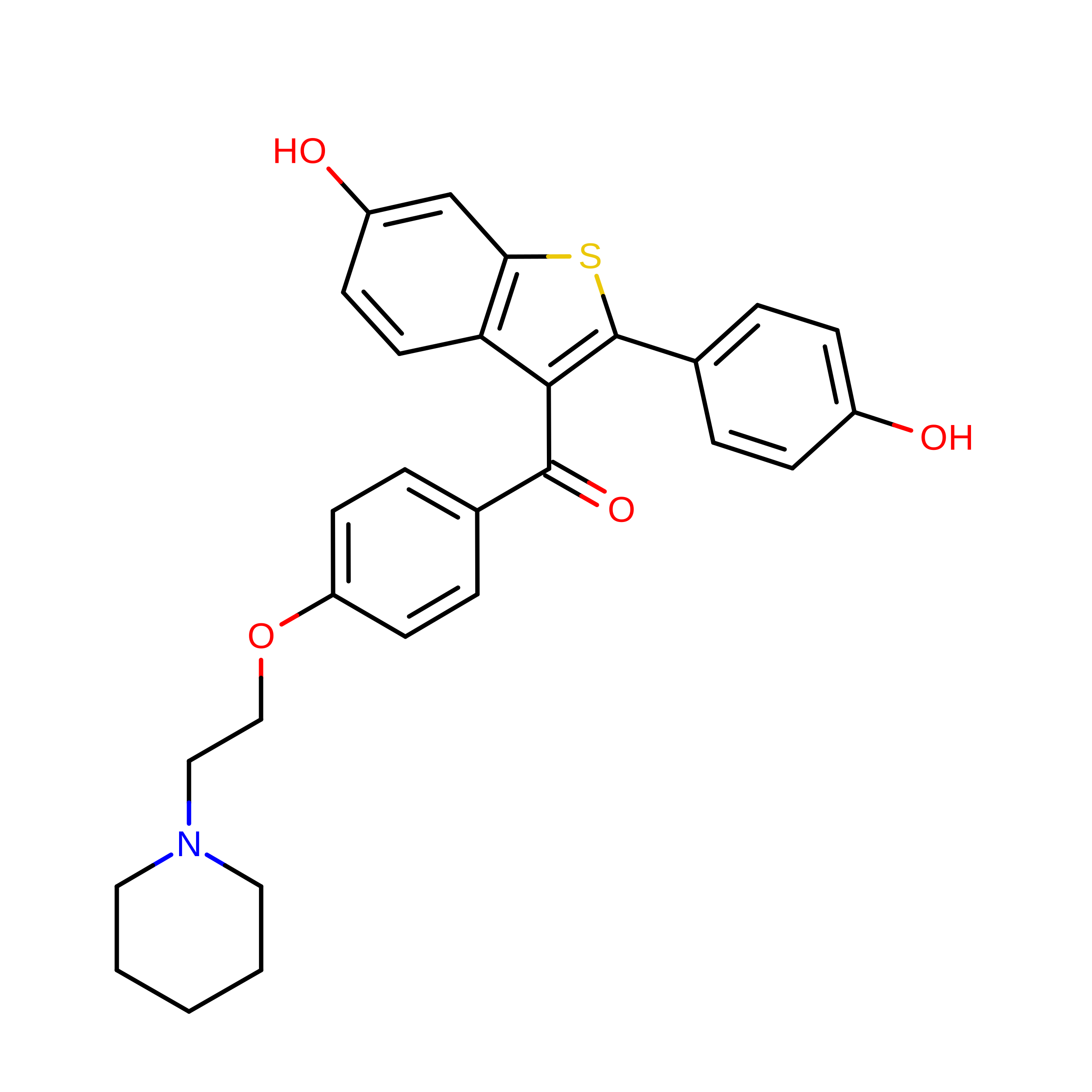
1ERR | pdb_00001err

HUMAN ESTROGEN RECEPTOR LIGAND-BINDING DOMAIN IN COMPLEX WITH RALOXIFENE


Experimental Data Snapshot

  • Method: X-RAY DIFFRACTION
  • Resolution: 2.60 Å
  • R-Value Free: 
    0.299 (Depositor), 0.268 (DCC) 
  • R-Value Work: 
    0.219 (Depositor), 0.196 (DCC) 

wwPDB Validation 3D Report Full Report

Validation slider image for 1ERR

Ligand Structure Quality Assessment 


This is version 1.4 of the entry. See complete history

Literature

Molecular basis of agonism and antagonism in the oestrogen receptor.

Brzozowski, A.M.Pike, A.C.Dauter, Z.Hubbard, R.E.Bonn, T.Engstrom, O.Ohman, L.Greene, G.L.Gustafsson, J.A.Carlquist, M.

(1997) Nature 389: 753-758

  • DOI: https://doi.org/10.1038/39645
  • Primary Citation Related Structures: 
    1ERE, 1ERR

  • PubMed Abstract: 

    Oestrogens are involved in the growth, development and homeostasis of a number of tissues. The physiological effects of these steroids are mediated by a ligand-inducible nuclear transcription factor, the oestrogen receptor (ER). Hormone binding to the ligand-binding domain (LBD) of the ER initiates a series of molecular events culminating in the activation or repression of target genes. Transcriptional regulation arises from the direct interaction of the ER with components of the cellular transcription machinery. Here we report the crystal structures of the LBD of ER in complex with the endogenous oestrogen, 17beta-oestradiol, and the selective antagonist raloxifene, at resolutions of 3.1 and 2.6 A, respectively. The structures provide a molecular basis for the distinctive pharmacophore of the ER and its catholic binding properties. Agonist and antagonist bind at the same site within the core of the LBD but demonstrate different binding modes. In addition, each class of ligand induces a distinct conformation in the transactivation domain of the LBD, providing structural evidence of the mechanism of antagonism.


  • Organizational Affiliation
    • Protein Structure Group, Chemistry Department, University of York, UK.

Macromolecule Content 

  • Total Structure Weight: 58.84 kDa 
  • Atom Count: 3,733 
  • Modeled Residue Count: 448 
  • Deposited Residue Count: 506 
  • Unique protein chains: 1

Macromolecules

Find similar proteins by:|  3D Structure
Entity ID: 1
MoleculeChains  Sequence LengthOrganismDetailsImage
ESTROGEN RECEPTOR
A, B
253Homo sapiensMutation(s): 0 
Gene Names: ER ALPHA
UniProt & NIH Common Fund Data Resources
Find proteins for P03372 (Homo sapiens)
Explore P03372 
Go to UniProtKB:  P03372
PHAROS:  P03372
GTEx:  ENSG00000091831 
Entity Groups
Sequence Clusters30% Identity50% Identity70% Identity90% Identity95% Identity100% Identity
UniProt GroupP03372
Sequence Annotations
Expand
Reference Sequence

Small Molecules

Modified Residues  1 Unique
IDChains TypeFormula2D DiagramParent
CCS
Query on CCS
A, B
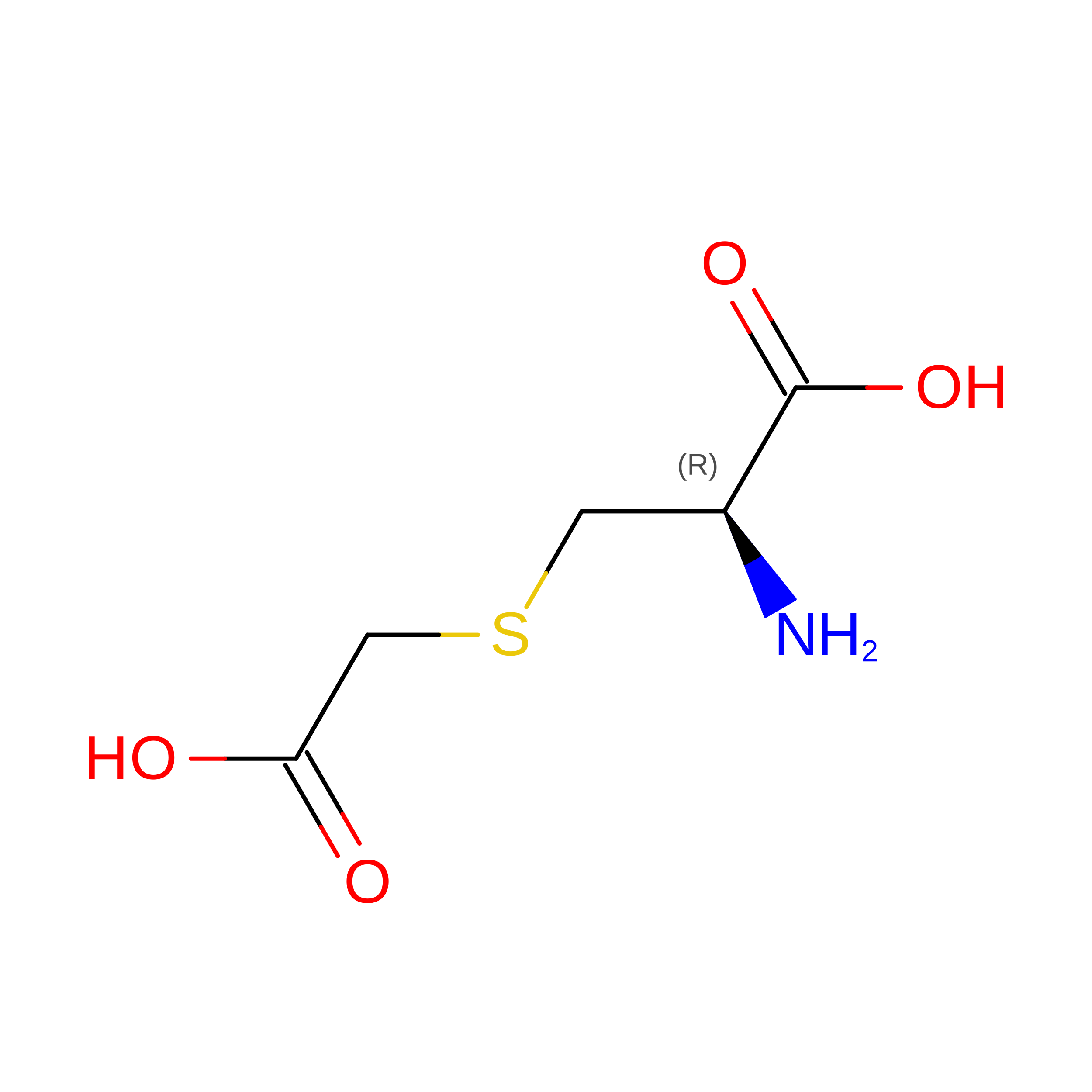
L-PEPTIDE LINKINGC5 H9 N O4 SCYS

Experimental Data & Validation

Experimental Data

  • Method: X-RAY DIFFRACTION
  • Resolution: 2.60 Å
  • R-Value Free:  0.299 (Depositor), 0.268 (DCC) 
  • R-Value Work:  0.219 (Depositor), 0.196 (DCC) 
Space Group: C 1 2 1
Unit Cell:
Length ( Å )Angle ( ˚ )
a = 104.53α = 90
b = 53.68β = 116.79
c = 102.71γ = 90
Software Package:
Software NamePurpose
MLPHAREphasing
REFMACrefinement
DENZOdata reduction
SCALEPACKdata scaling

Structure Validation

View Full Validation Report


Ligand Structure Quality Assessment 


Entry History 

Deposition Data

Revision History  (Full details and data files)

  • Version 1.0: 1998-09-16
    Type: Initial release
  • Version 1.1: 2008-03-24
    Changes: Version format compliance
  • Version 1.2: 2011-07-13
    Changes: Version format compliance
  • Version 1.3: 2013-05-15
    Changes: Atomic model
  • Version 1.4: 2025-03-26
    Changes: Data collection, Database references, Derived calculations, Structure summary