1DRY | pdb_00001dry

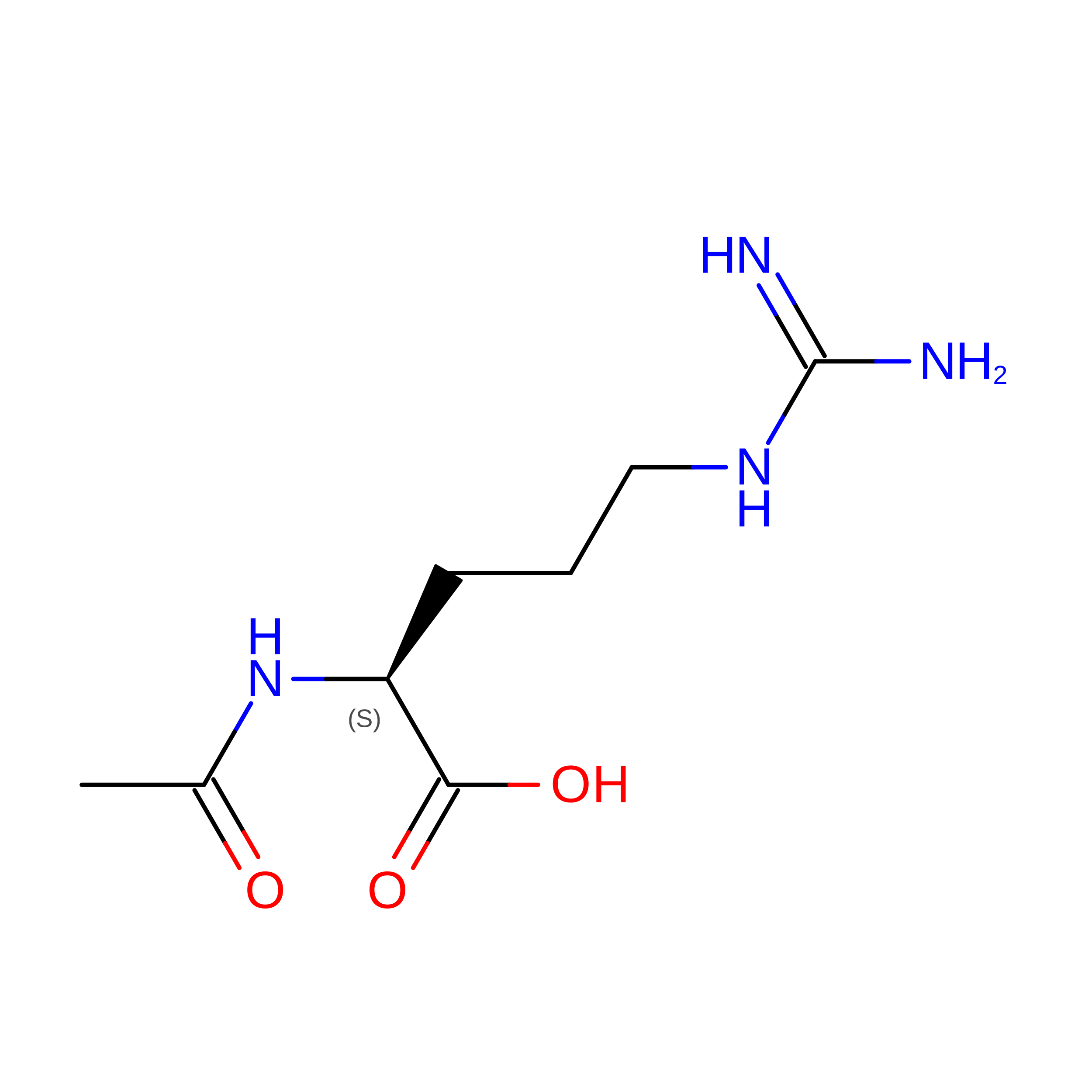
CRYSTAL STRUCTURE OF CLAVAMINATE SYNTHASE IN COMPLEX WITH FE(II), 2-OXOGLUTARATE AND N-ALPHA-L-ACETYL ARGININE


Experimental Data Snapshot

  • Method: X-RAY DIFFRACTION
  • Resolution: 1.40 Å
  • R-Value Free: 
    0.205 (Depositor) 
  • R-Value Work: 
    0.174 (Depositor) 

wwPDB Validation 3D Report Full Report

Validation slider image for 1DRY

This is version 1.3 of the entry. See complete history

Literature

Structural origins of the selectivity of the trifunctional oxygenase clavaminic acid synthase.

Zhang, Z.Ren, J.Stammers, D.K.Baldwin, J.E.Harlos, K.Schofield, C.J.

(2000) Nat Struct Biol 7: 127-133

  • DOI: https://doi.org/10.1038/72398
  • Primary Citation Related Structures: 
    1DRT, 1DRY, 1DS0, 1DS1

  • PubMed Abstract: 

    Clavaminate synthase (CAS), a remarkable Fe(II)/2-oxoglutarate oxygenase, catalyzes three separate oxidative reactions in the biosynthesis of clavulanic acid, a clinically used inhibitor of serine beta-lactamases. The first CAS-catalyzed step (hydroxylation) is separated from the latter two (oxidative cyclization/desaturation) by the action of an amidinohydrolase. Here, we describe crystal structures of CAS in complex with Fe(II), 2-oxoglutarate (2OG) and substrates (N-alpha-acetyl-L-arginine and proclavaminic acid). They reveal how CAS catalyzes formation of the clavam nucleus, via a process unprecedented in synthetic organic chemistry, and suggest how it discriminates between substrates and controls reaction of its highly reactive ferryl intermediate. The presence of an unpredicted jelly roll beta-barrel core in CAS implies divergent evolution within the family of 2OG and related oxygenases. Comparison with other non-heme oxidases/oxygenases reveals flexibility in the position which dioxygen ligates to the iron, in contrast to the analogous heme-using enzymes.


  • Organizational Affiliation
    • The Dyson Perrins Laboratory and the Oxford Centre for Molecular Sciences, South Parks Road, Oxford OX1 3QY, UK.

Macromolecule Content 

  • Total Structure Weight: 36.49 kDa 
  • Atom Count: 2,945 
  • Modeled Residue Count: 316 
  • Deposited Residue Count: 324 
  • Unique protein chains: 1

Macromolecules

Find similar proteins by:|  3D Structure
Entity ID: 1
MoleculeChains  Sequence LengthOrganismDetailsImage
CLAVAMINATE SYNTHASE 1324Streptomyces clavuligerusMutation(s): 0 
EC: 1.14.11.21
UniProt
Find proteins for Q05581 (Streptomyces clavuligerus)
Explore Q05581 
Go to UniProtKB:  Q05581
Entity Groups
Sequence Clusters30% Identity50% Identity70% Identity90% Identity95% Identity100% Identity
UniProt GroupQ05581
Sequence Annotations
Expand
Reference Sequence

Small Molecules

Ligands 5 Unique
IDChains Name / Formula / InChI Key2D Diagram3D Interactions
AAG

Query on AAG


Download:Ideal Coordinates CCD File
B [auth A]N-ALPHA-L-ACETYL-ARGININE
C8 H16 N4 O3
SNEIUMQYRCDYCH-LURJTMIESA-N
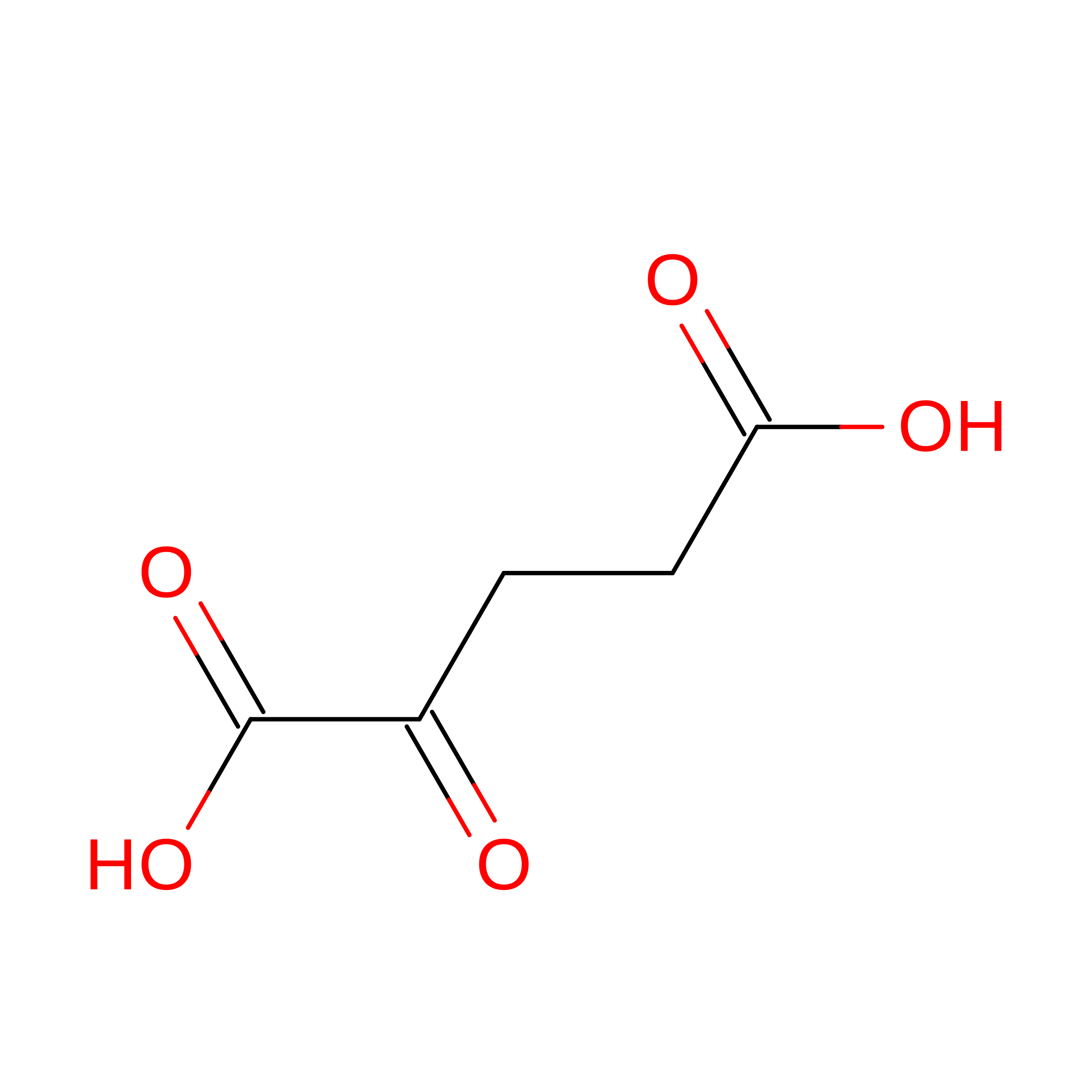
AKG

Query on AKG


Download:Ideal Coordinates CCD File
G [auth A]2-OXOGLUTARIC ACID
C5 H6 O5
KPGXRSRHYNQIFN-UHFFFAOYSA-N
SO4

Query on SO4


Download:Ideal Coordinates CCD File
D [auth A],
E [auth A],
F [auth A]
SULFATE ION
O4 S
QAOWNCQODCNURD-UHFFFAOYSA-L
GOL

Query on GOL


Download:Ideal Coordinates CCD File
H [auth A],
I [auth A],
J [auth A],
K [auth A]
GLYCEROL
C3 H8 O3
PEDCQBHIVMGVHV-UHFFFAOYSA-N
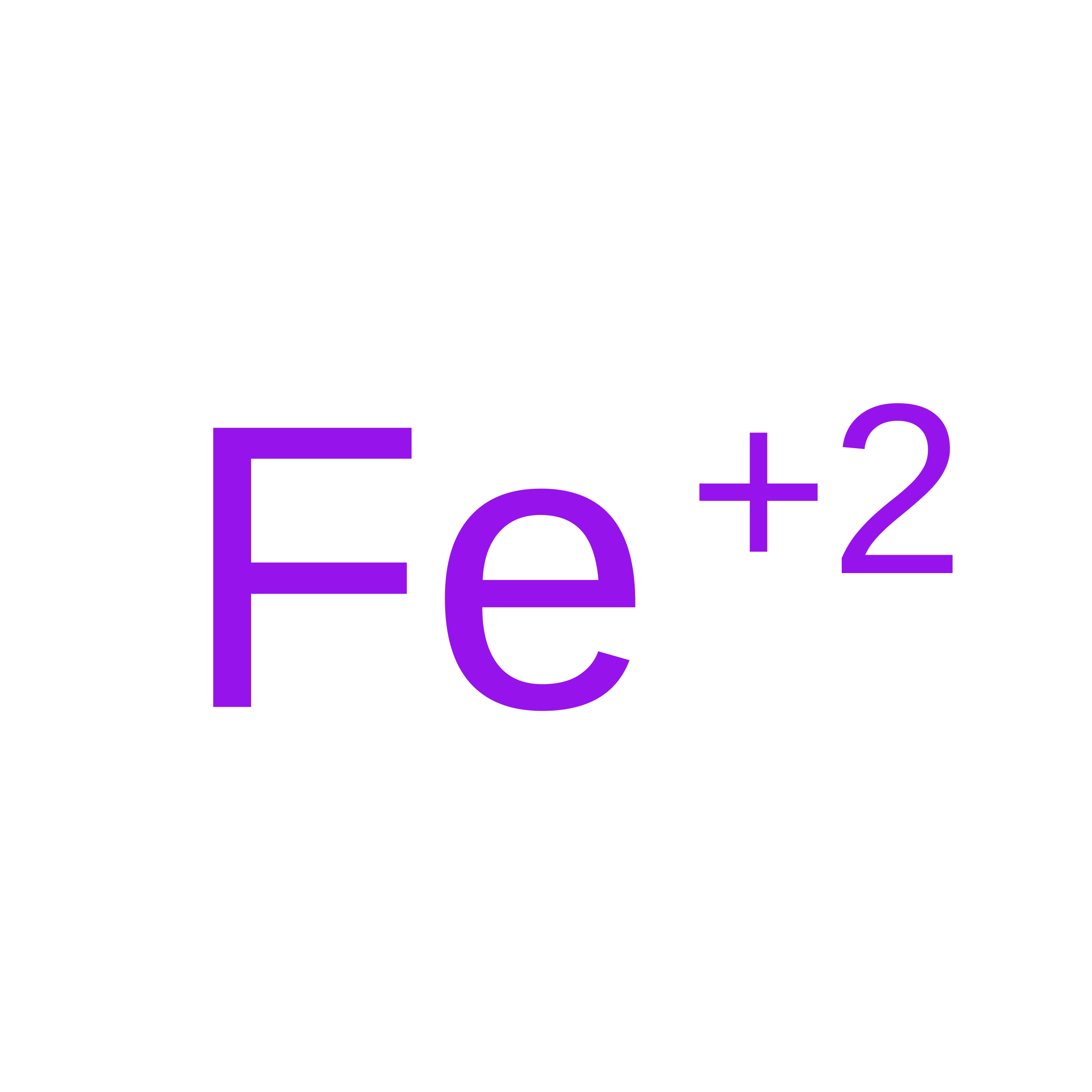
FE2

Query on FE2


Download:Ideal Coordinates CCD File
C [auth A]FE (II) ION
Fe
CWYNVVGOOAEACU-UHFFFAOYSA-N

Experimental Data & Validation

Experimental Data

  • Method: X-RAY DIFFRACTION
  • Resolution: 1.40 Å
  • R-Value Free:  0.205 (Depositor) 
  • R-Value Work:  0.174 (Depositor) 
Space Group: P 21 21 21
Unit Cell:
Length ( Å )Angle ( ˚ )
a = 64.81α = 90
b = 69.17β = 90
c = 70.02γ = 90
Software Package:
Software NamePurpose
CNSrefinement
DENZOdata reduction
SCALEPACKdata scaling
CNSphasing

Structure Validation

View Full Validation Report


Entry History 

Deposition Data

Revision History  (Full details and data files)

  • Version 1.0: 2000-07-06
    Type: Initial release
  • Version 1.1: 2008-04-27
    Changes: Version format compliance
  • Version 1.2: 2011-07-13
    Changes: Non-polymer description, Version format compliance
  • Version 1.3: 2023-11-29
    Changes: Data collection, Database references, Derived calculations