1AK0 | pdb_00001ak0

P1 NUCLEASE IN COMPLEX WITH A SUBSTRATE ANALOG


Experimental Data Snapshot

  • Method: X-RAY DIFFRACTION
  • Resolution: 1.80 Å
  • R-Value Free: 
    0.235 (Depositor) 
  • R-Value Work: 
    0.207 (Depositor) 
  • R-Value Observed: 
    0.207 (Depositor) 

wwPDB Validation 3D Report Full Report

Validation slider image for 1AK0

This is version 2.1 of the entry. See complete history

Literature

Recognition of single-stranded DNA by nuclease P1: high resolution crystal structures of complexes with substrate analogs.

Romier, C.Dominguez, R.Lahm, A.Dahl, O.Suck, D.

(1998) Proteins 32: 414-424

  • Primary Citation Related Structures: 
    1AK0

  • PubMed Abstract: 

    The reaction mechanism of nuclease P1 from Penicillium citrinum has been investigated using single-stranded dithiophosphorylated di-, tetra-, and hexanucleotides as substrate analogs. The complexes crystallize in tetragonal and orthorhombic space groups and have been solved by molecular replacement. The high resolution structures give a clear picture of base recognition by P1 nuclease at its two nucleotide-binding sites, especially the 1.8 A structure of a P1-tetranucleotide complex which can be considered a P1-product complex. The observed binding modes are in agreement with a catalytic mechanism where the two closely spaced zinc ions activate the attacking water while the third, more exposed zinc ion stabilizes the leaving 03' oxyanion. Stacking as well as hydrogen bonding interactions with the base 5' to the cleaved phosphodiester bond are important elements of substrate binding and recognition. Modelling of a productive P1-substrate complex based on the solved structures suggests steric hindrance as the likely reason for the resistance of Rp-phosphorothioates and phosphorodithioates. Differences with the highly homologous nuclease S1 from Aspergillus oryzae are discussed.


  • Organizational Affiliation
    • European Molecular Biology Laboratory, Heidelberg, Germany.

Macromolecule Content 

  • Total Structure Weight: 31.82 kDa 
  • Atom Count: 2,313 
  • Modeled Residue Count: 264 
  • Deposited Residue Count: 270 
  • Unique protein chains: 1

Macromolecules

Find similar proteins by:|  3D Structure
Entity ID: 1
MoleculeChains  Sequence LengthOrganismDetailsImage
P1 NUCLEASE270Penicillium citrinumMutation(s): 0 
EC: 3.1.30.1
UniProt
Find proteins for P24289 (Penicillium citrinum)
Explore P24289 
Go to UniProtKB:  P24289
Entity Groups
Sequence Clusters30% Identity50% Identity70% Identity90% Identity95% Identity100% Identity
UniProt GroupP24289
Glycosylation
Glycosylation Sites: 3
Sequence Annotations
Expand
Reference Sequence

Oligosaccharides

Help  
Entity ID: 2
MoleculeChains Length2D Diagram GlycosylationD Interactions
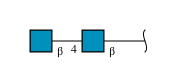
2-acetamido-2-deoxy-beta-D-glucopyranose-(1-4)-2-acetamido-2-deoxy-beta-D-glucopyranose
B
2N-Glycosylation
Glycosylation Resources
GlyTouCan: G42666HT
GlyCosmos: G42666HT
GlyGen: G42666HT

Small Molecules

Ligands 4 Unique
IDChains Name / Formula / InChI Key2D Diagram3D Interactions
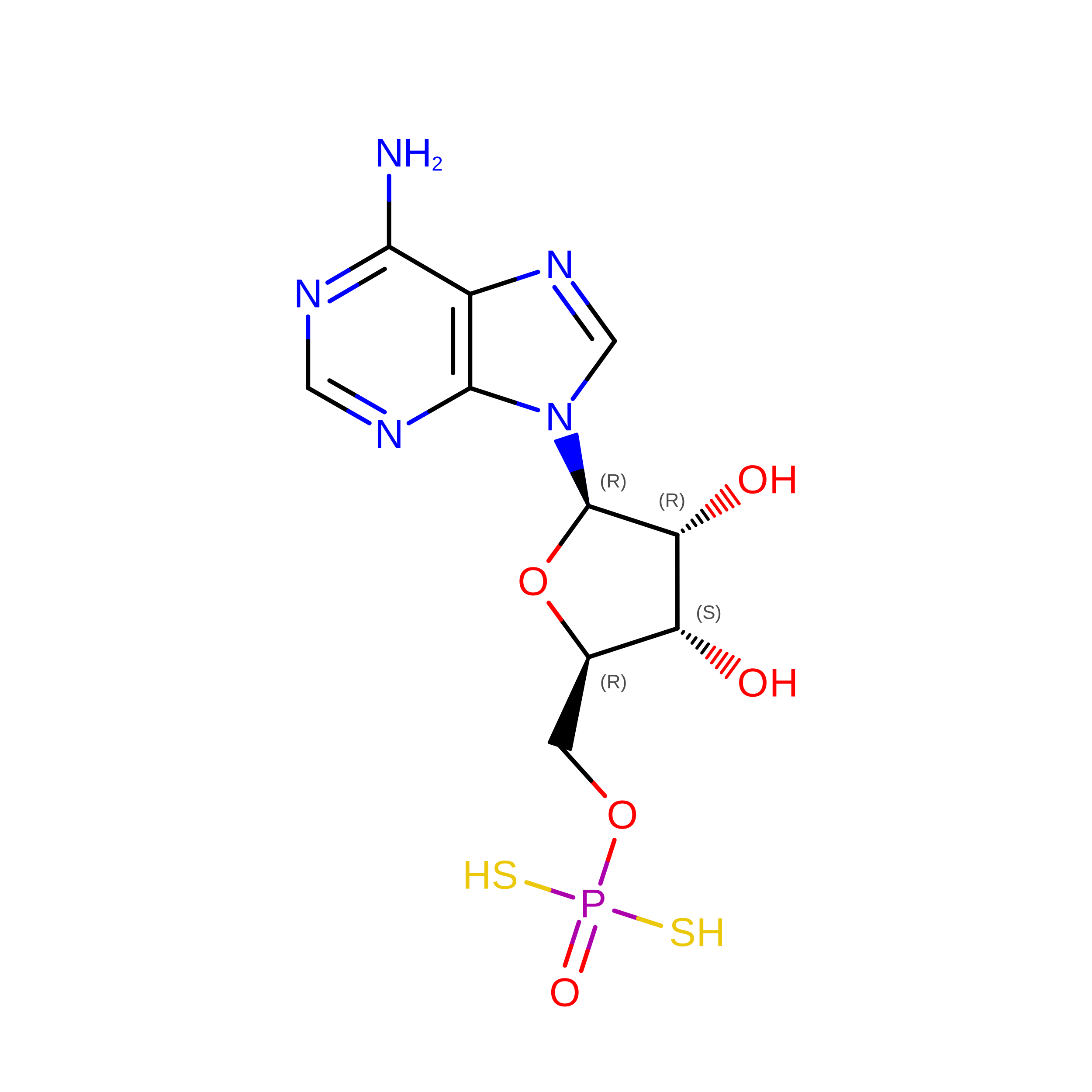
ADS

Query on ADS


Download:Ideal Coordinates CCD File
I [auth A]ADENOSINE-5'-(DITHIO)PHOSPHATE
C10 H14 N5 O5 P S2
RPDDEEQJNPPYRG-CPTYKQRNSA-N
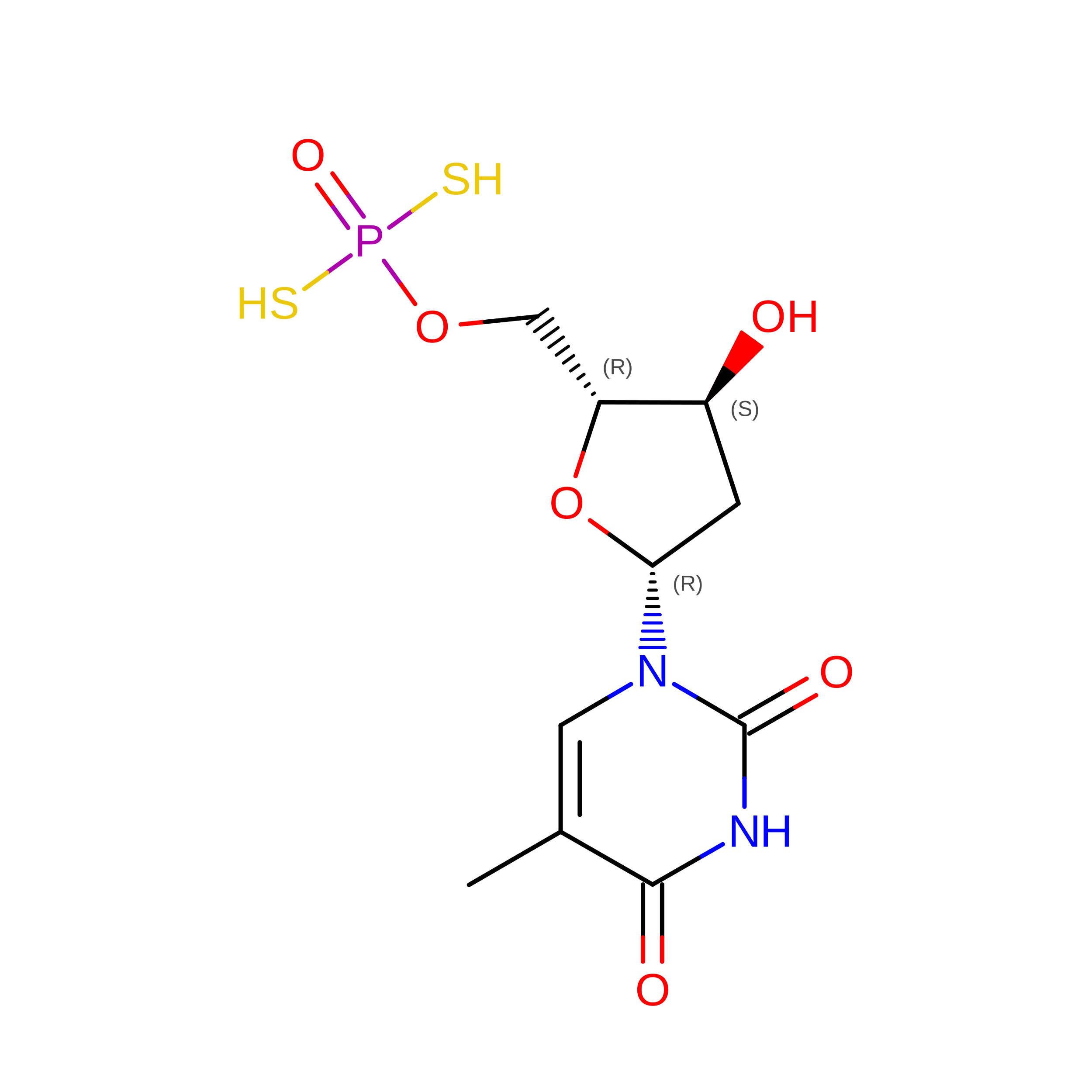
THS

Query on THS


Download:Ideal Coordinates CCD File
J [auth A],
K [auth A],
L [auth A]
THYMIDINE-5'-(DITHIO)PHOSPHATE
C10 H15 N2 O6 P S2
KMPXQZWMYQHTNT-XLPZGREQSA-N
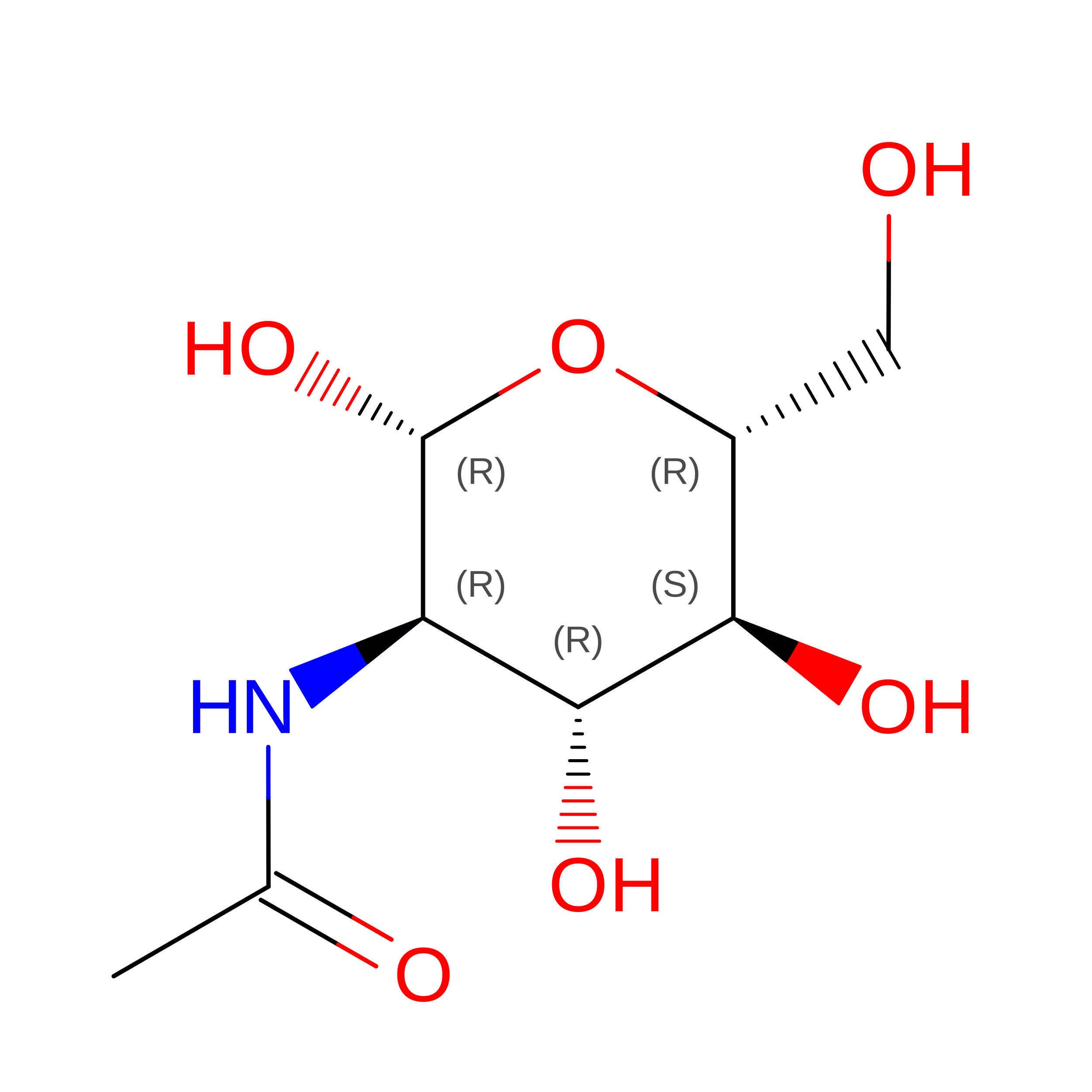
NAG

Query on NAG


Download:Ideal Coordinates CCD File
C [auth A],
D [auth A]
2-acetamido-2-deoxy-beta-D-glucopyranose
C8 H15 N O6
OVRNDRQMDRJTHS-FMDGEEDCSA-N
ZN

Query on ZN


Download:Ideal Coordinates CCD File
E [auth A],
F [auth A],
G [auth A],
H [auth A]
ZINC ION
Zn
PTFCDOFLOPIGGS-UHFFFAOYSA-N

Experimental Data & Validation

Experimental Data

  • Method: X-RAY DIFFRACTION
  • Resolution: 1.80 Å
  • R-Value Free:  0.235 (Depositor) 
  • R-Value Work:  0.207 (Depositor) 
  • R-Value Observed: 0.207 (Depositor) 
Space Group: P 21 21 21
Unit Cell:
Length ( Å )Angle ( ˚ )
a = 41.98α = 90
b = 74.04β = 90
c = 102.13γ = 90
Software Package:
Software NamePurpose
XDSdata scaling
XDSdata reduction
X-PLORmodel building
X-PLORrefinement
X-PLORphasing

Structure Validation

View Full Validation Report


Entry History 

Deposition Data

Revision History  (Full details and data files)

  • Version 1.0: 1997-12-03
    Type: Initial release
  • Version 1.1: 2008-03-24
    Changes: Version format compliance
  • Version 1.2: 2011-07-13
    Changes: Non-polymer description, Version format compliance
  • Version 2.0: 2020-07-29
    Type: Remediation
    Reason: Carbohydrate remediation
    Changes: Advisory, Atomic model, Data collection, Derived calculations, Structure summary
  • Version 2.1: 2024-10-23
    Changes: Data collection, Database references, Structure summary