Download Mendeley
Structural mechanism of TOPBP1 activating the ATR-ATRIP replication checkpoint kinase.
Li, B., Yaseen, A., Pavletich, N.P.(2026) Nat Struct Mol Biol 33: 1204-1213
- PubMed: 42493622 Search on PubMedSearch on PubMed Central
- DOI: https://doi.org/10.1038/s41594-026-01844-1
- Primary Citation Related Structures:
13DE, 9ZCY, 9ZD1, 9ZD3, 9ZD4 - PubMed Abstract:
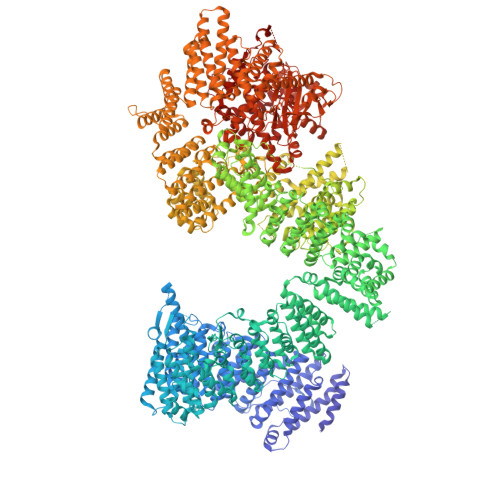
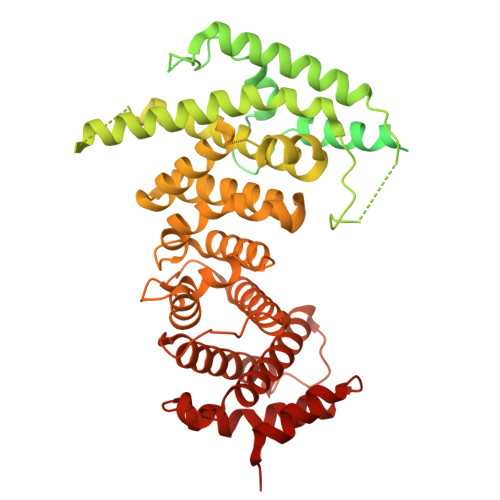
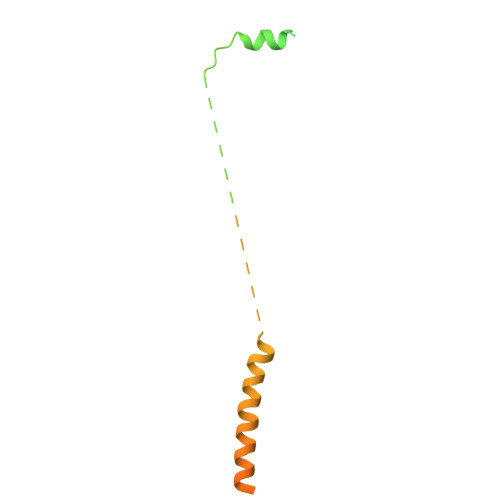
The ATR protein kinase preserves genomic integrity during DNA replication by controlling checkpoints needed for the orderly progression of S phase and for the responses to replication stress. ATR, with its obligate partner ATRIP, is activated by the TOPBP1 and ETAA1 proteins, which control different branches of ATR signaling. TOPBP1 is essential for induction of the S phase checkpoint in response to stalled replication forks, while ETAA1 is required for timely progression to mitosis from an unperturbed S phase. TOPBP1 and ETAA1 contain ATR-activating domains (AADs) of limited homology, but how they activate ATR has not yet been fully elucidated. Here we present the 3.0-Å cryo-EM structure of the human ATR-ATRIP complex bound to the TOPBP1 AAD, showing that TOPBP1 activates ATR by inducing a global conformational change that allosterically realigns active site residues in the kinase domain ~70 Å away. We also present the 3.3-Å structure of the ATR-ATRIP-ETAA1 AAD complex, which reveals a binding mode distinct from TOPBP1. Our data suggest that the distinct binding modes of TOPBP1 and ETAA1 contribute to the different cellular contexts and outcomes of ATR-ATRIP activation.
- Structural Biology Program, Memorial Sloan Kettering Cancer Center, New York, NY, USA.
Organizational Affiliation: