Download Mendeley
PIP 2 activation of the cardiac I Ks potassium channel.
Cui, J., Zhao, L., Xu, X., Cui, C., Duan, R., Kermani, A., Shi, J., Han, L., Sun, J., Zou, X.(2025) Res Sq
- PubMed: 41282193 Search on PubMedSearch on PubMed Central
- DOI: https://doi.org/10.21203/rs.3.rs-7609003/v1
- Primary Citation Related Structures:
12DK - PubMed Abstract:
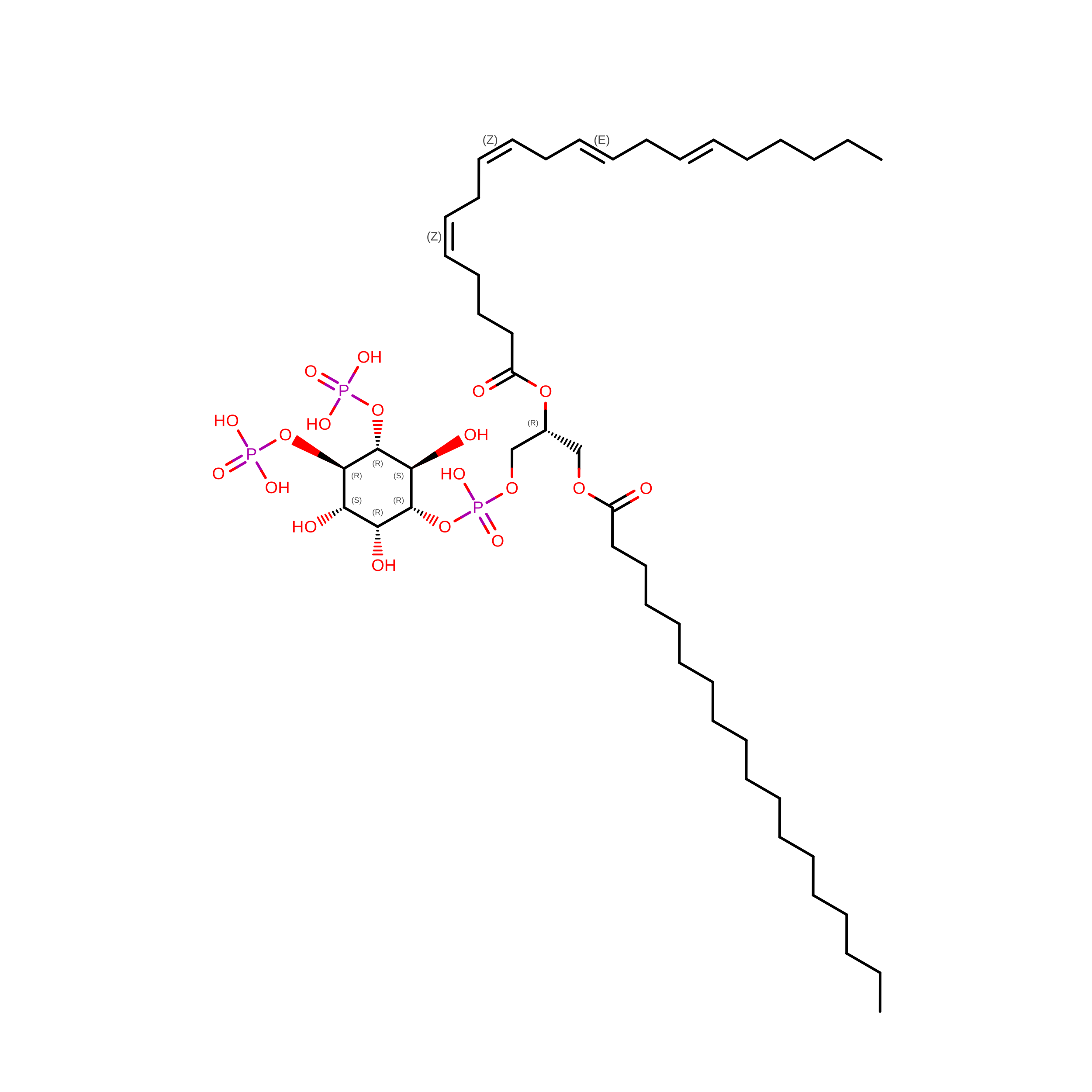
The I Ks channel complex, composed of the voltage-gated potassium channel KCNQ1 and its regulatory subunit KCNE1, is essential for the termination of cardiac action potentials. The function of KCNQ1 and I Ks requires PIP 2 , and its depletion abolishes channel opening. Previous studies revealed that KCNQ1 adopts both bent and straight conformations and can bind two PIP 2 molecules: one adjacent to VSD (V-PIP 2 ), and the other at the VSD-pore interface (C-PIP 2 ). Here we show that the two PIP 2 perform essential yet distinct roles: V-PIP 2 enables the bent-to-straight transition, whereas C-PIP 2 mediates VSD-pore coupling and stabilizes the straight conformation. Structure-function analysis and molecular dynamic simulations show that VSD activation elevates the V-PIP 2 site and weakens the CaM-VSD interaction, permitting the conformational shift from the bent, intermediate open (IO) state associated with KCNQ1 to the straight, I Ks -exclusive activated open (AO) state, which is further stabilized by C-PIP 2 . Leveraging this mechanism, we developed a compound CA1, which selectively targets the V-PIP 2 site and modulates I Ks channel activity without affecting KCNQ1, offering a novel and promising conceptional path for specific and safe antiarrhythmic therapeutics.
- Washington University in Saint Louis.
Organizational Affiliation: