Download Mendeley
Expression, purification, crystallization and structure solution of glyceraldehyde-3-phosphate dehydrogenase from the babesiosis infective agent Babesia bovis.
Ukrainski, B., Galvao, E.B., Silva, M., Iulek, J.(2026) Protein Expr Purif 243: 106991-106991
- PubMed: 42600714 Search on PubMed
- DOI: https://doi.org/10.1016/j.pep.2026.106991
- Primary Citation Related Structures:
10GI - PubMed Abstract:
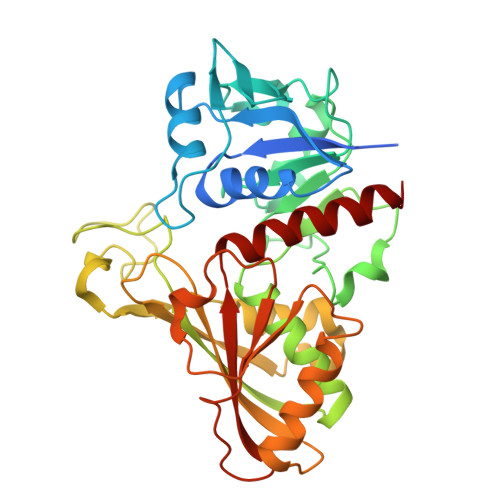
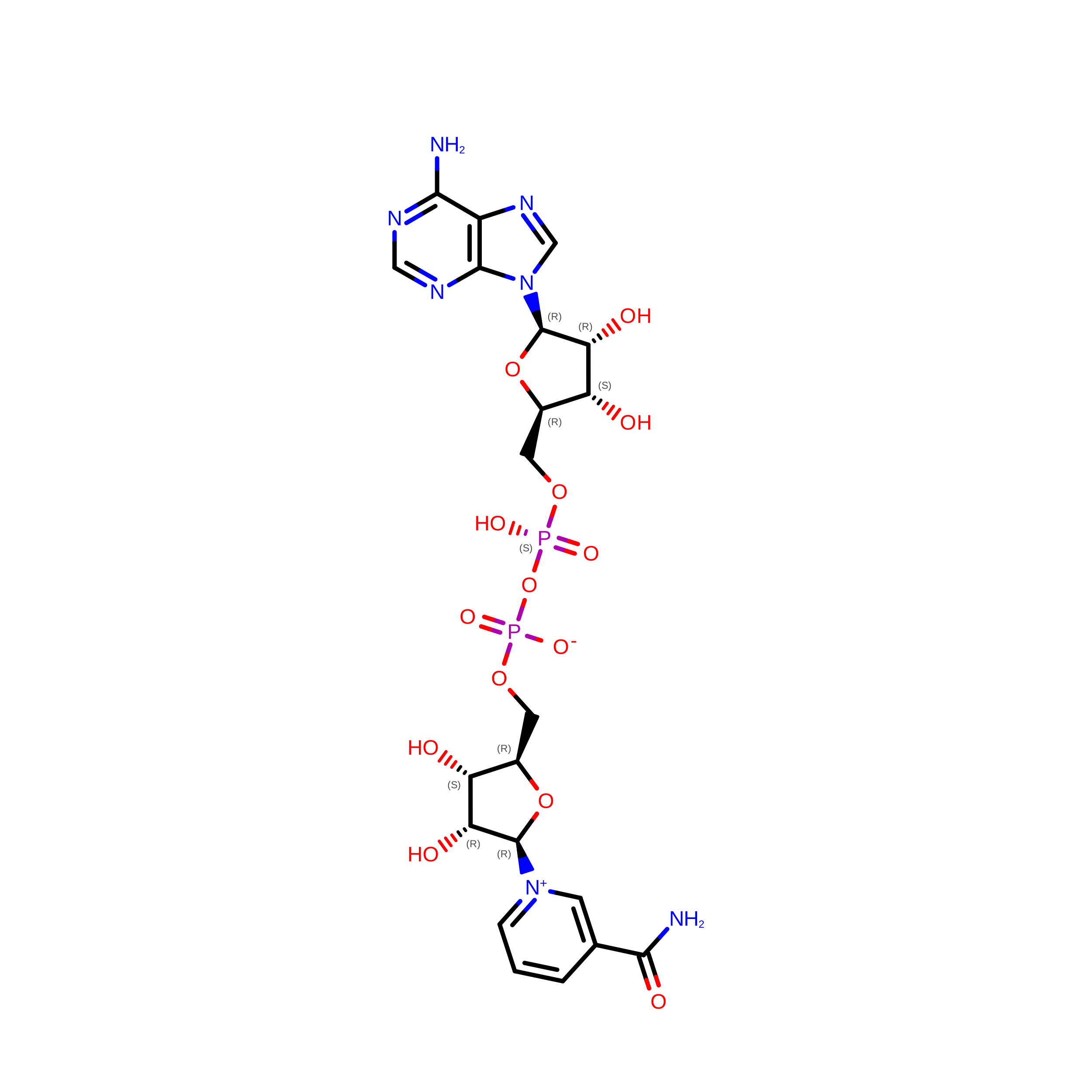
Babesia bovis is a species of apicomplexan hemoparasitic protozoa that can be transmitted by ticks, causing a global cattle disease. As it depends mainly on the glycolytic pathway for energy production and life cycle maintenance, glycolytic enzymes are possible targets for drug development against Babesia. Glyceraldehyde-3-Phosphate Dehydrogenase (GAPDH) has been one of such targets, against several parasitic organisms. It performs the reversible oxidative phosphorylation of glyceraldehyde-3-phosphate to 1,3-bisphospho-D-glycerate in the presence of nicotinamide adenine dinucleotide. The protocol for Babesia bovis Glyceraldehyde-3-Phosphate Dehydrogenase (BbGAPDH) expression and purification has been developed to yields of 28 mg of pure protein per liter of culture medium, with a specific activity of 55.5 ± 6.99 U mg -1 after His-tag removal, indicating preservation of enzymatic activity. For crystallization, the His-tag removal proved essential. Crystals diffracted to 3.12 Å resolution in the P3 1 21 space group; NAD + cofactor molecules are observed in their respective sites. Comparisons to the theoretical model indicate a number of side chain conformation differences. These results provide support for future enzyme inhibition assays, in addition to crystallization assays with potential inhibitors.
- Chemistry Departament, State University of Ponta Grossa, Paraná, Brazil. Electronic address: ukrainskibruna3@gmail.com.
Organizational Affiliation: