Download Mendeley
Ectopic NMDAR expression in cancer unmasks germline-encoded autoimmunity.
Kleeman, S.O., Michalski, K., Zhao, X., Steigerwald, R., Ferrer, M., Levett, L., Ertel, E., Schultz, A., Simorowski, N., Moody, P., Wee, T.L., Valente, C., Fox, S., Makuch, M., Thomsen, S., Harrison, R., Regan, C., Preall, J., Gao, Q., Thomas, D., Habel, J., Rubino, R., Irani, S., Furukawa, H., Janowitz, T.(2026) Nature 653: 1216-1228
- PubMed: 41882353 Search on PubMedSearch on PubMed Central
- DOI: https://doi.org/10.1038/s41586-026-10278-0
- Primary Citation Related Structures:
10EN, 10EV, 10EX, 10EY, 10EZ, 10FD, 10FE, 10FF, 10FL, 10FN, 10FO - PubMed Abstract:
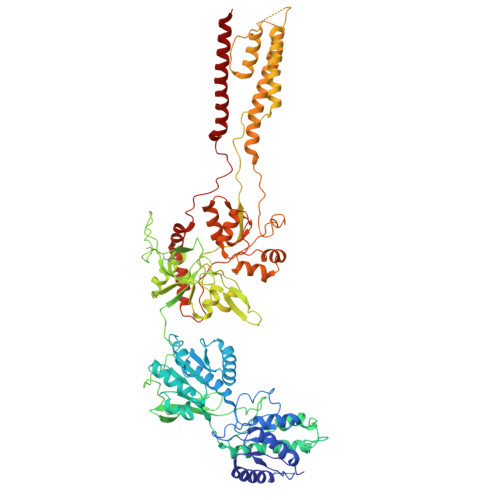
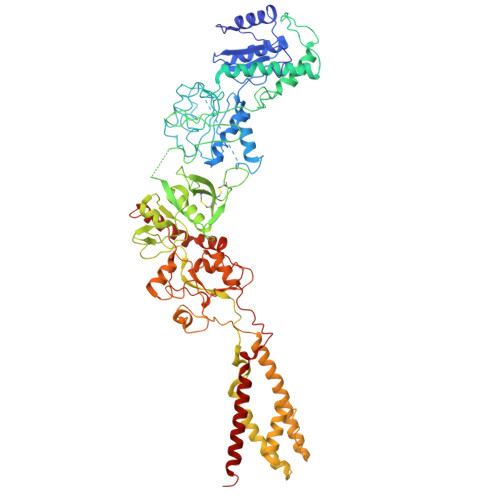
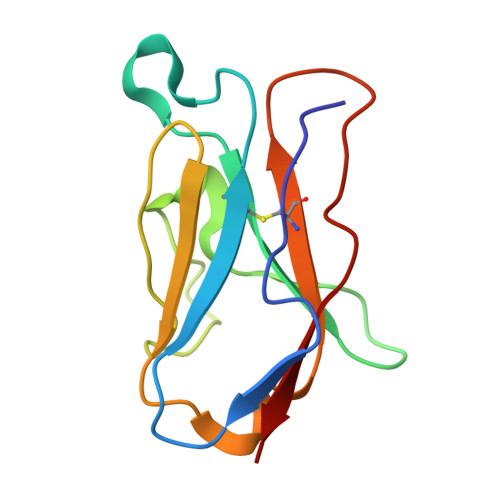
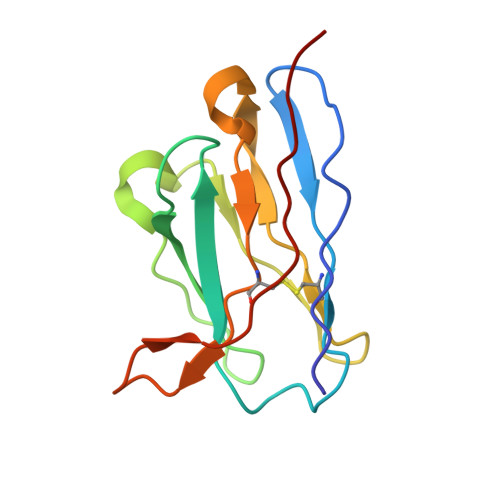
Autoimmunity and anti-cancer immunity lie on the same biological continuum 1,2 , but their link remains obscure. The paraneoplastic neurological syndrome ANRE (anti-NMDA receptor (NMDAR) encephalitis) is a paradigm for their connectivity 3 , given that intratumoural NMDAR expression is correlated with the generation of anti-NMDAR antibodies 4,5 . Here we verify ectopic expression of GluN1 and GluN2B NMDAR subunits in triple-negative breast cancer (TNBC) 6 and model this using orthotopic TNBC tumours with inducible expression of GluN1-GluN2B NMDARs. We show that NMDAR expression is sufficient to induce the recruitment of B cells and their affinity maturation, consistent with an integrated adaptive immune response. Reconstruction of extended intratumoural B cell phylogenies and cryogenic electron microscopy structural analyses demonstrate that affinity-matured hypermutated and class-switched antibodies emerged from pre-existing germline-configuration lower-affinity anti-NMDAR antibodies. Distinct matured antibodies targeted specific epitopes and induced conformational rearrangements within the NMDAR amino-terminal domain, predictive of their functional effects, ranging from inhibition to potentiation. Passive transfer of an NMDAR-potentiating antibody caused autonomic dysregulation and lowered the seizure threshold in healthy female mice, recapitulating key diagnostic criteria of ANRE 4,5 . We further identify a correlation between intratumoural NMDAR expression and anti-NMDAR antibody titres in patients with TNBC. Taken together, our data establish a direct connection between intratumoural NMDAR expression, antibody maturation and the onset of autoimmunity. These findings suggest that germline-encoded anti-NMDAR antibodies contribute to immune surveillance but can also trigger autoimmune disease after maturation, revealing a mechanistic trade-off between cancer immunity and neurotoxicity.
- Cold Spring Harbor Laboratory, Cold Spring Harbor, NY, USA.
Organizational Affiliation: