Download Mendeley
Discovery and Structural Optimization of BRD4-Selective Monovalent Direct Degraders.
Leriche, G., Barmare, F., Toth, J.I., Jamborcic, A., Kampert, T.L., Steadman, K., Yang, L., Fish, S., Daniele, E., McCarrick, M., Kallel, E.A., Li, X., Thompson, P.A., Parker, G.S., Freeman-Cook, K., Bailey, S.(2026) ACS Med Chem Lett 17: 1106-1113
- PubMed: 42157816 Search on PubMedSearch on PubMed Central
- DOI: https://doi.org/10.1021/acsmedchemlett.6c00022
- Primary Citation Related Structures:
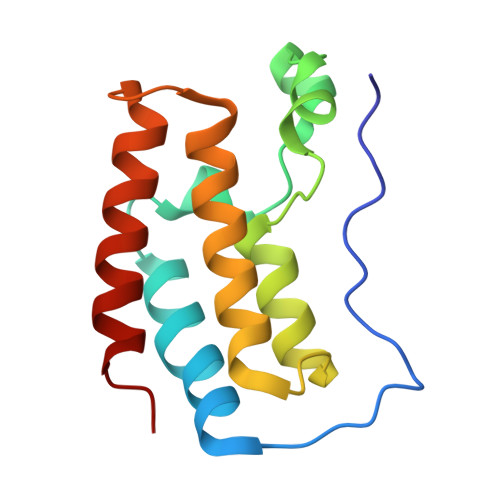
9ZYT - PubMed Abstract:
Targeted protein degradation (TPD) via the ubiquitin-proteasome system (UPS) is a rapidly advancing drug discovery strategy that enables the selective elimination of pathogenic proteins using small molecules. Here, we report the discovery of BRD4-selective monovalent direct degraders acting through DCAF11, identified by ultrahigh-throughput screening and subsequently optimized through a structure-guided medicinal chemistry campaign. Structure-activity relationship (SAR) studies support a direct degrader mechanism and culminated in the identification of the orally bioavailable compound PLX-4104 . In vitro, PLX-4104 induces rapid, complete, and selective degradation of BRD4 and exhibits potent antiproliferative activity in acute myeloid leukemia (AML) models. In vivo, PLX-4104 treatment resulted in complete tumor regression in the AML MV-4-11 xenograft model. Collectively, this lays the groundwork for the rational development of monovalent direct degraders with applications extending beyond BRD4.
- Plexium, 9330 Scranton Road, San Diego, California 92121, United States.
Organizational Affiliation: