9YQ4 | pdb_00009yq4

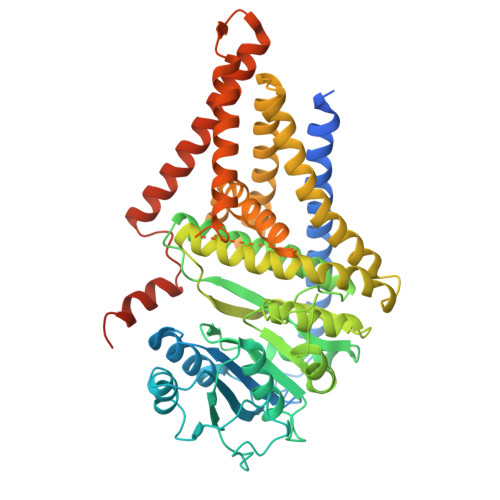
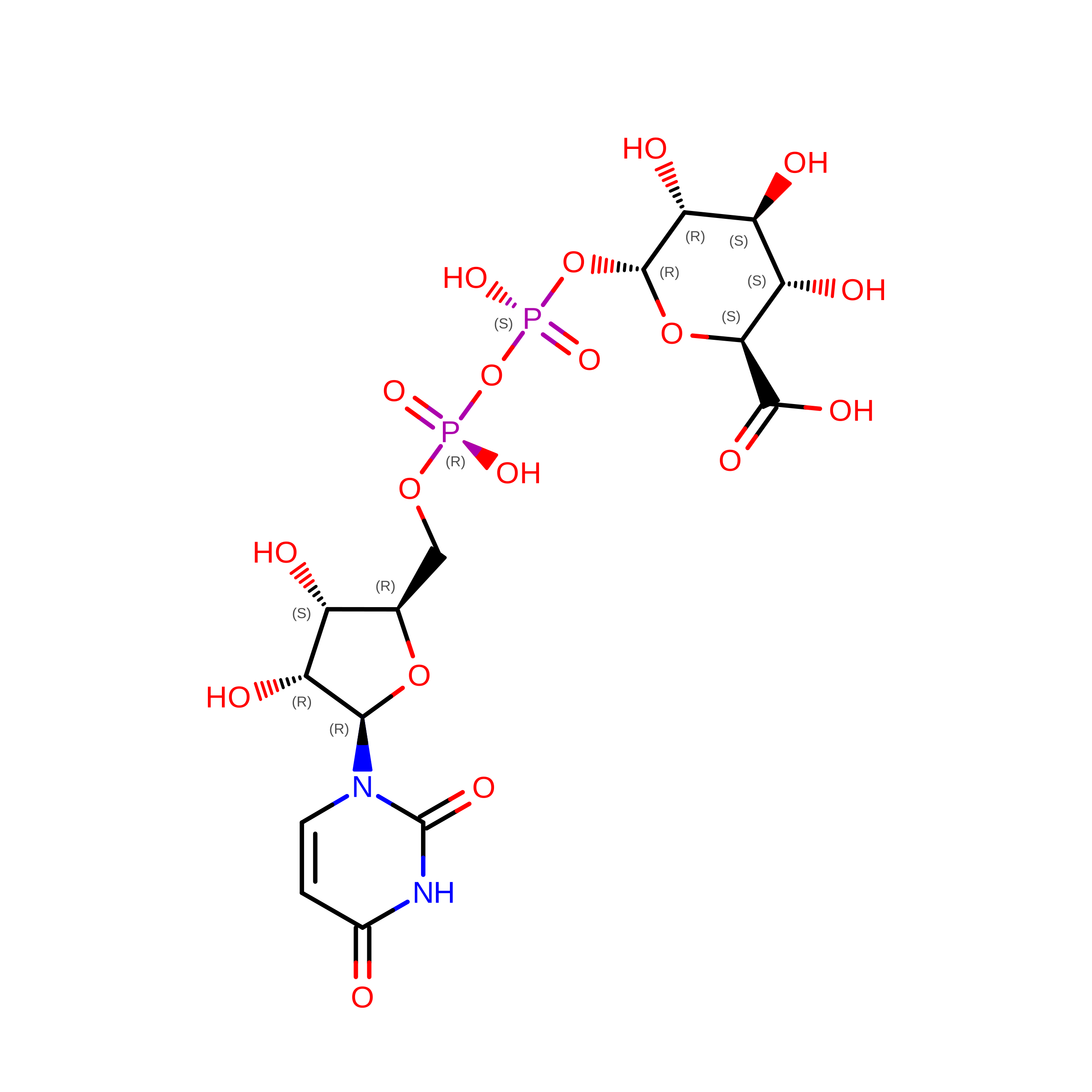
Chlorella virus hyaluronan synthase bound to a proofreading UDP-GlcA


Experimental Data Snapshot

  • Method: ELECTRON MICROSCOPY
  • Resolution: 3.30 Å
  • Aggregation State: PARTICLE 
  • Reconstruction Method: SINGLE PARTICLE 

wwPDB Validation   3D Report Full Report


This is version 1.0 of the entry. See complete history


Literature

Insights into substrate binding and utilization by hyaluronan synthase.

Stephens, Z.Karasinska, J.Zimmer, J.

(2025) bioRxiv 

  • DOI: https://doi.org/10.1101/2025.10.17.683186
  • Primary Citation of Related Structures:  
    9YQ2, 9YQ4, 9YQ5

  • PubMed Abstract: 

    Hyaluronan (HA) is an essential polysaccharide of the vertebrate extracellular matrix. It serves as an adhesive, lubricant, signaling molecule, and spatial filler without which embryogenesis would not complete. HA is synthesized by a membrane-integrated glycosyltransferase (HAS) that polymerizes UDP-activated N-acetylglucosamine and glucuronic acid (GlcA) in an alternating fashion. The nascent HA chain is secreted across the plasma membrane during this process. How HAS couples these tasks remains poorly understood. Here, we employ a combination of structural biology, biochemistry and glycobiology to delineate how HAS recognizes and utilizes UDP-GlcA. Using single-particle cryo-EM, we reveal a two-step process by which HAS binds its substrate UDP-GlcA. Prior to proper insertion into the catalytic pocket, the substrate is bound in a proofreading pose that may increase substrate selectivity. This state is accompanied by conformational changes of active site residues surrounding the UDP-binding pocket and involves a pair of basic residues that sense the substrate's carboxyl group. Further, we establish that HAS is unable to catalyze UDP-GlcA turnover in the absence of an acceptor sugar, emphasizing the role of a priming GlcNAc in glycosyl transfer. Lastly, cryo-EM snapshots of a dodecylmaltoside molecule trapped in the active site provide novel insights into substrate promiscuity. Here, our studies demonstrate that HAS catalyzes semi-selective GlcA-transfer to non-canonical β-linked acceptors.


  • Organizational Affiliation
    • University of Virginia School of Medicine, 480 Ray C. Hunt Dr., Charlottesville, VA 22903.

Macromolecules
Find similar proteins by:  (by identity cutoff)  |  3D Structure
Entity ID: 1
MoleculeChains Sequence LengthOrganismDetailsImage
Hyaluronan synthase574Paramecium bursaria Chlorella virus CZ-2Mutation(s): 0 
Gene Names: CZ-2_118R
EC: 2.4.1.212
Entity Groups  
Sequence Clusters30% Identity50% Identity70% Identity90% Identity95% Identity100% Identity
Sequence Annotations
Expand
  • Reference Sequence
Find similar proteins by:  (by identity cutoff)  |  3D Structure
Entity ID: 2
MoleculeChains Sequence LengthOrganismDetailsImage
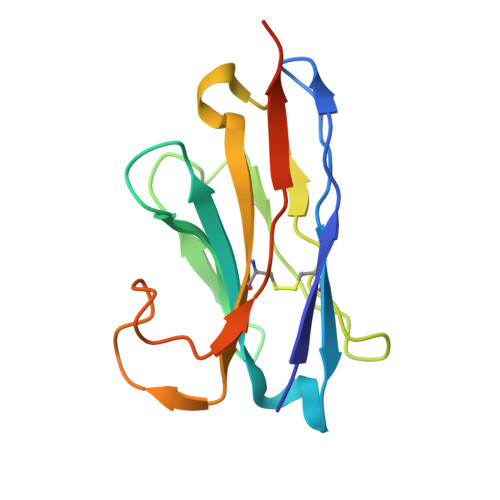
nanobody Nb872134Lama glamaMutation(s): 0 
Entity Groups  
Sequence Clusters30% Identity50% Identity70% Identity90% Identity95% Identity100% Identity
Sequence Annotations
Expand
  • Reference Sequence
Find similar proteins by:  (by identity cutoff)  |  3D Structure
Entity ID: 3
MoleculeChains Sequence LengthOrganismDetailsImage
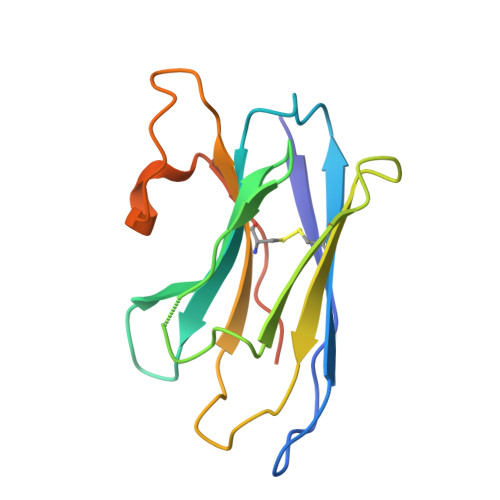
nanobody Nb881134Lama glamaMutation(s): 0 
Entity Groups  
Sequence Clusters30% Identity50% Identity70% Identity90% Identity95% Identity100% Identity
Sequence Annotations
Expand
  • Reference Sequence
Experimental Data & Validation

Experimental Data

  • Method: ELECTRON MICROSCOPY
  • Resolution: 3.30 Å
  • Aggregation State: PARTICLE 
  • Reconstruction Method: SINGLE PARTICLE 
EM Software:
TaskSoftware PackageVersion
MODEL REFINEMENTPHENIX1.20.1_4487:
RECONSTRUCTIONcryoSPARC

Structure Validation

View Full Validation Report


Entry History & Funding Information

Deposition Data


Funding OrganizationLocationGrant Number
National Institutes of Health/National Institute of General Medical Sciences (NIH/NIGMS)United States5R35 GM144130

Revision History  (Full details and data files)

  • Version 1.0: 2025-12-10
    Type: Initial release