Download Mendeley
Autopalmitoylation of IDH1-R132H regulates its neomorphic activity in cancer cells.
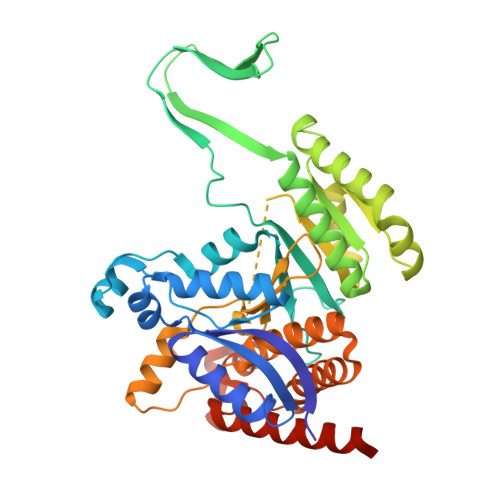
Hu, L., Lin, J., Sun, L., Berezuk, A.M., Tuttle, K.S., Zhu, X., Seo, H.S., Dhe-Paganon, S., Li, P., Sun, Y., Ni, L., Zhang, J., Tan, D., Wakimoto, H., Cahill, D.P., Bai, X., Luo, X., Asara, J.M., Subramaniam, S., Shan, Y., Wu, X.(2026) Nat Chem Biol 22: 1087-1098
- PubMed: 41530531 Search on PubMedSearch on PubMed Central
- DOI: https://doi.org/10.1038/s41589-025-02131-8
- Primary Citation Related Structures:
9YHA, 9YHB - PubMed Abstract:
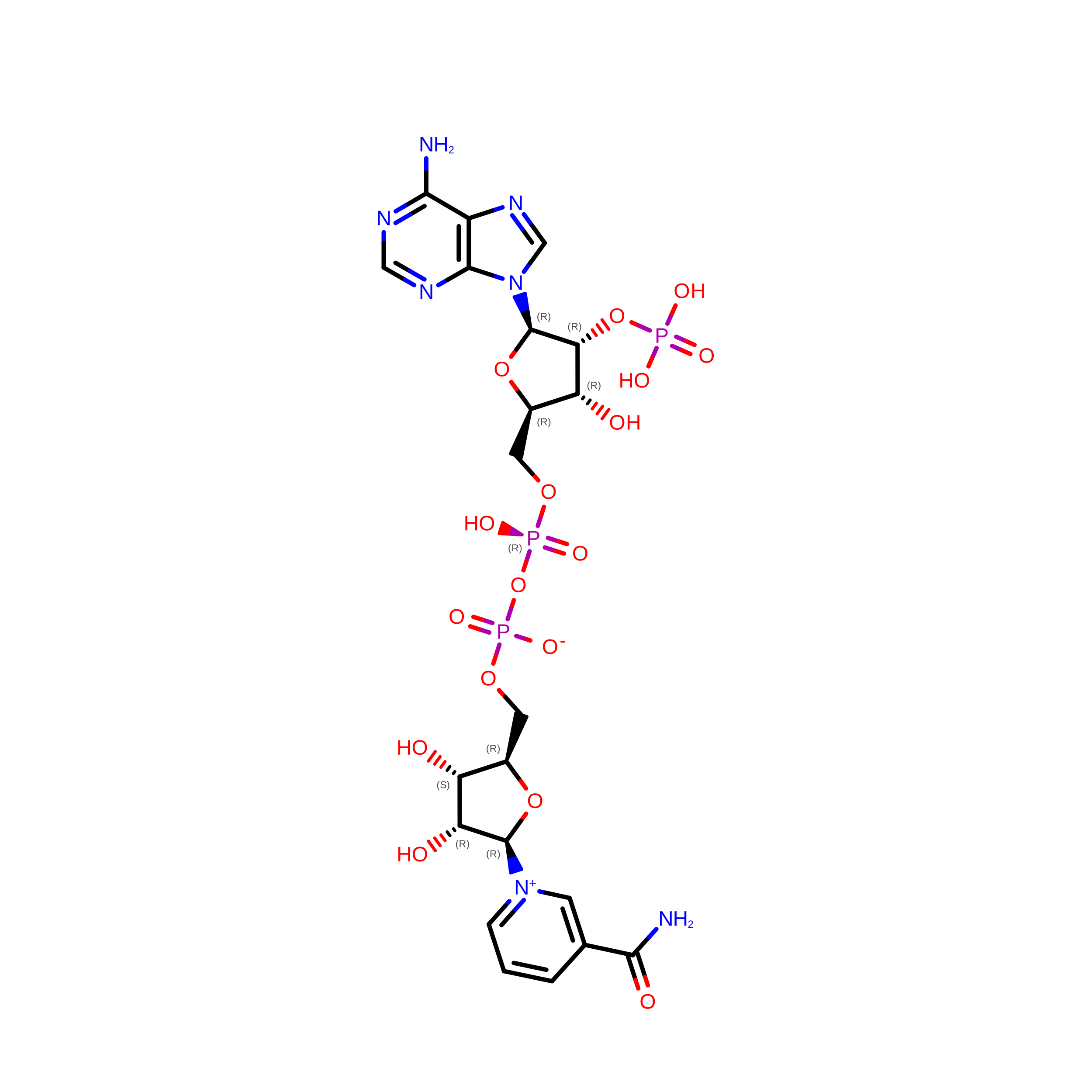
Gain-of-function mutations of isocitrate dehydrogenase 1 (IDH1) lead to oncometabolite (R)-2-hydroxyglutarate production, contributing to the tumorigenesis of multiple human cancers. While fatty acid biosynthesis is critical for IDH1-mutant tumor growth, the underlying mechanisms remain unclear. Here, leveraging chemical probes and chemoproteomic profiling, we identified that oncogenic IDH1-R132H is uniquely autopalmitoylated at C269, which is not observed in wild-type IDH1. This modification responds to fatty acids and regulates R132H enzymatic activity by enhancing substrate and cofactor binding, as well as dimerization. Loss of C269 palmitoylation reverses IDH1-R132H-induced metabolic reprogramming and hypermethylation phenotypes and impairs cell transformation. Interestingly, C269 autopalmitoylation occurs within a hydrophobic pocket, targeted by a clinical IDH1-mutant inhibitor (LY3410738). Our study reveals that autopalmitoylation, conferred by the IDH1 R132H mutation, links fatty acid metabolism to the regulation of IDH1 mutant activity and represents a druggable vulnerability in IDH1-mutant cancers.
- Cutaneous Biology Research Center, Massachusetts General Hospital, Harvard Medical School, Charlestown, MA, USA. lhu8@mgh.harvard.edu.
Organizational Affiliation: