Download Mendeley
Golcadomide: An Oral CELMoD Agent Targeting IKZF1/3 for Diffuse Large B-cell Lymphoma.
Mo, Z., Groocock, L., Wood, S., Jankeel, D., Mendy, D., Watson, E.R., Kai, Y., Deb, G., Cote, M., Janardhanan, P., Fernandez-Deudero, A., Barnes, L., Peng, S., Groza, M., Kalashnikova, E., Angelo, M., Zhu, J., Galasso, R., Jang, I.S., Castillo, M.S., Fontanillo, C., Polido, G., Christoforou, A., Kercher, T., Lander, G.C., Wang, K., Narla, R.K., Carrancio, S., Pierce, D.W., Rolfe, M., Bence, N., Lopez-Girona, A.(2026) Blood Cancer Discov 7: 104-128
- PubMed: 41182271 Search on PubMed
- DOI: https://doi.org/10.1158/2643-3230.BCD-25-0059
- Primary Citation Related Structures:
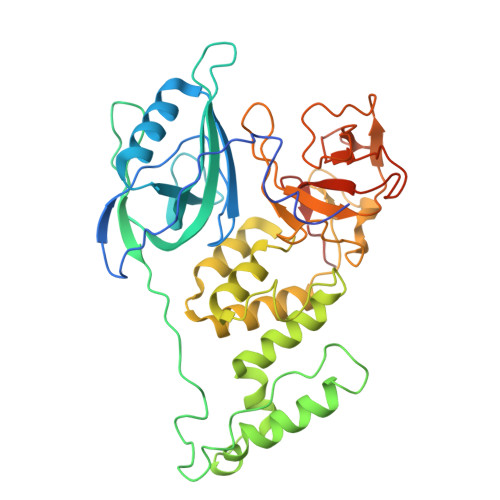
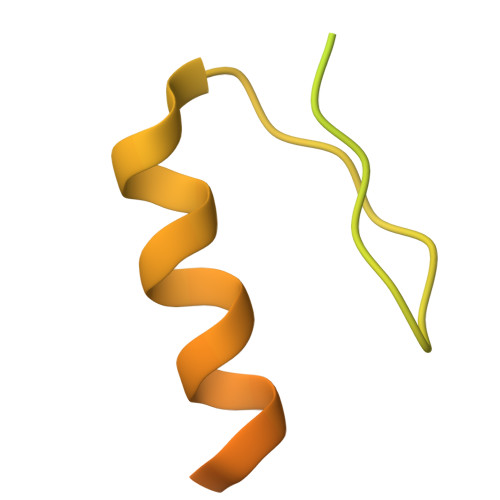
9Y7D - PubMed Abstract:
Diffuse large B-cell lymphoma (DLBCL) is an aggressive and heterogeneous disease with limited treatment options and a poor prognosis, especially for patients refractory to standard therapies. We report the discovery of golcadomide (CC-99282), an oral cereblon-modulating CELMoD agent designed using target-specific knowledge and optimized pharmacologic properties for the treatment of DLBCL. Golcadomide exhibited rapid, deep, and sustained degradation of transcription factors IKZF1 and IKZF3, surpassing the antitumor activity of the IMiD agent lenalidomide in preclinical models. In human lymphoma cell lines, golcadomide downregulated MYC, activated IFN-stimulated genes, and promoted antiproliferation, apoptosis, and immunogenic cell death. In mouse xenografts, golcadomide preferentially distributed to tissues known to be affected by lymphoma, resulting in enhanced tumor regression and tumor-free outcomes. Pharmacologic and CRISPR screening further revealed genes and pathways underlying golcadomide's antitumor efficacy. These findings supported golcadomide as a promising drug candidate for DLBCL, providing a strong rationale for future golcadomide-based regimens. Golcadomide is an oral cereblon-modulating agent for the treatment of DLBCL. It exhibited rapid, deep, and sustained degradation of IKZF1 and IKZF3, preferentially accumulated in lymphoma residence tissues, and delivered robust antitumor activity. These results provide a strong rationale for continued clinical investigation of golcadomide for patients with DLBCL.
- Protein Homeostasis (PH) Thematic Research Center (TRC), Bristol Myers Squibb, San Diego, California.
Organizational Affiliation: