Download Mendeley
Blunt-force assembly of programmable DNA architectures using pi-pi stacking.
Woloszyn, K., Horvath, A., Jaffe, M., Perren, L., Rueb, J., Mahiba, S., Jonoska, N., Ohayon, Y.P., Canary, J.W., Vecchioni, S., Sha, R.(2026) Nat Commun 17
- PubMed: 41735315 Search on PubMedSearch on PubMed Central
- DOI: https://doi.org/10.1038/s41467-026-69973-1
- Primary Citation Related Structures:
9PGR, 9PHI, 9PHK, 9PHP, 9PLU, 9PLZ, 9PM3, 9PMG, 9PMH, 9Q3B, 9Q3D, 9Q3W, 9Q5J, 9Q5K, 9Y3B, 9Y3C, 9Y74 - PubMed Abstract:
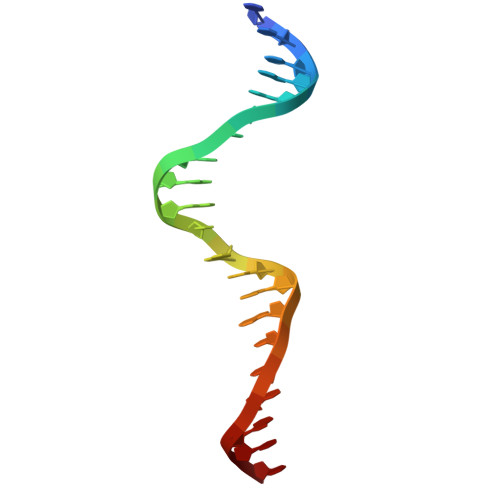
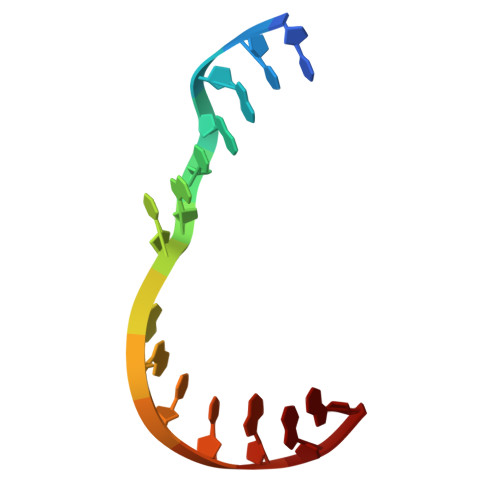
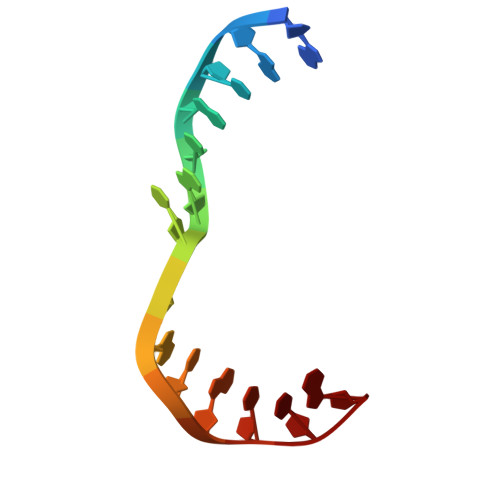
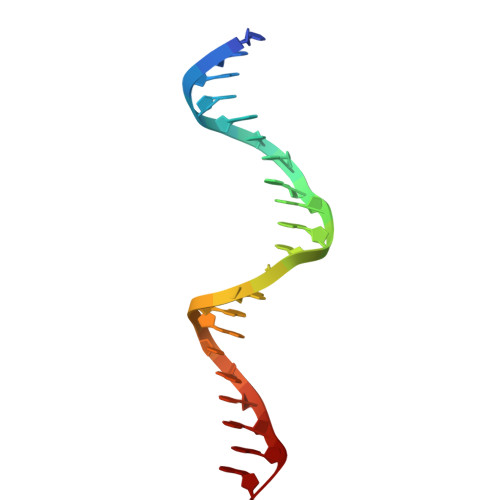
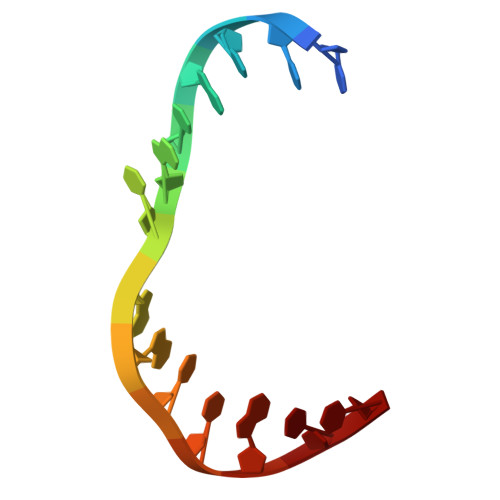
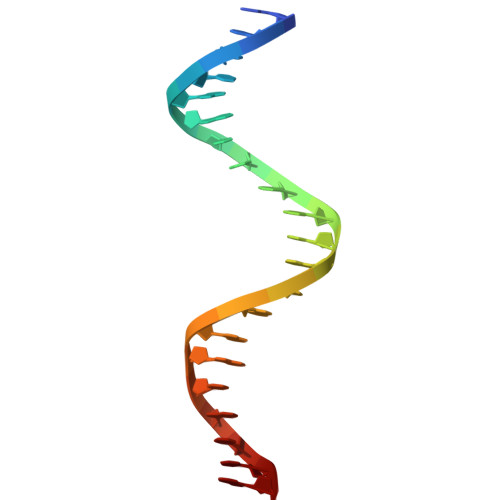
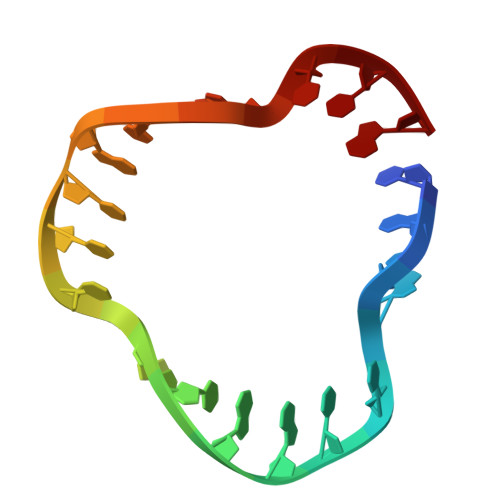
Sticky-ended cohesion has been the driving force for DNA self-assembly and has enabled model and design programmability in DNA nanotechnology for over 40 years. Traditional units within self-assembled crystals have rationally-designed sticky ends to avoid unpredictable packing behavior, but in doing so, the surprising variety of contact flavors available to natural nucleic acids remains unexploited. Here, we employ composable DNA tiles to form complex 3D architectures using blunt-ended motifs with single duplex interfaces, thereby leveraging the geometry of the tile and the terminal nucleobase identity to control self-assembly outcomes. These crystals yielded X-ray diffraction at resolutions between 10.0 and 1.86 Å. We establish programmability and tunable packing, including translational and inversion symmetries, 5'-3' and 5'-5' stacking, and both positive and negative helical twist values. Finally, we establish the ability of racemic mixtures of L- and D-DNA motifs to perform programmable co-assembly driven by terminal π-π interactions, demonstrating molecular recognition and coexistence between mirror molecular systems.
- Department of Chemistry, New York University, New York, NY, USA.
Organizational Affiliation: