9XFI | pdb_00009xfi

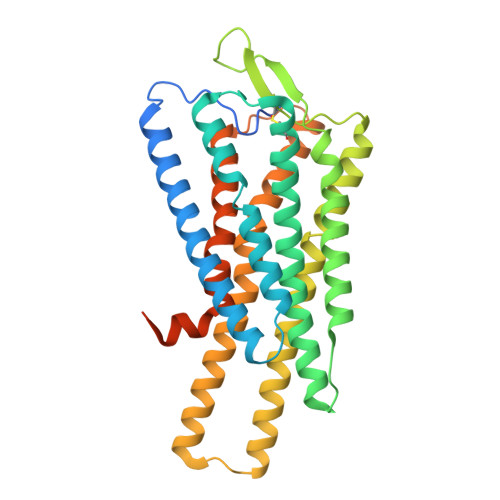
Cryo-EM structure of the Bavachalcone bound FFAR4-Giq complex


Experimental Data Snapshot

  • Method: ELECTRON MICROSCOPY
  • Resolution: 2.99 Å
  • Aggregation State: PARTICLE 
  • Reconstruction Method: SINGLE PARTICLE 

wwPDB Validation 3D Report Full Report

Validation slider image for 9XFI

This is version 1.0 of the entry. See complete history

Literature

G alpha q activation of free fatty acid receptor 4 suppresses metabolic dysfunction by disrupting Nr1h3-PPAR gamma axis.

Kong, Y.Wang, J.Wang, Z.Yang, S.Ye, X.Wang, W.Wang, H.Deng, W.Liu, Y.Xu, F.Hou, T.Zhao, Y.Zhang, B.Yu, X.Chen, Y.Liang, X.Zhu, S.

(2026) Nat Commun 17

  • DOI: https://doi.org/10.1038/s41467-026-75589-2
  • Primary Citation Related Structures: 
    9XFI, 9XFJ

  • PubMed Abstract: 

    Maintenance of glucose and lipid homeostasis is essential for metabolic health, and its dysregulation, driven by complex gene-environment interactions-underlies various metabolic disorders. Free fatty acid receptor 4 (FFAR4) has been proposed to link dietary signals with genetic metabolic predisposition, yet the precise mechanisms underlying the pathophysiological function of FFAR4 remain elusive and lack of the highly selective FFAR4 agonists. Our study shed light on the pivotal role of FFAR4 in metabolic homeostasis within metabolic organs. Hepatic FFAR4 deficiency in mice exacerbates lipid accumulation and promoted severe steatosis, whereas its overexpression ameliorates diet-induced metabolic dysfunction. Mechanistically, suppression of hepatic FFAR4 promotes lipogenesis by enhancing co-activation of the nuclear receptor Nr1h3 and PPARγ. Furthermore, we identify bavachalcone, a non-carboxylated compound isolated from the traditional Chinese medicine Psoralea corylifolia L., as a functionally effective FFAR4 agonist, which could robustly attenuate metabolic dysfunction. Structural analysis using cryo-electron microscopy reveals the binding mode of bavachalcone within the FFAR4-Gα iq complex and illuminated the underlying mechanisms. In conclusion, our findings highlight an indispensable role of hepatic FFAR4 in counteracting metabolic dysregulation and identify bavachalcone as a selective and translatable FFAR4 agonist worthy of further clinical evaluation.


  • Organizational Affiliation
    • Wuxi school of medicine, Jiangnan University, Wuxi, China.

Macromolecule Content 

  • Total Structure Weight: 128.29 kDa 
  • Atom Count: 7,167 
  • Modeled Residue Count: 906 
  • Deposited Residue Count: 1,139 
  • Unique protein chains: 4

Macromolecules

Find similar proteins by:|  3D Structure
Entity ID: 1
MoleculeChains  Sequence LengthOrganismDetailsImage
Free fatty acid receptor 4361Homo sapiensMutation(s): 0 
Gene Names: FFAR4GPR120GPR129O3FAR1PGR4
UniProt & NIH Common Fund Data Resources
Find proteins for Q5NUL3 (Homo sapiens)
Explore Q5NUL3 
Go to UniProtKB:  Q5NUL3
PHAROS:  Q5NUL3
GTEx:  ENSG00000186188 
Entity Groups
Sequence Clusters30% Identity50% Identity70% Identity90% Identity95% Identity100% Identity
UniProt GroupQ5NUL3
Sequence Annotations
Expand
Reference Sequence
Find similar proteins by:|  3D Structure
Entity ID: 2
MoleculeChains  Sequence LengthOrganismDetailsImage
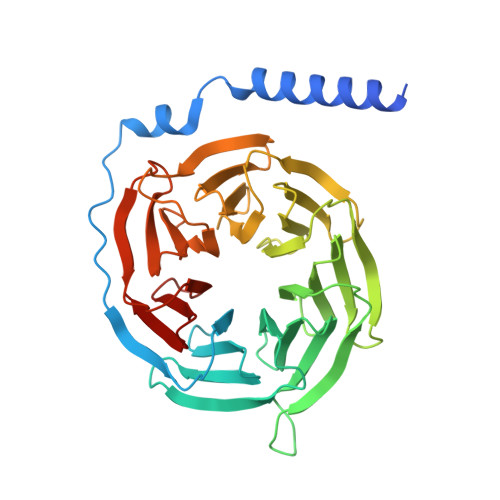
Guanine nucleotide-binding protein G(I)/G(S)/G(T) subunit beta-1B [auth C]353Homo sapiensMutation(s): 0 
Gene Names: GNB1
UniProt & NIH Common Fund Data Resources
Find proteins for P62873 (Homo sapiens)
Explore P62873 
Go to UniProtKB:  P62873
PHAROS:  P62873
GTEx:  ENSG00000078369 
Entity Groups
Sequence Clusters30% Identity50% Identity70% Identity90% Identity95% Identity100% Identity
UniProt GroupP62873
Sequence Annotations
Expand
Reference Sequence
Find similar proteins by:|  3D Structure
Entity ID: 3
MoleculeChains  Sequence LengthOrganismDetailsImage
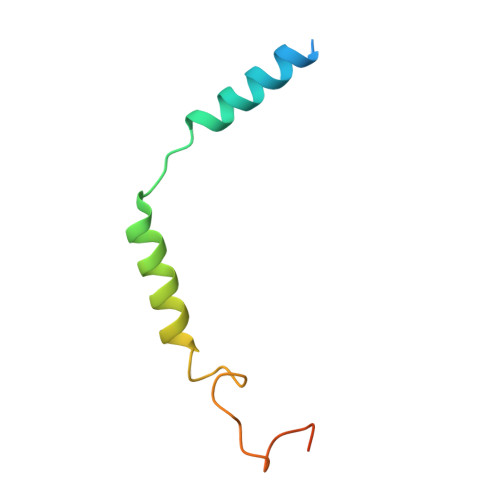
Guanine nucleotide-binding protein G(I)/G(S)/G(O) subunit gamma-2C [auth D]71Homo sapiensMutation(s): 0 
Gene Names: GNG2
UniProt & NIH Common Fund Data Resources
Find proteins for P59768 (Homo sapiens)
Explore P59768 
Go to UniProtKB:  P59768
PHAROS:  P59768
GTEx:  ENSG00000186469 
Entity Groups
Sequence Clusters30% Identity50% Identity70% Identity90% Identity95% Identity100% Identity
UniProt GroupP59768
Sequence Annotations
Expand
Reference Sequence
Find similar proteins by:|  3D Structure
Entity ID: 4
MoleculeChains  Sequence LengthOrganismDetailsImage
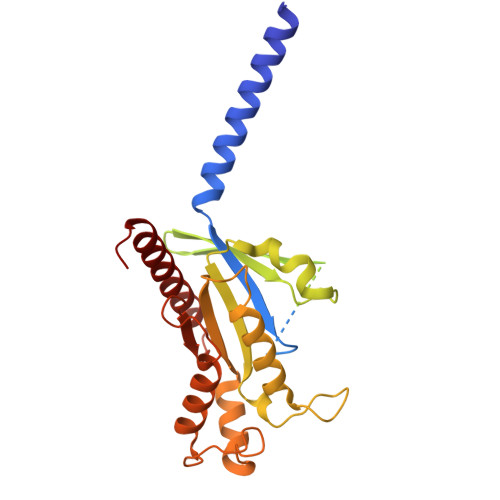
Guanine nucleotide-binding protein G(i) subunit alpha-1,Guanine nucleotide-binding protein G(q) subunit alphaD [auth B]354Homo sapiensMutation(s): 0 
Gene Names: GNAI1GNAQGAQ
EC: 3.6.5
UniProt & NIH Common Fund Data Resources
Find proteins for P63096 (Homo sapiens)
Explore P63096 
Go to UniProtKB:  P63096
PHAROS:  P63096
GTEx:  ENSG00000127955 
Find proteins for P50148 (Homo sapiens)
Explore P50148 
Go to UniProtKB:  P50148
PHAROS:  P50148
GTEx:  ENSG00000156052 
Entity Groups
Sequence Clusters30% Identity50% Identity70% Identity90% Identity95% Identity100% Identity
UniProt GroupsP50148P63096
Sequence Annotations
Expand
Reference Sequence

Small Molecules

Ligands 1 Unique
IDChains Name / Formula / InChI Key2D Diagram3D Interactions
A1EZZ(
Subject of Investigation/LOI)

Query on A1EZZ


Download:Ideal Coordinates CCD File
E [auth A](~{E})-3-(4-hydroxyphenyl)-1-[5-(3-methylbut-2-enyl)-2,4-bis(oxidanyl)phenyl]prop-2-en-1-one
C20 H20 O4
BLZGPHNVMRXDCB-UXBLZVDNSA-N

Experimental Data & Validation

Experimental Data

  • Method: ELECTRON MICROSCOPY
  • Resolution: 2.99 Å
  • Aggregation State: PARTICLE 
  • Reconstruction Method: SINGLE PARTICLE 
EM Software:
TaskSoftware PackageVersion
MODEL REFINEMENTPHENIX1.20.1_4487
RECONSTRUCTIONcryoSPARC

Structure Validation

View Full Validation Report


Entry History 

& Funding Information

Deposition Data


Funding OrganizationLocationGrant Number
Not funded--

Revision History  (Full details and data files)

  • Version 1.0: 2026-09-16
    Type: Initial release