Download Mendeley
Distinct phosphorylation mechanisms as dynamic switches for Hsp90 regulation.
Wan, C., Zhu, L., Wang, S., Zhang, X., Zhao, J., Qu, X., Huang, C.(2026) Nat Commun 17
- PubMed: 42156390 Search on PubMed
- DOI: https://doi.org/10.1038/s41467-026-73400-w
- Primary Citation Related Structures:
9X6X, 9X70, 9X71, 9X72, 9X73 - PubMed Abstract:
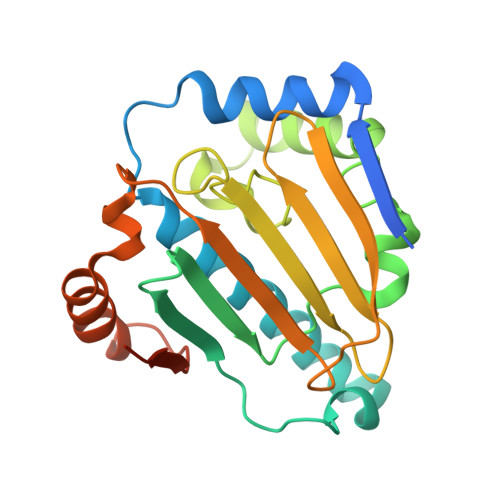
Phosphorylation is a central post-translational mechanism for on-demand regulation of protein function. In the ATP-dependent molecular chaperone Hsp90, multiple phosphorylation sites have been implicated in activity control, yet how individual sites encode regulatory instructions remains unclear. Here, using solution NMR spectroscopy, we delineate how site-specific phosphorylation distinctly reshapes the conformational energy landscape of Hsp90 across its ATPase cycle. The phospho-mimetic mutation T115E induces a global redistribution of the N-terminal domain energy landscape, flattening conformational barriers, pre-populating a lid-closed-like excited state in the apo form, weakening ATP-driven stabilization, and impairing ADP-mediated resetting. In contrast, T36E preserves the overall structure but selectively rewires dynamics at the ATP-bound step, where accelerated exchange and a reduced excited-state population bias the ensemble toward the ground state. Together, these findings reveal that phosphorylation sites engage different dynamic allosteric routes, yet converge on a common functional outcome by suppressing productive progression through the Hsp90 ATPase cycle.
- MOE Key Laboratory for Cellular Dynamics, Hefei National Laboratory for Physical Sciences at the Microscale, Biomedical Sciences and Health Laboratory of Anhui Province, Division of Life Sciences and Medicine, University of Science and Technology of China, Hefei, P. R. China.
Organizational Affiliation: