Download Mendeley
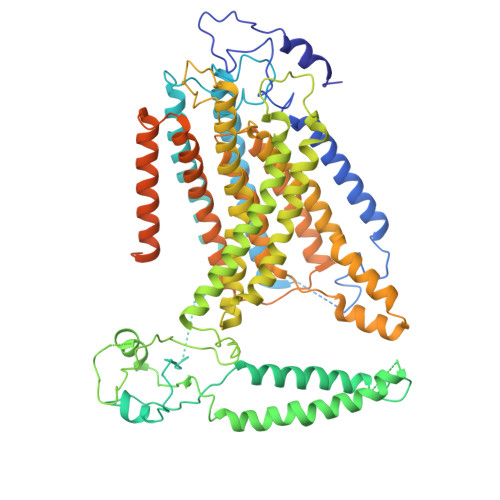
TMEM63 proteins act as mechanically activated cholesterol modulated lipid scramblases contributing to membrane mechano-resilience.
Lin, Y., Zhou, Z., Han, Y., Cheng, D., Wang, H.J., Ju, L.A., Zhang, Y., Cox, C.D., Corry, B.(2026) Nat Commun 17
- PubMed: 41617699 Search on PubMedSearch on PubMed Central
- DOI: https://doi.org/10.1038/s41467-026-68919-x
- Primary Citation Related Structures:
9WXV - PubMed Abstract:
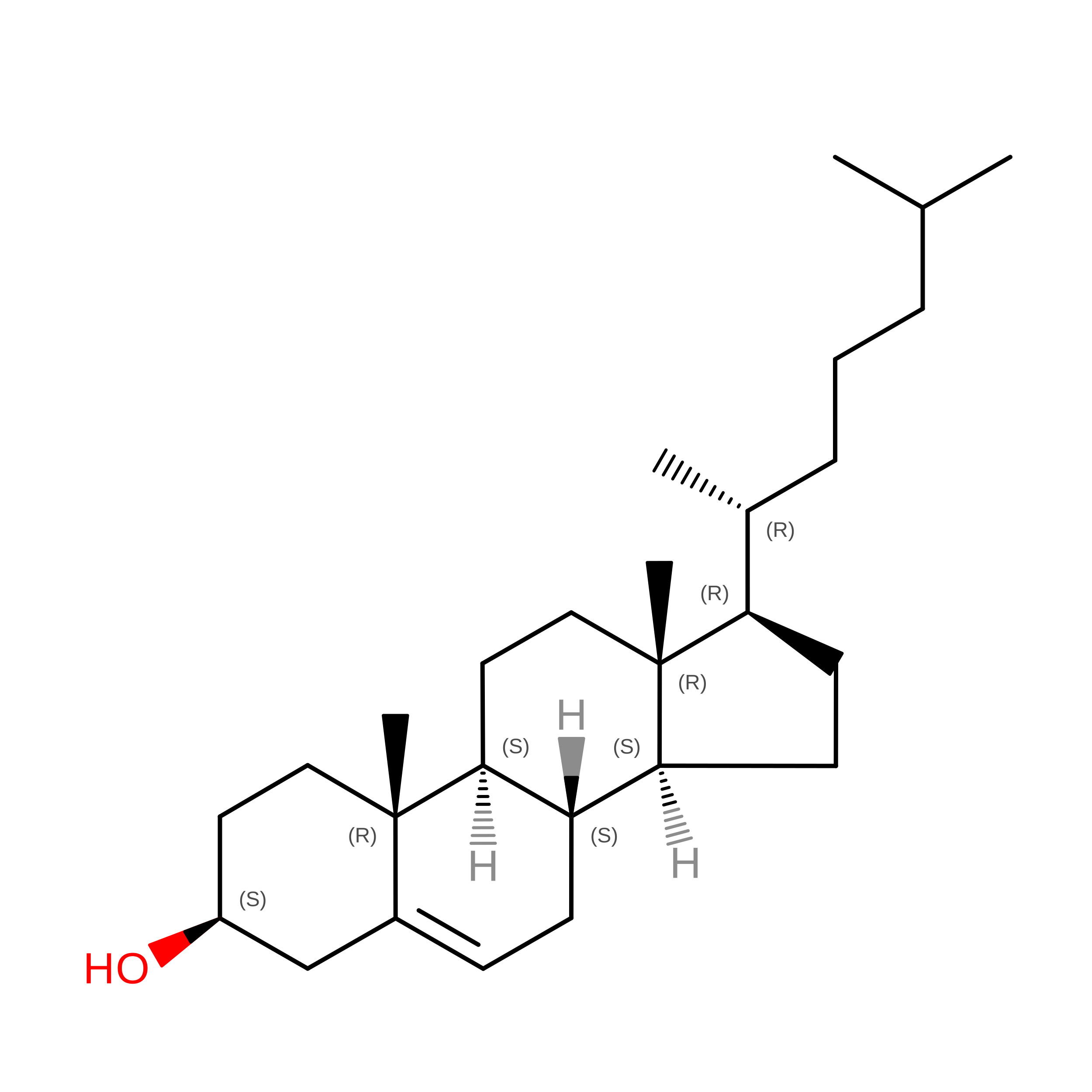
OSCA/TMEM63 mechanosensitive ion channels play critical physiological roles in plants and animals. These channels bear structural homology to the dual functional TMEM16 family, and OSCA1.2 was recently shown to form a lipid-lined ion conduction pathway in the open state. This raised the question of whether members of the OSCA/TMEM63 family may also function as mechanically activated lipid scramblases. Using a combination of in vitro and cellular assays with computational techniques, we show that phospholipids can be translocated through the open pores of OSCA1.1/1.2/2.2 and TMEM63A/B proteins, suggesting a dual ion channel and lipid scramblase function for members of this protein family. We characterize the effects of mutating key groove lining residues demonstrating that different residues form bottlenecks for lipids and ions respectively and show that cholesterol inhibits lipid scrambling by stabilizing the closed state and slowing translocation through the open pore. We show that lipid scrambling in TMEM63 proteins can be activated by mechanical forces in the membrane, making these mechanically activated lipid scramblases. Finally, we demonstrate that this activity is important for the mechanically induced morphological remodeling of biological membranes and the resilience of cells to high mechanical forces.
- Research School of Biology, Australian National University, Acton, ACT, Australia.
Organizational Affiliation: