Download Mendeley
Multiheme selenoenzyme essential for elemental sulfur respiration.
Mihara, H., Yoshizawa, T., Izu, Y., Zhang, W., Inoue, M., Shimamoto, N., Tobe, R., Aono, R., Kurihara, T., Matsumura, H.(2026) Sci Adv 12: eaeg2218-eaeg2218
- PubMed: 42647610 Search on PubMedSearch on PubMed Central
- DOI: https://doi.org/10.1126/sciadv.aeg2218
- Primary Citation Related Structures:
9WT8, 9WTA, 9WTB - PubMed Abstract:
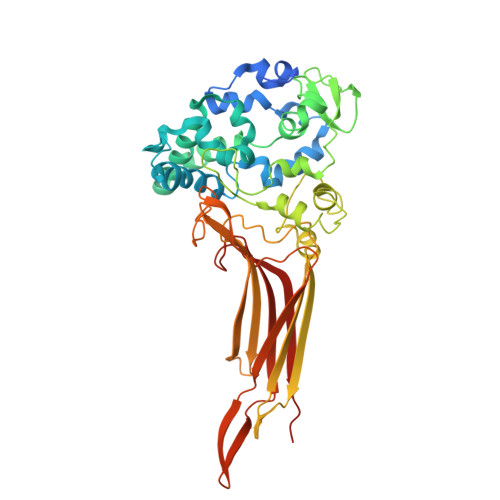
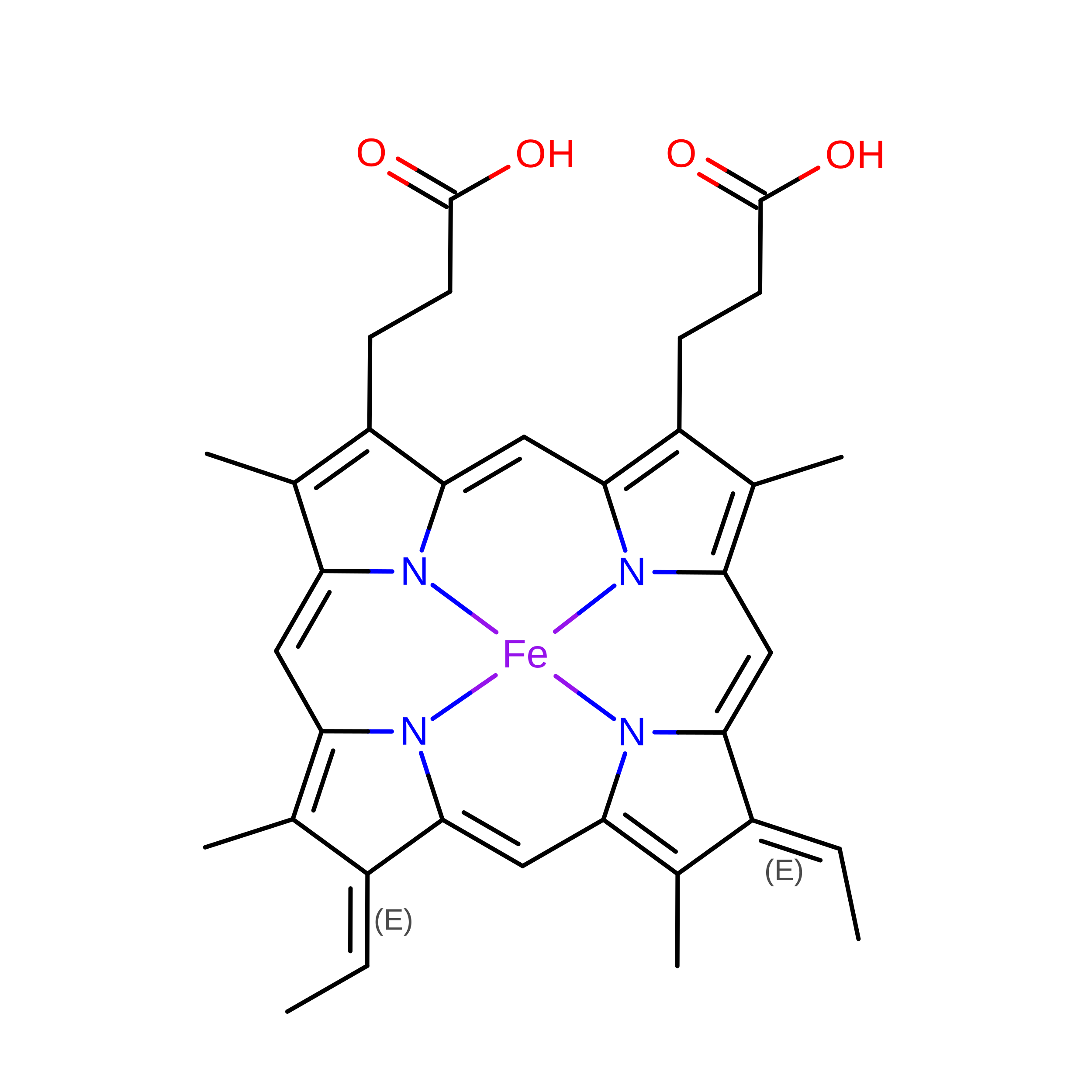
Elemental sulfur reduction is a key process in anaerobic ecosystems and the global sulfur cycle. Although elemental sulfur serves as a terminal electron acceptor in microbial respiration, the molecular basis is unclear. Here, we identify a conserved multiheme cytochrome c selenoprotein essential for sulfur reduction in a sulfur-respiring bacterium. Structural and biochemical analyses show that the enzyme forms a tetramer, with each subunit containing five hemes and one selenocysteine residue. The enzyme catalyzes polysulfide reduction at an active site, where a cysteine coordinates the heme iron, while selenocysteine is essential for catalysis. Genetic analyses show that both residues are critical for sulfur respiration in vivo. These findings reveal a selenium-sulfur-dependent catalysis on a heme center for polysulfide reduction, expanding our understanding of microbial energy metabolism.
- College of Life Sciences, Ritsumeikan University; Kusatsu, 525-8577, Japan.
Organizational Affiliation: