Download Mendeley
Structural insights into the G-protein subtype selectivity revealed by human sphingosine-1-phosphate receptor 3-G q complexes.
Yamauchi, M., Im, D., Maeda, S., Ikuta, T., Toyomoto, M., Asada, H., Sugita, Y., Kishikawa, J.I., Noda, T., Kato, T., Inoue, A., Iwata, S., Hagiwara, M.(2025) Proc Natl Acad Sci U S A 122: e2507421122-e2507421122
- PubMed: 41252158 Search on PubMedSearch on PubMed Central
- DOI: https://doi.org/10.1073/pnas.2507421122
- Primary Citation Related Structures:
9L74, 9WP9 - PubMed Abstract:
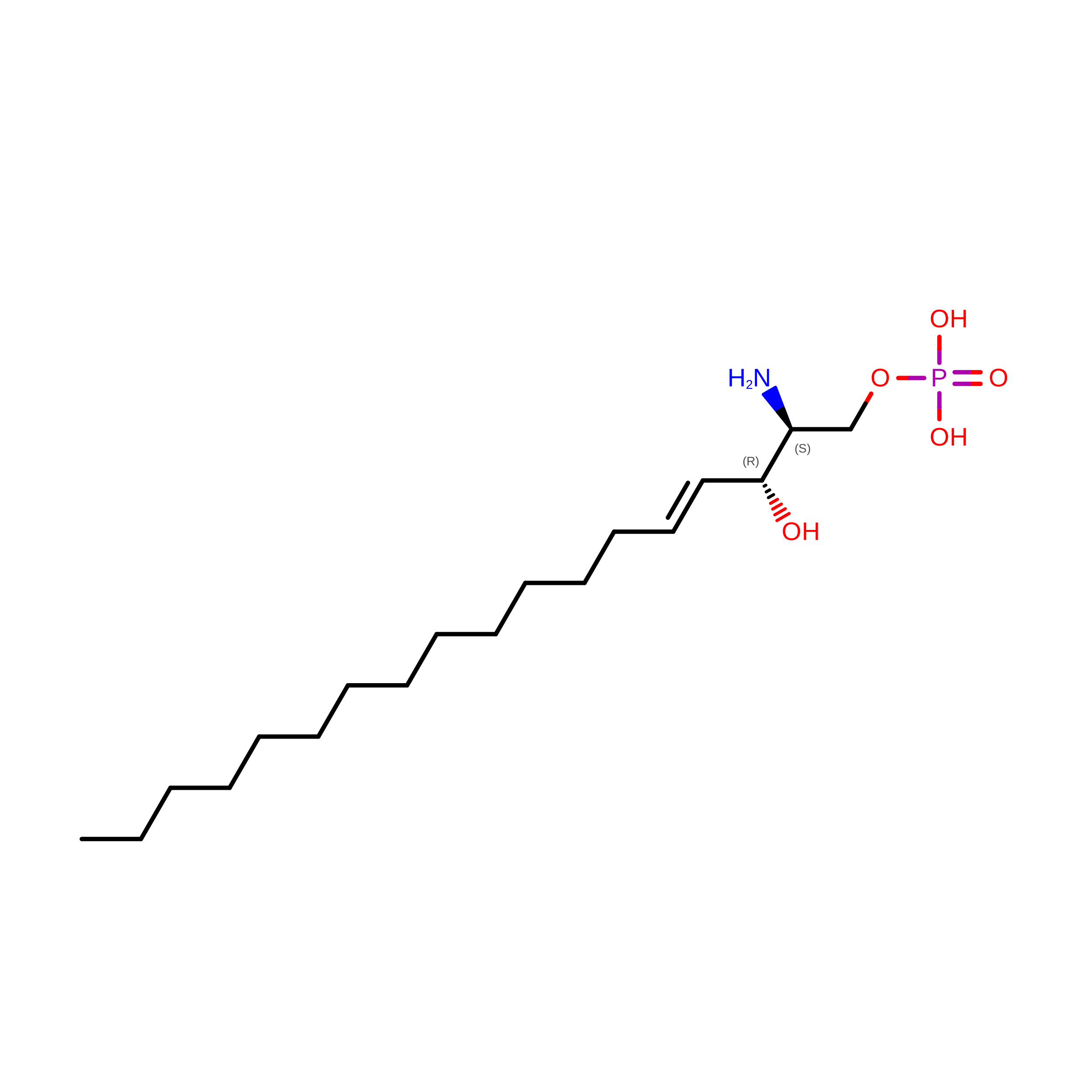
Sphingosine-1-phosphate (S1P) is one of the most extensively studied bioactive lipids that transduces signals via the S1P receptor (S1PR) family (S1PR1-5), a class of G-protein-coupled receptors (GPCRs), to regulate immune cell migration, vascular permeability, and pain modulation. However, the mechanism for achieving specificity in downstream signaling remains poorly understood. Here, we present cryogenic electron microscopic structures of the S1PR3-G αq complex bound to endogenous agonists: d18:1 S1P or d16:1 S1P. Both agonists shared the same binding pocket and binding mode despite the different signaling intensities of the S1PR3-G αq signal pathway. By comparing the structures of two agonist-bound complexes, combined with mutagenesis studies, we identified key amino acids, Phe119 3.33 and Arg136 3.50 , that play crucial roles in differential agonist recognition and receptor activation. Furthermore, structural comparisons with previously determined S1PR3-G αi complex or G-protein-free S1PR3 structures, along with mutagenesis analysis, revealed dynamic intracellular loop 2 conformations and specific amino acid interactions that contribute to G-protein selectivity. Notably, we identified amino acids at the 34.50 and 34.53 positions within ICL2 as critical for specific interactions with G proteins. These findings provide better understanding of the mechanism of GPCR activation and unique perspectives that can be applied to other class A GPCRs, leading to the possibility of optimized drug development.
- Department of Drug Discovery Medicine, Graduate School of Medicine, Kyoto University, Sakyo-ku, Kyoto 606-8507, Japan.
Organizational Affiliation: